
Jury clears OpenAI in Musk lawsuit, removes IPO hurdle
Serge Bulaev
A jury found against Elon Musk's claims toward OpenAI, which may remove a big legal barrier to the company's possible public listing. However, OpenAI still faces several other lawsuits and regulatory questions that could affect its plans. The company appears to be preparing for an IPO later this year, but timing might change if legal or regulatory issues grow. Ongoing cases and OpenAI's unique structure could still influence whether or when it goes public. Further developments may shape what investors think before any official stock market filing.

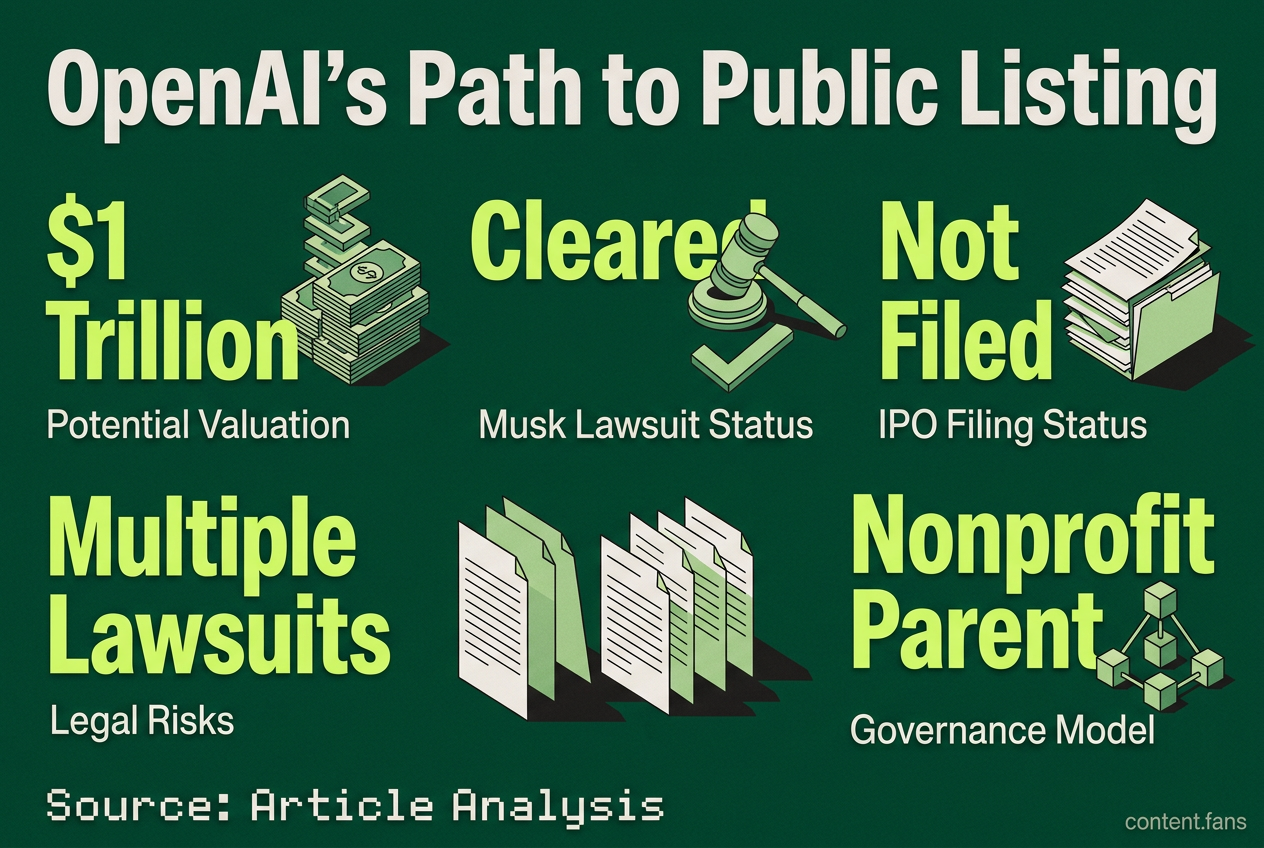
A recent jury verdict clearing OpenAI in a lawsuit from Elon Musk removes a significant legal hurdle for the company's potential Initial Public Offering (IPO). An Oakland jury rejected Musk's breach-of-contract claims on statute-of-limitations grounds, a decision that could allow OpenAI to pursue a public listing with a valuation approaching $1 trillion, according to industry reports.
While the verdict resolves a high-profile dispute, OpenAI still faces a complex landscape of other lawsuits, regulatory scrutiny, and corporate governance questions that could influence the timing and viability of an IPO in 2026.
IPO Timetable Still Tentative
Although the Musk lawsuit is resolved, an OpenAI IPO is not imminent. The company has yet to file a formal registration statement with the SEC. The process still requires completing regulatory approvals, finalizing terms with bankers, and conducting an investor roadshow, making the timeline subject to change.
Although reports indicate OpenAI is preparing for a public offering, no formal S-1 registration statement has been filed. The IPO is anticipated for later this year, but sources like CBS News highlight that the timeline is contingent on regulatory approvals. The process also depends on bankers setting terms, completing an investor roadshow, and addressing disclosures from other legal challenges.
Ongoing Courtroom Risks
OpenAI continues to face significant legal risks beyond the Musk case. The company is a defendant in a major consolidated copyright class-action lawsuit in New York, where discovery is ongoing and a judge has ordered the production of a significant number of de-identified ChatGPT logs.
Other notable cases include copyright infringement claims from Britannica, Merriam-Webster, and Ziff Davis, which have been joined to the main proceeding. Additionally, OpenAI is defending against two wrongful-death suits, though the company denies liability and states its technology did not promote harmful acts.
Key legal fronts to watch:
- Consolidated copyright MDL in S.D.N.Y. (extensive log discovery under way)
- Britannica and Merriam-Webster complaint, now joined to MDL
- Separate Ziff Davis digital media action, likewise transferred
- Two wrongful-death suits at early pleading stages
Each matter adds potential disclosure obligations and settlement costs that could weigh on investor appetite.
Governance Questions Linger
Questions surrounding OpenAI's unique corporate governance persist. The company operates through a nonprofit parent structure with a for-profit subsidiary; the parent is the OpenAI nonprofit. This structure is designed to align commercial goals with its mission of building safe artificial general intelligence.
This unconventional model continues to attract regulatory interest, with ongoing dialogue reported between the company and attorneys general in Delaware and California. During an IPO roadshow, investors may demand greater clarity on how its mission-driven governance will coexist with shareholder expectations for profit, especially given its deep commercial ties to Microsoft.
Competitive Landscape and Market Pressures
OpenAI also faces intense market competition. Rivals like Anthropic, Google, and various open-source projects are accelerating their model release cycles, compelling OpenAI to increase its already massive infrastructure spending. Having raised substantial private capital, the company is under pressure to demonstrate a clear path to profitability amid escalating R&D costs.
While the Musk verdict provides some legal clarity, the path to an IPO remains interwoven with these competitive, legal, and regulatory challenges. Future developments will be critical in shaping investor sentiment ahead of any potential SEC filing.
What did the jury decide in Elon Musk's lawsuit against OpenAI?
According to industry reports, a U.S. jury in Oakland unanimously dismissed the case on statute-of-limitations grounds, ruling Musk filed too late.
- Clears the most visible legal threat to OpenAI's IPO narrative
- Does not affect other pending litigation (copyright, wrongful-death, class actions)
- Musk has vowed to appeal
Does the verdict mean OpenAI can go public immediately?
The win removes a headline risk, but an IPO is still preparatory:
- No Form S-1 filed yet
- Reuters quotes Wall Street sources valuing OpenAI at up to $1 trillion if it lists later this year
- Normal SEC review, road-show and governance audits still required
Which lawsuits are still active against OpenAI?
-
Copyright multidistrict litigation (S.D.N.Y.)
- Multiple separate publisher cases consolidated; discovery includes significant numbers of de-identified ChatGPT logs
- Class not yet certified; no settlement talks reported -
Wrongful-death claims
- Two cases publicly acknowledged: one overdose-related, one linked to the Florida State University shooting
- OpenAI denies liability, says ChatGPT "did not encourage or promote illegal activity" -
Minority-investor suits and licensing disputes continue in Delaware Chancery
How does the verdict affect OpenAI's governance scrutiny?
It does not resolve the bigger governance debate:
- OpenAI operates through a non-profit-controlled structure after corporate restructuring
- California & Delaware AGs continue oversight; mission-drift concerns persist
- Recent funding rounds have raised valuation significantly, intensifying investor pressure for transparency
What competitive pressures remain while OpenAI eyes the public market?
- Anthropic and Google are shipping rival models at aggressive price points
- OpenAI's frontier training costs and regulatory spotlight could weigh on pricing power
- Analysts say first-mover advantage is narrowing; IPO timing may hinge on proving sustained revenue growth amid mounting R&D spend