
OpenAI integrates ChatGPT with bank accounts for personal finance
Serge Bulaev
OpenAI has added a feature that lets ChatGPT connect to users' bank accounts for personal finance, but it can only read balances and transactions, not move money. The system uses Plaid to access banking data and stores only limited information, which users can delete by disconnecting their accounts. Experts note this may create new security and privacy risks, like account takeover or metadata leaks, and say that sensitive data may be stored using the new Dreaming V3 memory. There are steps users can take to reduce risks, such as enabling multi-factor authentication and disconnecting accounts when not needed. The landscape may change with future updates or new rules.

OpenAI has integrated ChatGPT with bank accounts, transforming the AI assistant into a powerful personal finance tool. This new feature allows users to connect their financial accounts for a read-only overview of their spending, balances, and transactions. While it offers unprecedented convenience, it also introduces significant security and privacy considerations that users must understand.
How Does ChatGPT's Personal Finance Feature Work?
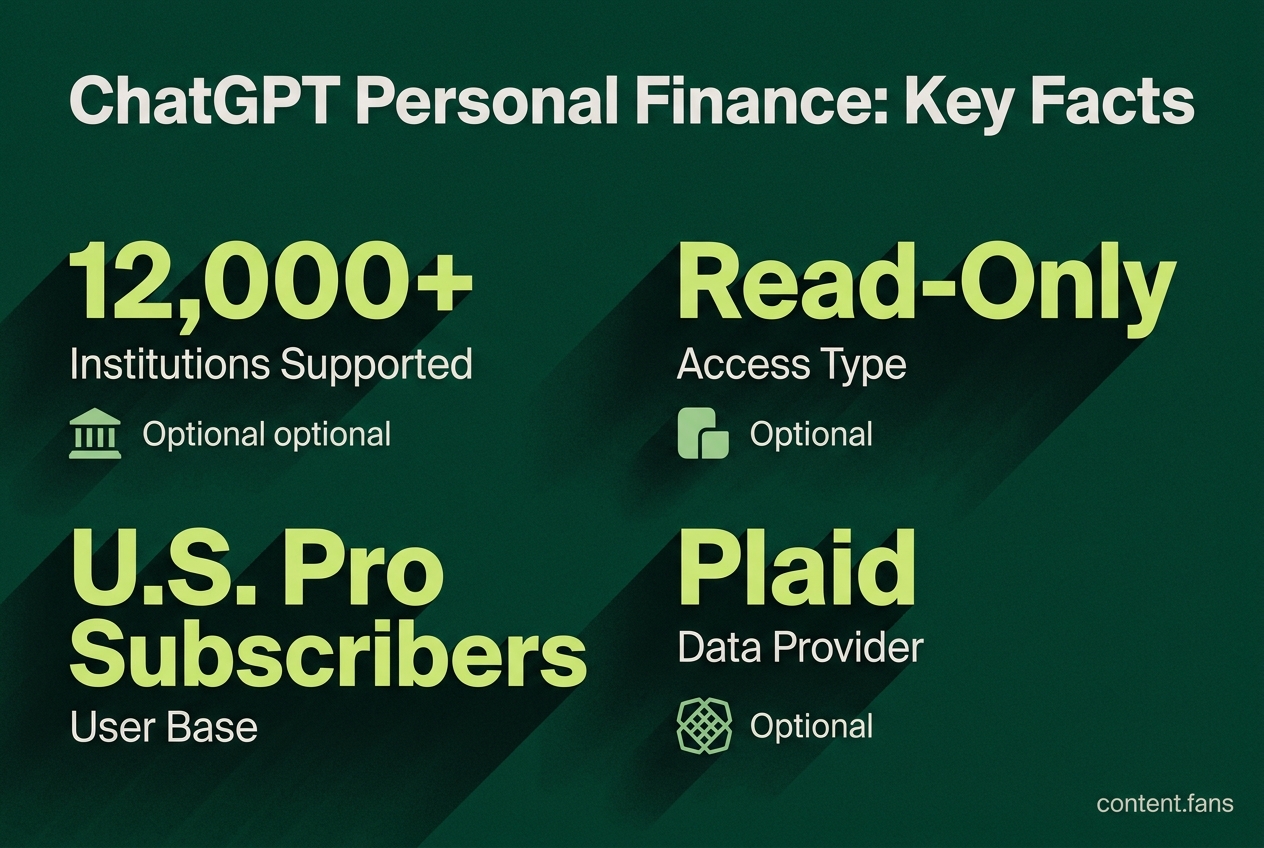
The new integration allows U.S. Pro subscribers to connect ChatGPT to their financial accounts using Plaid, which supports over 12,000 institutions. According to a TechCrunch report, the feature is strictly read-only, meaning the AI can analyze data but cannot move money or modify accounts.
This feature provides a conversational way to manage finances. Users can ask ChatGPT questions about their spending habits, upcoming bills, and account balances. The AI processes this information to deliver consolidated summaries and insights directly within the chat interface, acting as a view-only financial dashboard.
OpenAI's documentation confirms this is a "personal finance experience" designed to surface key information, including:
- Current balances across checking, savings, and credit accounts
- Categorized transaction histories
- Recurring bills and subscriptions
- High-level summaries of loans and investments
- Consolidated monthly or yearly spending reports
Enhanced Memory for Your Finances
OpenAI attributes the feature to its personal finance experience and account connections, which create a persistent understanding of your financial habits. This background process synthesizes facts from past conversations, allowing the AI to remember your goals, spending patterns, and preferences across sessions. Unlike older features, this memory layer updates automatically, discarding outdated information while retaining relevant context for more personalized interactions. Users can review, edit, or delete this synthesized memory at any time.
What Are the Main Security and Privacy Risks?
While OpenAI emphasizes that credentials remain with Plaid and access is read-only, experts note this may create new security and privacy risks. Key concerns include:
- Account Takeover: If an attacker compromises your ChatGPT login, they could gain a comprehensive, consolidated view of your entire financial life.
- Sensitive Metadata Leaks: Even without full account numbers, transaction details like merchant names, dates, and amounts can expose personal information, from medical conditions to personal relationships.
- Prompt Injection: Malicious data hidden within transaction notes could theoretically be used to manipulate the model, potentially causing it to leak information or provide harmful responses.
OpenAI states that synced data is deleted within 30 days of disconnecting an account, but the policy on future use of aggregated, anonymized data remains unclear.
How ChatGPT Compares to Other AI Finance Tools
OpenAI enters a competitive space where Plaid-level connectivity is becoming standard among many financial technology providers. According to industry reports, differentiation now depends on user controls, security protocols, and data transparency as a growing number of AI-powered finance tools emerge in the market. Many analysts agree that tokenized, read-only access and clear deletion policies are now the minimum requirement for earning user trust in this category.
5 Expert Tips to Reduce Your Risk
To use the new personal finance feature safely, security experts recommend taking the following practical steps to minimize your attack surface:
- Secure Your ChatGPT Account: Use a strong, unique password and enable multi-factor authentication (MFA).
- Limit Your Exposure: Only connect the accounts necessary for your analysis. Disconnect them when you are finished and review permissions quarterly.
- Use the Official Plaid Portal: Never paste login credentials or other sensitive financial details directly into the chat window.
- Manage Your Memory: Regularly review the memory summary in your ChatGPT settings to delete any sensitive entries. Use temporary chats for one-off queries you don't want saved.
- Verify All Advice: Treat all output from the AI as informational, not as professional financial advice. Always cross-reference critical information before making decisions.