
OpenAI files confidential S-1 for IPO, targets $300B+ valuation
Serge Bulaev
OpenAI has filed a confidential S-1 for an IPO, with reports suggesting a valuation above $300 billion. The company says it has not decided on the IPO timing yet and may stay private longer to finish more product work. Analysts estimate that about 40 percent of OpenAI's sales now come from business customers, and leadership has set a goal of reaching 50 percent before going public. Details about revenue and risks are still private, and media reports suggest some investors are unsure if enterprise growth will justify the reported valuation. OpenAI is also planning to combine its main products into one app, which may help it keep users and appeal more to businesses.

OpenAI has officially filed a confidential S-1 for its initial public offering (IPO), signaling its intent to go public. While the company confirmed the filing, it maintains flexibility on the timing, suggesting it may remain private to advance product development. The filing underscores a strategic push to grow its enterprise revenue share before the public debut, though key financial details remain sealed.
What is a confidential S-1 filing, and why has OpenAI submitted one?
A confidential S-1 is a document filed with the U.S. Securities and Exchange Commission (SEC) that lets a company start the IPO process privately. OpenAI has confirmed its confidential submission after news leaks but stated it has not decided on timing yet. The company noted that remaining private for now - potentially for "a while" - offers advantages for completing key product initiatives before its public debut.
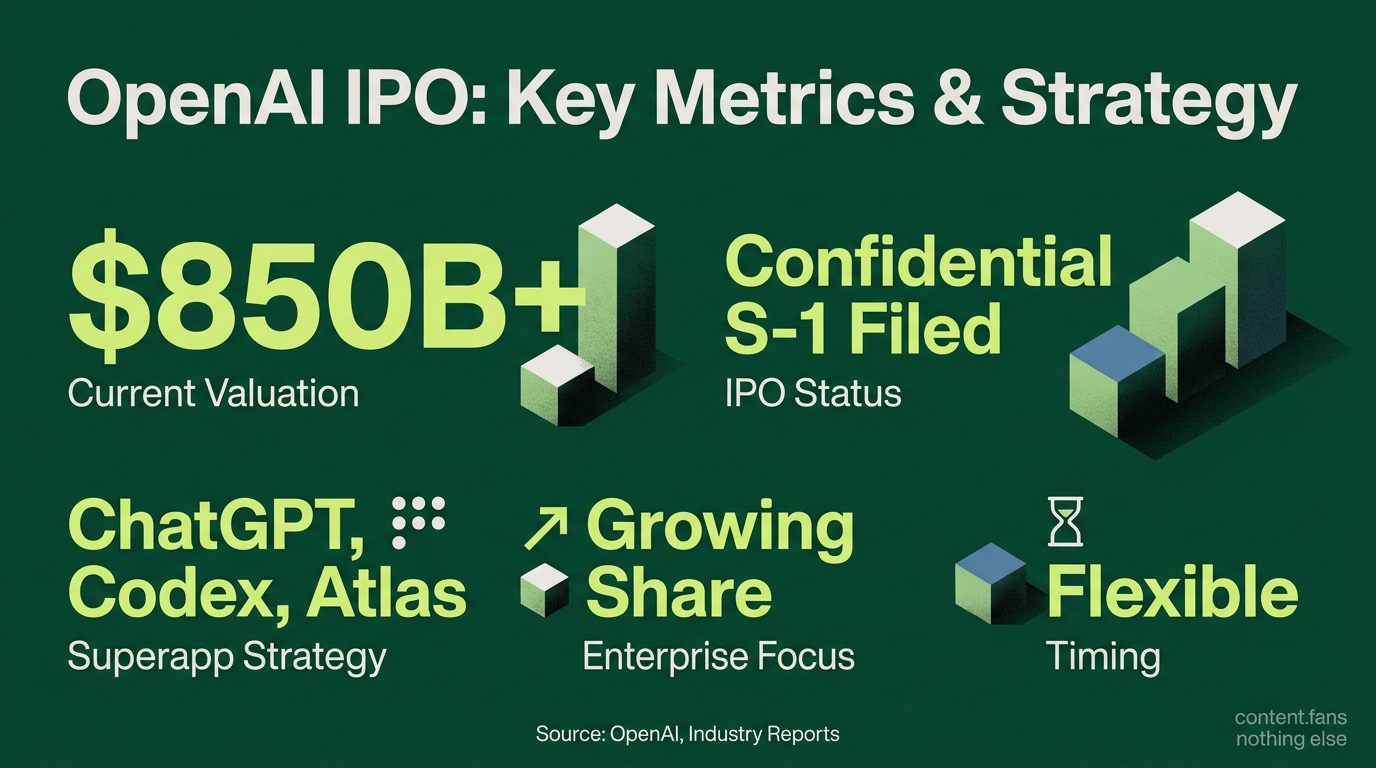
OpenAI submitted a confidential S-1 filing to the SEC, signaling its intent to go public. This process allows the company to prepare for an IPO while keeping financial data private. The timing remains undecided as OpenAI focuses on enterprise growth.
What valuation is OpenAI reportedly seeking, and how does this reflect its revenue strategy?
The sourced reports describe OpenAI as already valued at over $850 billion. This valuation is tied to its strategy of prioritizing enterprise revenue, which according to industry reports represents a significant portion of sales from its growing number of business customers. The company is reportedly focused on increasing this enterprise share, demonstrating a stable, subscription-driven revenue model to appeal to public market investors.
How is OpenAI's "superapp" strategy designed to capture enterprise market share?
OpenAI plans to merge its core products - ChatGPT, Codex, and Atlas - into a single, unified "superapp." This desktop-first platform aims to capture the enterprise market by creating an integrated workflow where employees can deploy AI agents across their existing tools. The strategy also includes embedding partner services like Canva and Booking.com, deepening its value as a central productivity hub while keeping its mobile app focused.
Who is leading OpenAI's product and commercial strategy during this transition?
During this critical transition, Greg Brockman is leading OpenAI's product strategy, with Fidji Simo heading its commercial and enterprise efforts. This leadership pairing aligns the company's technical vision with its revenue goals. Brockman is overseeing the "superapp" integration, while Simo's team is focused on converting its growing number of business users into paying enterprise subscribers to fortify financials before the IPO.
What structural changes is OpenAI making to prepare for life as a public company?
To prepare for the public markets, OpenAI has made significant structural changes, including converting to a public benefit corporation (PBC). This move replaces its former capped-profit model with a more traditional equity structure. Alongside its product consolidation strategy, this change is designed to showcase strong ecosystem metrics and diversified revenue streams, which are key indicators for public investors. The company has also reportedly hired major banks to manage the offering.