
OpenAI files confidential S-1 for IPO, eyes $852B valuation
Serge Bulaev
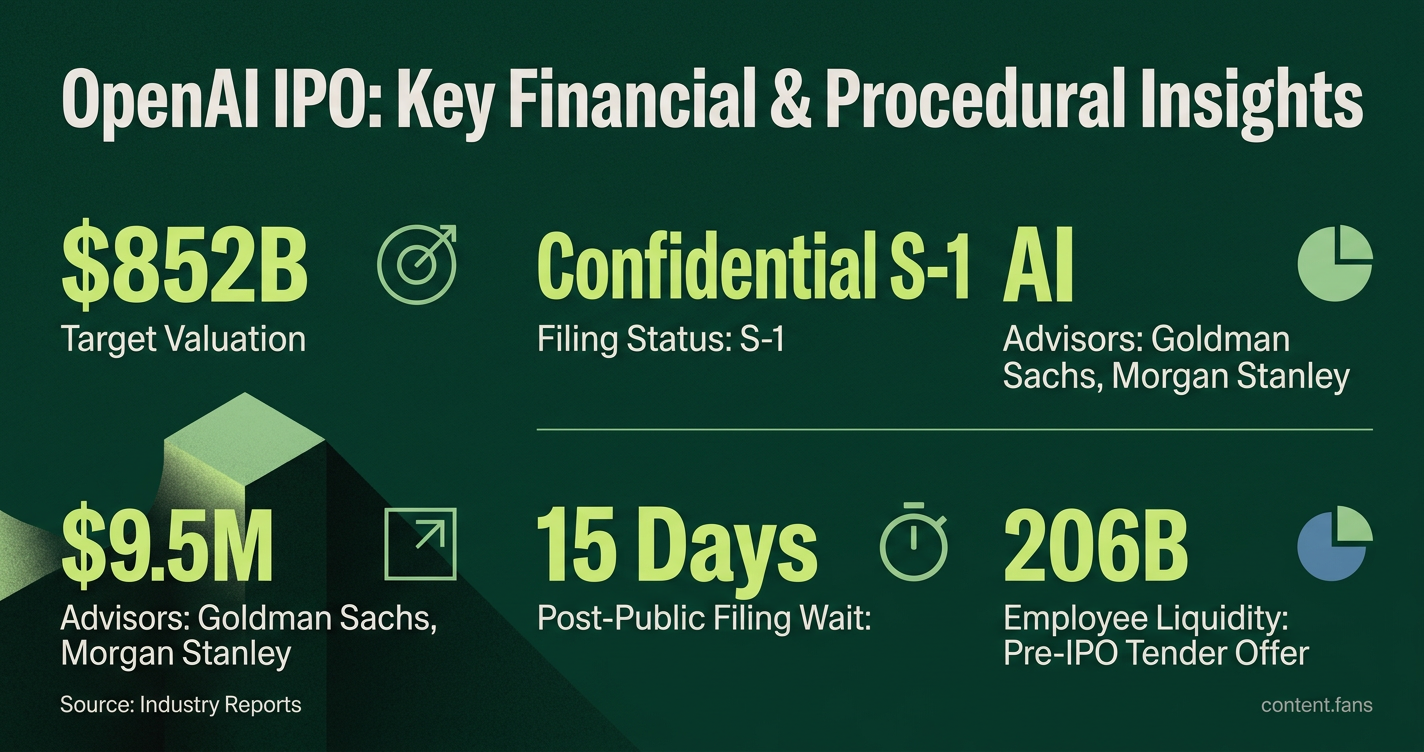
OpenAI has confidentially filed an S-1 with the SEC, which may lead to a future IPO and includes a planned pre-IPO employee tender offer at a $852 billion valuation. The company says there is no set timetable for going public, and the process could take a while as the SEC reviews the draft statement. OpenAI also plans to let employees sell shares before the IPO, but details are not yet clear. The filing might reshape how AI companies raise money and report information, though some experts warn the high valuation may bring extra scrutiny and questions. The move could lead to greater oversight and transparency for OpenAI and the broader AI industry.

In a major move signaling a potential public offering, OpenAI has confidentially filed an S-1 for its IPO with the U.S. Securities and Exchange Commission. According to industry reports, the AI leader submitted the draft registration as a preemptive step. Citing Rule 135, the company clarified the notice "does not constitute an offer to sell or the solicitation of an offer to buy any securities" link. According to industry reports, the filing is coupled with plans for a pre-IPO employee tender offer at a significant valuation.
This confidential filing provides OpenAI with the flexibility to go public when market conditions are favorable, though executives have not committed to a specific timeline. Industry observers believe the move, combined with an employee tender offer, could significantly alter capital investment and reporting standards throughout the AI industry.
Status of the S-1 and next procedural steps
OpenAI has submitted a confidential S-1 registration statement to the U.S. Securities and Exchange Commission, a key preliminary step toward a potential Initial Public Offering (IPO). This filing allows the company to begin the review process with regulators privately, with no definitive timeline for going public yet announced.
The S-1 draft is currently under review by the SEC. According to industry reports, OpenAI has informed its staff that a public version may not appear for some time, with speculation suggesting a potential offering later this year. Goldman Sachs and Morgan Stanley are reportedly advising OpenAI on the process.
Filing confidentially allows prominent companies to address regulatory feedback privately before disclosing financial details. Legal experts point out that after the filing is made public, a mandatory 15-day waiting period must pass before an investor roadshow can commence, a critical factor given the AI market's sensitivity to tech equity trends.
Employee liquidity and the 2025 tender precedent
Alongside the S-1 filing, according to industry reports, OpenAI intends to launch a new pre-IPO tender offer, allowing current and former employees to sell shares at a significant valuation. Key details, including the start date and participation limits, have not been released.
This follows a secondary sale in recent months where a significant number of employees reportedly sold substantial amounts of stock. That event featured individual participation caps, with many participants reaching the maximum allowed amounts. A new tender at a higher valuation could be a powerful tool for talent acquisition and retention, though it also introduces complex tax considerations.
Market and regulatory ripple effects
Should OpenAI debut on the public market near a potential trillion-dollar valuation, it would establish a new benchmark for late-stage AI companies. However, some analysts caution that a high price-to-sales multiple could face investor skepticism.
Regardless of the final valuation, an IPO would legally mandate greater transparency regarding model safety, data-sourcing practices, and related-party transactions. This increased scrutiny will likely impact ongoing regulatory discussions on AI governance and antitrust in major global capitals. Key potential outcomes include:
- New Valuation Benchmarks: A high public valuation would serve as an anchor for private funding rounds across the AI sector.
- Increased Access to Capital: Public listing provides substantial capital for funding intensive computational resources and acquiring top talent.
- Heightened Scrutiny: Public filings will bring closer examination of revenue sources, particularly the company's significant enterprise relationship with Microsoft.
- Competitive Pressure: The move pressures rivals like Anthropic, which also recently filed a confidential S-1, to sharpen their own market strategies and narratives.
Ultimately, the confidential S-1 filing is not a conclusion but a gateway to a new phase of intense scrutiny for OpenAI. Future disclosures will reveal how the company plans to navigate the balance between its ambitious growth objectives and the heightened responsibilities of being a publicly traded entity.