
OpenAI Expands With Hundreds of AI Consultants for Enterprise Sales
Serge Bulaev
OpenAI is hiring hundreds of AI consultants to help sell and set up its products for big companies. This move appears to be aimed at growing its business with large customers who may need expert help before using AI widely. Reports suggest these new jobs will help with things like integrating AI, setting up rules, and changing how companies work. Some experts say this may help OpenAI compete with other firms, but it is not clear yet if it will lead to more sales. The company's success might depend on showing clients real results from their investment.

In a strategic move to deepen its market penetration, OpenAI expands with hundreds of AI consultants for enterprise sales, aiming to help large corporations deploy its technology at scale. This significant hiring initiative signals a shift from pilot programs to full-scale production environments, targeting Fortune-level customers.
Why Hire So Many Specialists?
OpenAI is hiring specialists to provide enterprise clients with hands-on support for integration, governance, and workflow redesign. This service-led approach is designed to help large companies move beyond experimental pilots and implement AI solutions into their core operations, shortening a project's time-to-value.
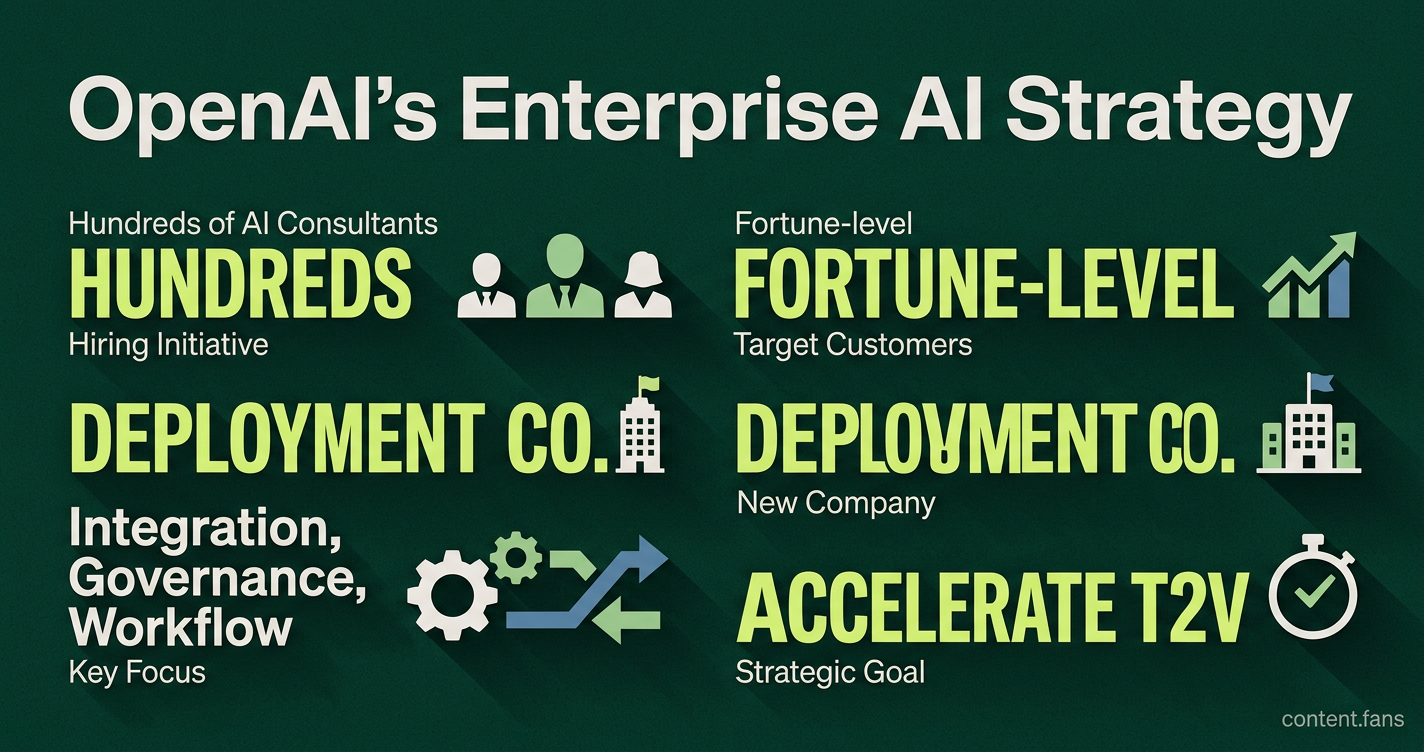
The strategic pivot reflects OpenAI's focus on enterprise growth. To lead this charge, OpenAI appointed former Google Cloud executive Barret Zoph to head enterprise sales. The new roles focus on hands-on support and include:
- Enterprise Account Directors
- AI Deployment Managers
- Solutions Architects
- Forward Deployed Engineers
- Enterprise Sales Strategists
These positions are built to provide the integration, governance, and workflow support that large firms require before committing to multi-year AI contracts.
Enterprise AI as the Next Revenue Pillar
OpenAI announced the OpenAI Deployment Company to help businesses build and deploy AI systems, with an emphasis on moving from experimentation or pilots into production and scaling enterprise use. This strategy focuses on complex integrations and use cases that demand sustained expert guidance. Analysts agree that this consultant-led model can de-risk projects, preventing stalled proofs of concept and accelerating a buyer's time-to-value.
The market shows a clear need for this expertise. While industry reports indicate many adopters see productivity gains from AI, research reveals a significant portion of companies struggle to actively track its return on investment. OpenAI's consultants are poised to close this gap by helping clients establish formal governance, metrics, and change management.
Competitive Pressure Shapes the Strategy
OpenAI's move is not happening in a vacuum; its rivals are pursuing similar service-heavy strategies. Reports from major firms like Deloitte and PwC emphasize that successful AI adoption requires more than software - it demands operating model changes, early governance, and measurable outcomes. Consulting firms are gaining traction by bundling templates and KPI dashboards that promise rapid results.
By building an in-house consulting arm, OpenAI aims to maintain control and keep pace with competitors. This strategy allows it to compete directly with integrated deployment services from rivals like Anthropic and Google. While OpenAI hasn't confirmed numbers, the scale of hiring suggests a significant investment to defend and grow its market share.
What This Means for Large Customers
For enterprises evaluating OpenAI, this expanded team promises faster project kickoffs, clearer governance, and dedicated support. The move directly addresses the primary barrier to scaling AI: execution challenges, as identified by industry analysts. By embedding delivery talent within the sales process, OpenAI aims to bridge the gap between initial excitement and measurable business value.
Ultimately, the success of this strategy hinges on demonstrating a clear return on investment (ROI) - a metric many companies are still struggling to formalize. However, OpenAI's hiring spree confirms a critical industry trend: leading AI vendors must now pair powerful technology with practical, hands-on expertise to win.