
OpenAI Expands Codex into Enterprise Platform with New Features, Costs
Serge Bulaev
OpenAI has expanded Codex from a tool just for developers into an enterprise platform with new features like Sites, role-specific plugins, and integrations for app development and workflow automation. These changes may require IT teams to support more types of users and handle more data, and could lead to higher costs due to new subscription-based pricing. Security and compliance monitoring may need to increase because more apps and plugins use sensitive data. Experts suggest that companies set safeguards before renewing contracts, such as price limits and clear service rules. It appears that businesses may also need to decide who is responsible for compliance when using Codex in production.

The OpenAI Codex enterprise platform marks a major evolution from a developer-centric tool to a company-wide work platform. This expansion introduces powerful new features, but also presents new integration points, cost structures, and governance questions for partners and procurement teams. This guide explains the critical changes, their impact, and how your organization can prepare before your next contract renewal.
How Codex Evolved Beyond a Code Generator
OpenAI has expanded Codex with features for non-developers, including "Sites" for creating web apps from data and role-specific plugins that integrate with over 60 SaaS tools. This transforms Codex from a simple coding assistant into a comprehensive enterprise orchestration platform for various business workflows.
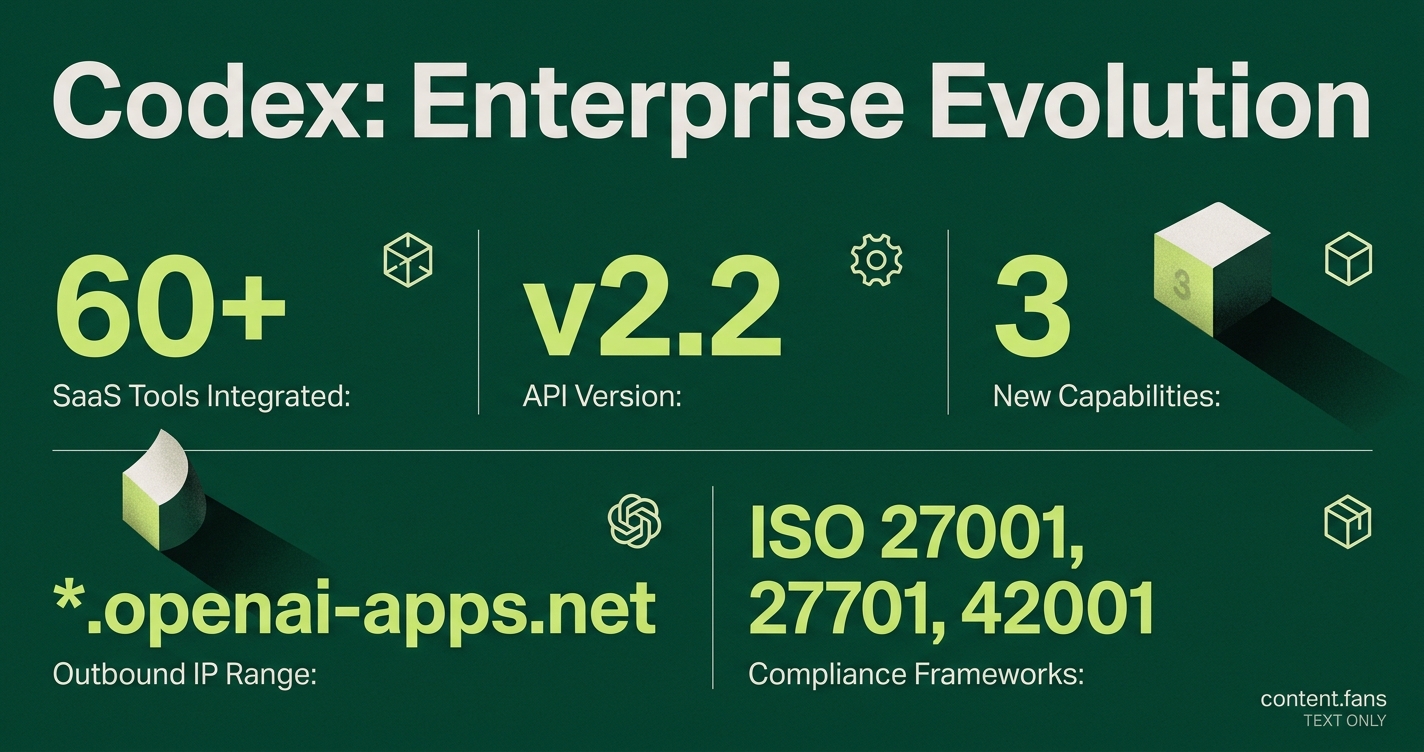
OpenAI unified the underlying engine, so a single, consistent API now powers the Codex experience across the CLI, VS Code, desktop clients, and third-party IDEs (Wikipedia). This shift turns Codex from a developer utility into an enterprise-wide orchestration layer, adding three major capabilities for business users:
- Sites: A feature that allows users, such as analysts, to turn a spreadsheet into a live, interactive dashboard accessible via a secure URL (The Next Web).
- Role Plugins: Connectors that orchestrate over 60 common SaaS tools - including Salesforce, Figma, and Snowflake - through a single, natural-language interface.
- In-Place Annotations and CLI Hooks: Integrations with issue trackers like Jira and CI systems, enabling Codex to perform tasks like drafting pull requests automatically.
New Integration, Governance, and Security Requirements
These new capabilities create a wider surface area for security and compliance teams to monitor. Organizations must address several new technical and governance points:
- API and Network Changes: Engineering teams must adapt to an updated authentication header (v2.2), a new Model Context Protocol (MCP) endpoint for SaaS integrations, and an enlarged outbound IP range for plugins (*.openai-apps.net).
- Centralized Governance: An Enterprise Plugin System now allows IT administrators to approve, block, or silently deploy versioned plugin bundles. This system helps prevent "shadow AI" by ensuring that any unapproved plugin immediately loses its entitlement token (Azalio).
- Expanded Risk Assessment: Business leaders must assess risk across dimensions like data sensitivity, model dependence, and regulatory fit. Workflows handling sensitive data require stricter controls, and mapping risks to frameworks like ISO 27001, ISO 27701, and ISO/IEC 42001 is recommended to streamline compliance.
Navigating New Licensing, Costs, and Partner Agreements
The expansion of Codex brings significant changes to its licensing and pricing model. Legacy perpetual keys and simple EULAs are being replaced with usage-based billing and tiered subscription SKUs, a pattern that has led to substantial price increases with other vendors.
The new Sites and plugin features are not included in legacy agreements. They are separate, billable add-ons (e.g., SKUs CXW-SITES, CXW-PLUG) that can represent a significant uplift on base seat costs. Enterprises must proactively renegotiate to avoid unexpected budget growth.
In parallel, OpenAI has formalized its partner ecosystem, enlisting global systems integrators like Cognizant, Accenture, and CGI to manage enterprise deployments (The Next Web). This raises a critical question for buyers: clarifying whether the vendor, the partner, or the internal team owns compliance reporting and incident response for production data.
Checklist for Contract Renegotiation
Before renewing your contract, procurement and legal teams should secure clear safeguards. Use this checklist as a guide for your negotiations:
- Cap Price Increases: Implement a fixed-percentage or CPI-linked ceiling on price escalations.
- Align Usage Commitments: Ensure annual commitments are based on measured consumption, with an appropriate buffer for usage fluctuations.
- Demand Uptime Guarantees: Secure strict 99.9% uptime SLAs with clear service-credit remedies for any failures.
- Require Deprecation Notices: Mandate a 60-day notice for any model deprecation and secure rights to a substitute model without degradation in performance.
- Maintain Portability: Preserve multi-vendor flexibility by validating at least one alternative AI provider quarterly to mitigate concentration risk.
The transformation of Codex into an enterprise platform offers immense potential for productivity but demands a proactive governance and procurement strategy. By understanding the new features, assessing risks, and renegotiating contracts with clear safeguards, organizations can harness the power of Codex while controlling costs and maintaining compliance.