
OpenAI and Anthropic Chase Enterprise AI Revenue as B2B Share Soars
Serge Bulaev
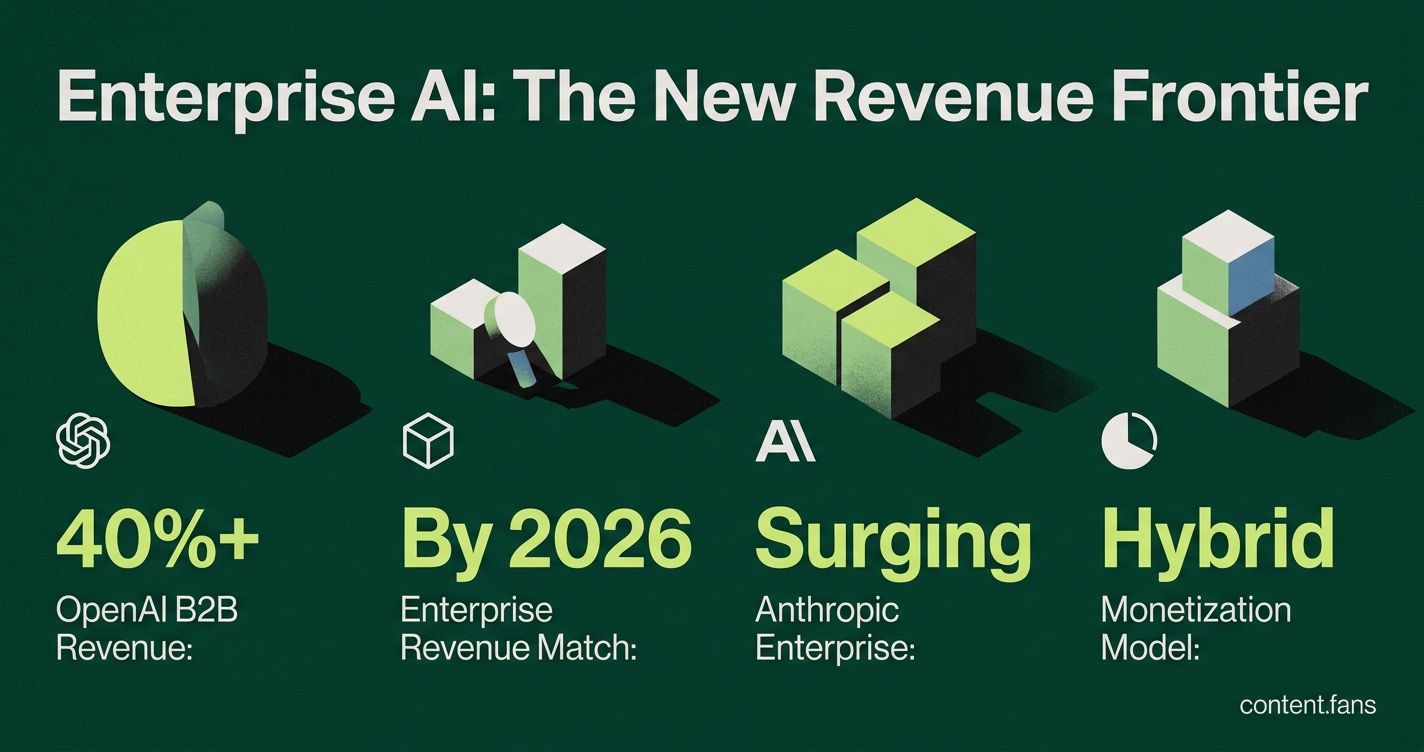
OpenAI and Anthropic are focusing more on business customers, and enterprise sales now appear to make up over 40 percent of OpenAI's revenue. Analysts suggest that business sales are now a main part of their plans, not just a side project. Companies may be choosing these AI tools for their safety and compliance features, especially in industries with strict rules. Pricing models seem to be changing, with vendors offering base fees plus extra charges based on usage. Some reports indicate that Anthropic has recently overtaken OpenAI in enterprise spending share, but market shares might change quickly as competition grows.

The race for enterprise AI revenue is intensifying as leading LLM providers like OpenAI and Anthropic pivot their strategies toward corporate clients. This enterprise push is now a core focus, with OpenAI reporting that B2B sales account for over 40 percent of its revenue enterprise momentum. Concurrently, Anthropic has dramatically increased its market presence, capturing a significant portion of enterprise LLM usage according to industry reports enterprise share lead.
These figures confirm that B2B sales have graduated from a side project to a primary revenue driver. Top AI vendors are strategically re-engineering their products, pricing models, and sales organizations to secure predictable, high-value corporate contracts.
Why enterprises matter
Corporate clients provide higher average contract values, longer-term commitments, and greater revenue stability than consumer markets. OpenAI executives reportedly told investors that enterprise revenue could match consumer sales by the end of 2026, signaling a fundamental shift where CFOs now treat AI expenditures as a core operational cost, not an experimental one.
AI leaders are targeting enterprise clients for their larger budgets, longer contract terms, and predictable revenue streams. Unlike the volatile consumer market, corporate accounts offer stable growth and higher lifetime value, making B2B sales a more sustainable and lucrative long-term strategy for monetizing large language models.
Anthropic's trajectory highlights a different angle of enterprise appeal. While its consumer use remains steady, its corporate adoption is surging, according to Menlo Ventures data. Analysts believe this growth is driven by its strong emphasis on safety, security, and compliance features, which are critical for regulated sectors.
Monetization models on the table
The monetization strategy is evolving beyond simple seat-based licenses. According to Bessemer Venture Partners, AI vendors are adopting hybrid models that blend platform subscription fees with usage-based charges. This structure often includes a base fee, a set allowance of tokens or tasks, and paid overages, allowing for pricing that reflects value delivered. To support this, robust metering and spend caps are becoming essential for predictable corporate budgeting.
One current pattern reportedly looks like this:
- Base platform fee grants admin controls and support
- Included monthly token allowance
- Overage charges per thousand tokens or completed tasks
- Optional outcome bonus for resolved tickets or verified leads
Without accurate metering, vendors face margin erosion and significant friction from corporate procurement teams.
Feature adaptations that close deals
For enterprise buyers, governance and security controls are as important as raw model performance. Features like audit logs, policy enforcement, and data residency are now considered non-negotiable table stakes, according to Deloitte. In response, OpenAI has enhanced its platform with robust admin governance and deployment support, directly addressing compliance hurdles that previously stalled pilot projects.
Similarly, Anthropic is prioritizing features like long-context reasoning and strict default refusal rules to attract clients in sensitive industries like healthcare and finance. Meanwhile, Google's Gemini Enterprise leverages its FedRAMP High certification and deep integration with Google Workspace to appeal to existing GCP customers, although its revenue impact remains less detailed in public filings.
Competitive chessboard in mid-2026
Recent corporate spending data from Ramp for Q1 2026 indicates a dynamic market, with Anthropic narrowly overtaking OpenAI in enterprise AI spend share (34.4% vs. 32.3%). Google Cloud holds a significant share, largely due to its infrastructure advantages. However, analysts emphasize the market's volatility, noting that OpenAI's market share has declined substantially in recent years as competition intensified.
In this competitive landscape, industry strategists now recommend a multi-vendor approach over committing to a single provider. A common pattern sees CIOs routing specific workloads to the best-suited platform: agentic tasks to OpenAI for its high rate limits, safety-critical jobs to Anthropic, and multimodal or compliance-focused work to Google. This split-sourcing strategy highlights how pricing, governance, and specialized features now dictate enterprise buying decisions.