
OpenAI adopts new bylaws, requiring two-thirds vote to fire CEO
Serge Bulaev
OpenAI changed its rules to require a two-thirds vote from non-employee directors to fire the CEO, which may make it harder to remove top leaders. This change was not made public until it appeared in court documents related to Elon Musk's lawsuit and OpenAI has not answered questions about when or why the rule was adopted. After Sam Altman was briefly fired and then quickly reinstated in November 2023, OpenAI's board reviewed its rules and made several governance changes, but there are still questions about how the supermajority rule works. Reports suggest OpenAI plans to change its business structure, but it is unclear how new rules will affect future leadership or decisions. Some experts say courts tend to let boards decide on such matters, so future challenges may depend on how the process was handled.

In a significant governance shift, according to industry reports, new OpenAI bylaws require a higher threshold vote from its non-employee directors to fire the CEO. The change reportedly elevates the dismissal threshold from a simple majority and effectively strengthens CEO Sam Altman's position. This bylaw amendment was not publicly announced by OpenAI and came to light only after Business Insider reported on the discovery within court documents. OpenAI has not commented on the timing of the change or the board's internal deliberations.
Governance flashpoint after the 2023 firing
Following the November 2023 ouster and reinstatement of Sam Altman, OpenAI reportedly amended its bylaws. The new rule mandates that a significant majority of non-employee directors must vote in favor of terminating the CEO, a significant increase from the previous simple majority requirement.
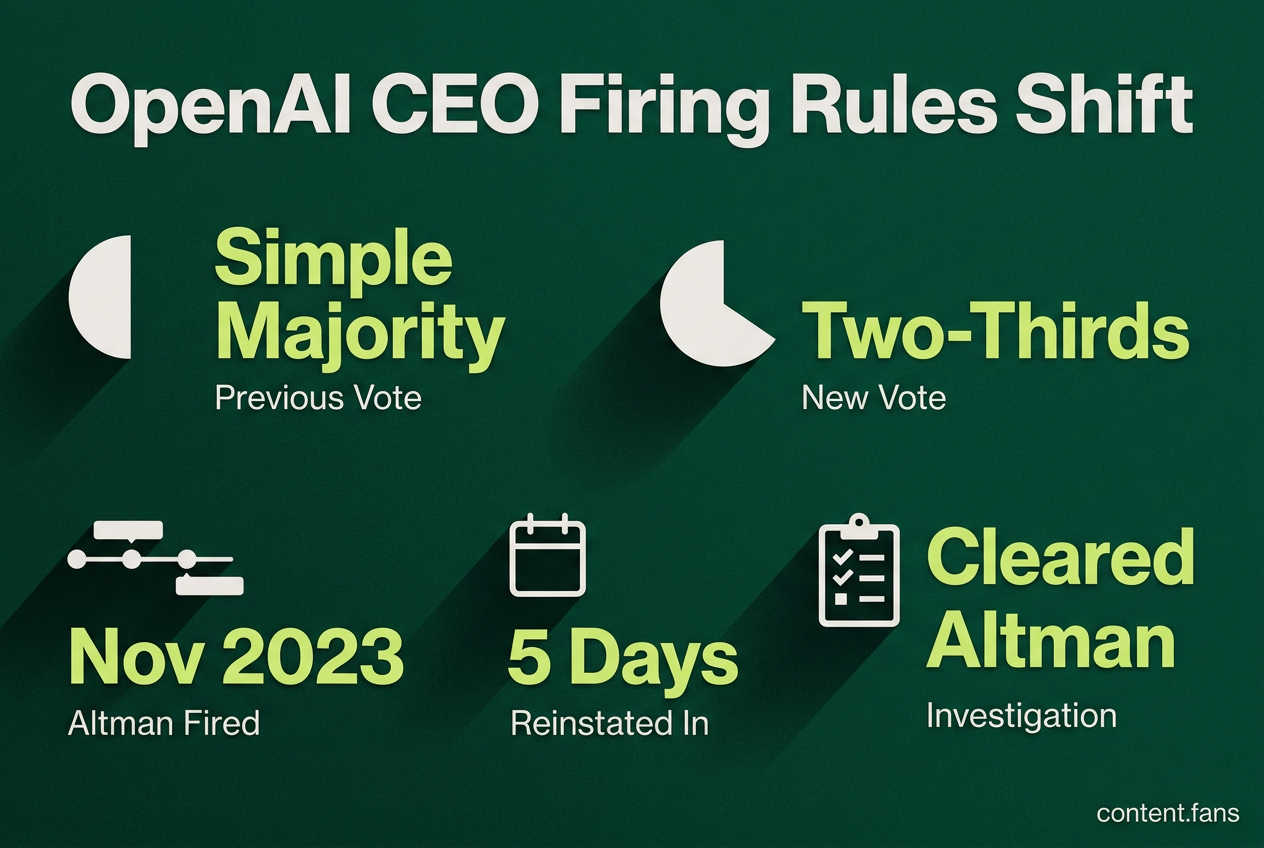
The change follows the chaotic events of November 2023, when the previous board removed Altman with a simple majority vote, citing a "loss of confidence." The bylaws that permitted this are detailed in Wikipedia's summary of the event "Removal of Sam Altman from OpenAI". Altman was reinstated five days later amid mass employee resignation threats and investor pressure. A subsequent investigation by law firm WilmerHale found his conduct "did not mandate removal" and recommended governance improvements.
Microsoft pressure and external criticism
A key catalyst for governance reform was pressure from major partner Microsoft. CEO Satya Nadella, who received no advance warning of the firing, criticized the board's handling of the situation. He expressed concerns in a Guardian interview about the board's decision-making process and demanded changes to prevent future instability. Nadella later testified he was "never given clarity" on the board's reasoning, linking investor confidence directly to board stability.
Broader overhaul and for-profit transition plans
The new bylaw is part of a wider governance overhaul, which includes a reported plan to transition OpenAI's main business into a public benefit corporation (PBC). According to a Reuters report, this shift could grant Sam Altman equity while the original nonprofit retains a minority stake and board appointment powers.
Key post-crisis governance steps include:
- November 2023: Altman removed, then reinstated within five days.
- Early 2024: According to industry reports, interim board reviews bylaws and hires WilmerHale.
- Spring 2024: Investigation clears Altman; new independent directors reportedly join.
- 2024: Board reportedly adopts whistleblower hotline and new conflict-of-interest policies.
- September 2024: OpenAI confirmed intent to convert to for-profit structure.
- December 2024: Detailed plan announced to convert for-profit arm into Delaware PBC.
Unanswered questions about the supermajority rule
Significant questions about the supermajority rule remain. It is unclear if the rule applies only to the CEO or other executives and how it will function within the planned for-profit structure. Legal experts note that courts typically defer to a board's judgment on internal governance, suggesting any legal challenge would likely focus on the procedure of the change, not its intent. With court proceedings ongoing and documents still under seal, the exact wording of the bylaw and its future implications are not yet fully understood.