
NRF: Agentic Commerce Needs Localized AI for Southeast Asia, India Gen Z
Serge Bulaev
NRF says that agentic commerce for Southeast Asia and India may need special AI systems because many Gen Z shoppers live there and could spend up to 5 trillion dollars yearly by 2030. Retailers are advised to create data and payment systems that fit local habits instead of using Western models. Studies suggest Gen Z in these areas often use e-commerce apps first and switch between social media, chat, and shopping sites before buying. Experts believe that agents must understand local languages, offer trusted payment methods, and connect with social platforms to meet these shoppers' needs. It appears that agents focusing on product variety, quality, and easy payments might be more successful than those looking only at price.

The future of agentic commerce in Southeast Asia and India requires localized AI, according to the NRF. This region, home to a significant portion of the world's Gen Z population, represents a substantial market opportunity. Retailers are urged to build data models, payment systems, and engagement layers that reflect local shopping habits rather than adopting Western blueprints.
Why the region looks different
This region's unique e-commerce landscape is defined by mobile-first discovery, multi-channel shopping paths that blend social media with marketplaces, and culturally specific purchasing triggers like livestream events. AI agents must therefore process local languages, social trends, and diverse payment options to be effective.
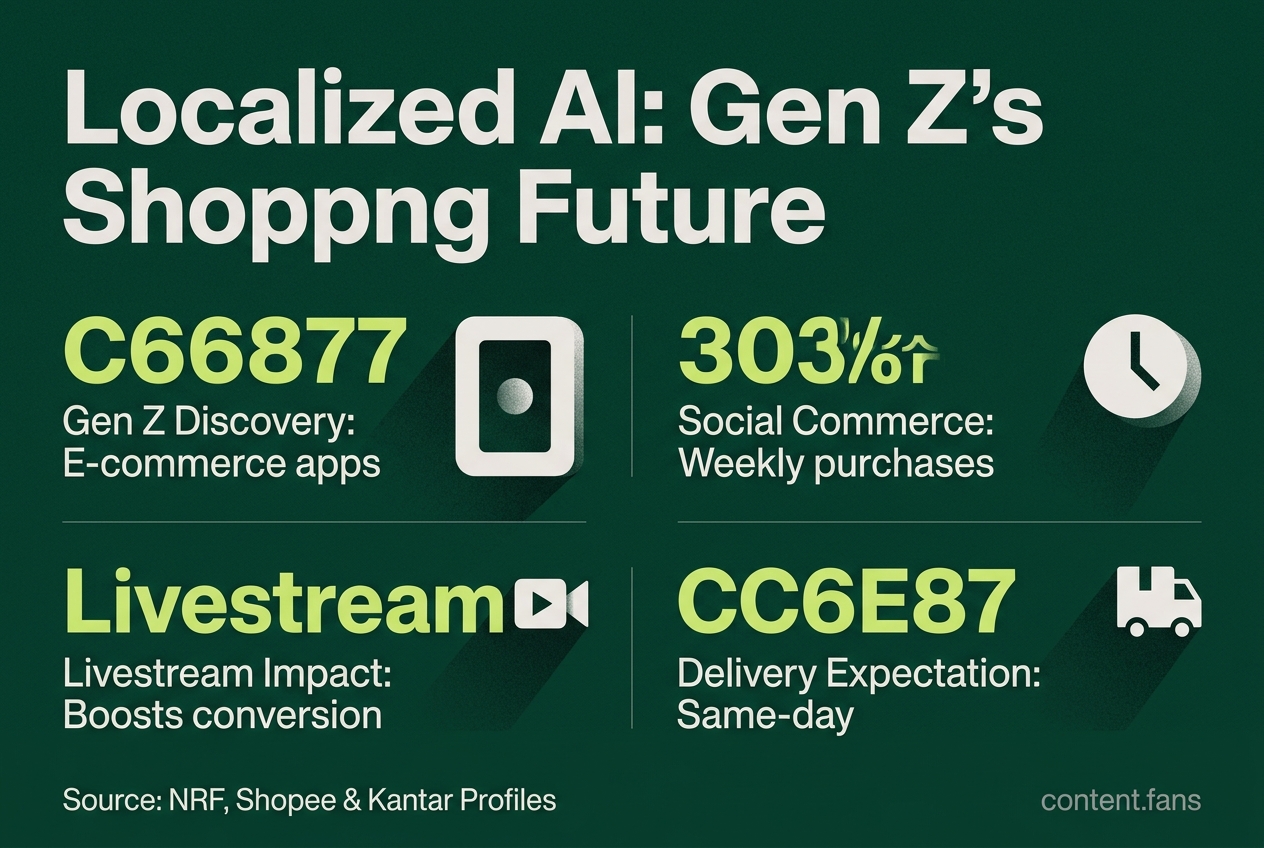
A Shopee and Kantar Profiles study reveals that many Gen Z shoppers in Southeast Asia use e-commerce apps for initial product discovery, often navigating between social media, chat, and marketplaces before buying. This complex journey requires agentic AI to maintain user context across platforms. Cultural norms also play a key role; a significant portion of the region's Gen Z make social commerce purchases weekly, and livestream shopping in Indonesia and Thailand can boost conversion substantially.
NRF 2026 APAC Innovators Showcase examples
The Innovators Showcase in Singapore highlights companies already building these localized AI layers. Exhibitors are demonstrating modular systems that allow agents to negotiate, compare, and buy autonomously. Examples include:
- Capillary Technologies: Developing data pipelines for vernacular loyalty programs.
- Cartsy AI: Showcasing merchandising modules that understand regional slang and SKU attributes.
- Advertima Vision AG: Using computer vision to analyze in-store customer behavior in dense urban environments.
Architectural priorities that emerge
- Structured Product Metadata: Agents require standardized data. Since regional sellers often use a mix of English and local languages, robust translation layers are essential.
- Real-Time Inventory and Logistics: High expectations for same-day delivery in cities like Manila and Bengaluru necessitate low-latency API connections between AI agents and logistics providers.
- Social Commerce Connectors: Agents need API access to platforms like TikTok and Shopee Live to pull pricing, availability, and social sentiment data that guides discovery.
- Flexible Payment Orchestration: With cash-on-delivery and digital wallets like UPI coexisting, agents must intelligently route checkout flows to trusted local payment options.
What the numbers hint at
Data from the Shopee and Kantar Profiles poll indicates Gen Z's priorities when choosing a platform:
- Product Variety: A large majority prioritize a large assortment.
- Reliable Quality: Most cite quality as a key factor.
- Easy Payments: Many value simple and trusted payment methods.
- Logistics: Next-day delivery and clear refund policies are considered essential.
These preferences imply that autonomous agents scoring products on assortment, quality, and payment convenience could achieve adoption faster than those focused solely on price.
Industry forecasts from analysts suggest AI agents could handle a significant portion of global digital transactions in the coming years. Given that Southeast Asia and India may represent a substantial share of this projected multi-trillion-dollar global agentic revenue, establishing localized data governance and policy frameworks is an urgent priority for retailers.
What is agentic commerce, and how is it different from today's AI chatbots or recommendation engines?
Agentic commerce moves beyond scripted chatbots or single-step prompts. It describes AI agents that can define goals, compare options, negotiate terms and complete purchases entirely on their own. Instead of waiting for a shopper to type "find the cheapest noise-canceling earbuds," an agent continuously monitors price drops, stock levels and delivery speeds, then autonomously places the order when the user-defined criteria are met. The key distinction is goal pursuit: chatbots respond; agents act across multiple steps and data sources.
Why do Southeast Asia and India require specially built agentic-commerce architectures?
A significant portion of Gen Z consumers worldwide live in these two regions, and they are expected to drive substantial annual spending in the coming years. Yet their shopping journey is culturally distinct:
- Many Gen Z in Southeast Asia start discovery inside marketplaces such as Shopee, then research on social media before finalizing the purchase on the same app days later.
- Live-streaming "shoppertainment" in Indonesia and Thailand lifts sales significantly over static ads.
- A large majority of Vietnamese Gen Z have bought products recommended by micro-influencers, valuing authenticity over celebrity endorsements.
An agent trained on Western data sets would miss these patterns. Region-specific systems must therefore merge live-stream APIs, social-commerce touch-points and local logistics engines into the agent's decision loop.
Which companies have demonstrated localized solutions at the NRF APAC Innovators Showcase?
The NRF APAC Innovators Showcase features thirty curated companies selected by the NRF Innovation Advisory Committee, held June 2-4, 2026 in Singapore. While the full demo roster has not been released, Capillary Technologies and Cartsy AI - both listed on the official floorplan - are known to focus on hyper-local personalization engines and AI-driven catalogue management that adapt to language, currency and delivery norms across APAC markets.
What technical infrastructure must retailers build before agents can operate in these markets?
- Structured product data - agents cannot read PDFs; they need SKU-level attributes, real-time stock and localized pricing.
- Real-time fulfillment APIs - same-day courier networks in Jakarta or Mumbai must expose pickup-time windows so the agent can decide whether to lock in the deal.
- Cultural metadata tags - color symbolism, festival timing and even K-pop references must be encoded so that the agent can fine-tune its offers without breaking local etiquette.
Gartner notes that firms investing in such real-time data architectures improve decision speed substantially, a prerequisite for autonomous agents.
What measurable impact can retailers expect once they deploy localized agents?
- Significant lift in engagement when AI tailors visuals to local cultural nuances in Vietnam and Thailand, according to industry reports.
- A substantial portion of Southeast Asian e-commerce orders projected to be executed via autonomous agents by the end of the decade, according to industry analysts.
- Time-to-checkout cut substantially for repeat grocery buyers, as agents auto-replenish based on consumption patterns and local delivery slots.
In short, brands that treat agentic commerce as "just another channel" risk losing visibility; those that embed localized agents at the center of the discovery-purchase cycle secure a first-mover advantage among the world's largest Gen Z audience.