
New Report: Dairy Brands Use Texture to Justify Higher Prices
Serge Bulaev
Recent studies suggest that dairy brands may use texture, such as creaminess or layering, to justify higher prices for premium products. Consumers appear willing to pay more when a product feels richer or more indulgent, and texture can even be more important than flavor for some people. Research indicates that brands offering textured varieties may see increased sales and shopper interest, but they need to keep these products clearly different from cheaper options. Experts warn that if the texture does not meet expectations, customers might switch brands, so companies should make sure their texture claims are believable and shown clearly to shoppers.

In commoditized dairy categories, premium SKUs are driving value growth, and new evidence shows dairy brands use texture to justify higher prices. Brands that successfully leverage mouthfeel as a key differentiator are achieving higher margins and greater shopper engagement. An analysis of spoonable yogurts and cheese snacks reveals a clear pattern: indulgent, textured products sustain significant price gaps and show higher shelf velocity than their plain counterparts, according to FoodNavigator analysis. The data suggest that consumers will accept a surcharge for products that feel richer, creamier, or layered, even in categories dominated by private labels.
Why texture moves the price needle
Texture justifies higher prices by signaling quality and creating a more enjoyable sensory experience. Consumers perceive richer, creamier, or more complex textures as a mark of a premium product, triggering a willingness to pay more. This sensory differentiation is often more compelling than flavor alone for many shoppers.
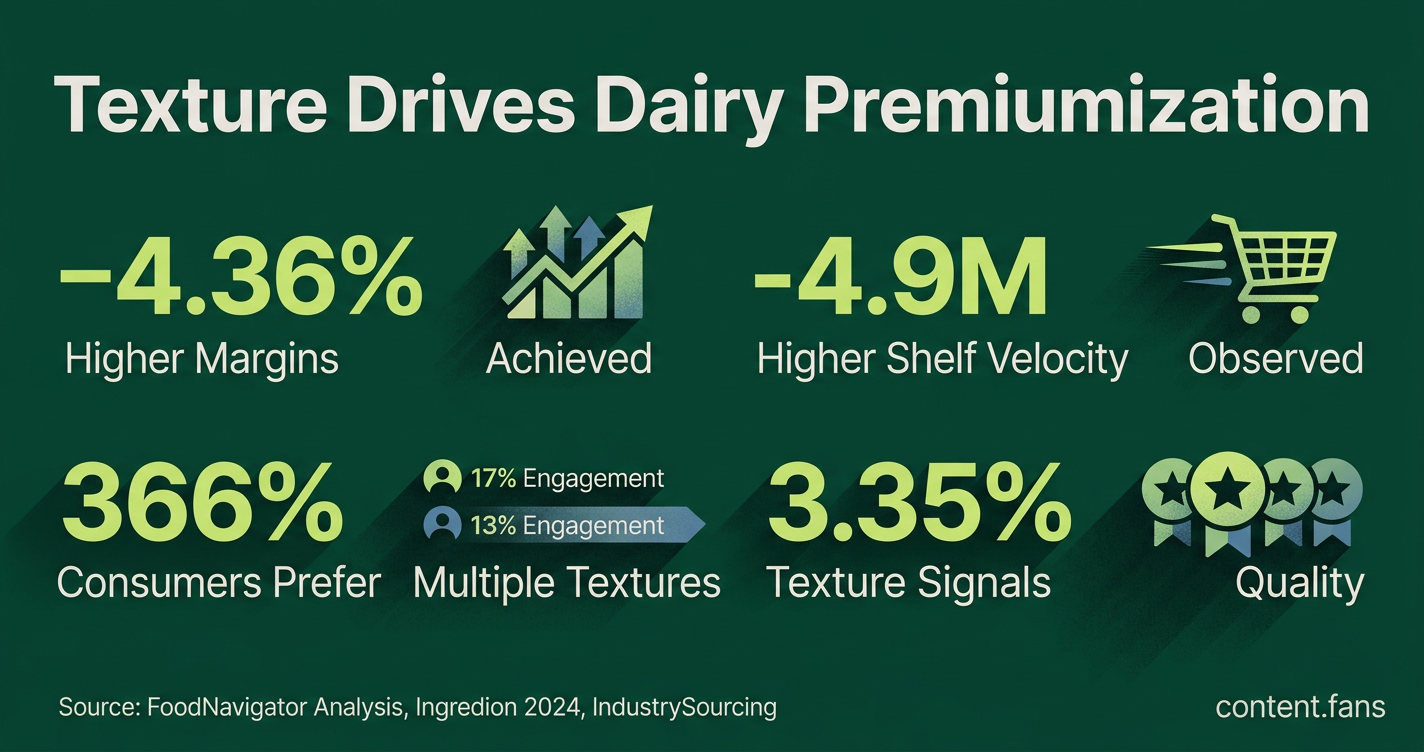
Consumer data highlights a strong connection between texture, quality perception, and purchasing habits. For example, Ingredion's 2024 ATLAS research found that many European consumers seek recognizable ingredients for clean-label products, with "crispy" being among the most appealing texture cues in savory foods. Furthermore, an IndustrySourcing survey of 11 countries revealed that a significant portion of consumers prefer foods with multiple textures, and many believe texture can be as important or more important than flavor. Academic research confirms this, with recent studies showing a direct link between surface texture and willingness to pay. The stakes are high, as industry reports warn that many consumers might switch brands if a product's texture fails to meet expectations.
Premium SKUs drive value growth in commoditized dairy categories
Successfully launched premium dairy products typically share three strategic pillars. First, they offer a distinct, indulgent mouthfeel that differentiates them from standard options. Second, this sensory upgrade is paired with familiar claims, such as health benefits or ingredient provenance, to build consumer trust. Third, they benefit from strong in-store merchandising that physically separates them from value-priced tiers, discouraging direct price comparisons.
Brands often structure their product portfolios into clear tiers to guide consumer choice:
- Value: large pack or private label equivalent that keeps entry price low
- Core: everyday item priced near the category average
- Premium texture: whipped, layered, or extra creamy format positioned as an occasional treat
- Functional indulgence: premium texture plus benefit such as protein enrichment
This ladder clarifies trade-ups for shoppers and helps retailers defend their shelf pricing architecture.
Portfolio tactics: results and cautions
Market data validates this texture-forward strategy. According to industry reports, premium brand volumes have grown while mainstream brand volumes have declined in recent years. This growth is partly attributed to a richer product mix from new textured SKUs. However, brands must remain vigilant; with private label's growing market share, premium offerings must maintain clear differentiation to avoid being undercut on price.
To measure success, experts recommend tracking three key metrics: incremental sales versus the existing range, cannibalization of core products, and repeat purchase rates. An ideal outcome is a high repeat purchase rate with minimal cannibalization, which raises the average selling price and overall margin. Formats with a visibly distinct mouthfeel, such as layered yogurts or whipped cottage cheese, appear to generate the most favorable results.
To accelerate adoption, brands should validate texture claims through in-person sampling and compelling digital content. Live retail demonstrations can boost trial rates, while social media videos can effectively showcase a product's unique sensory characteristics like creamy peaks, airy pockets, or satisfying stretch. While the opportunity is significant, the market is evolving quickly. Continuous innovation - through new mixing profiles, inclusions, or seasonal textures - is key to keeping the premium tier fresh and competitive.
What exactly is "texture-driven premiumization" in dairy, and why is it gaining traction now?
Texture-driven premiumization means charging more for dairy by emphasizing mouthfeel. Think creamy Greek yogurt with a thick, almost spoon-standing density or plant-based cheese that shreds and melts like the dairy original. According to FoodNavigator's dairy innovation coverage, the strategy is winning because texture can justify significant price lifts at a time when industry reports suggest many shoppers would switch brands if mouthfeel disappoints. In short, when price wars hit the commodity tier, texture becomes the new flavor.
How willing are shoppers to pay extra for textured dairy products?
Research from thousands of consumers across multiple countries shows many prefer multi-texture experiences, and a significant portion of Asian consumers perceive multi-texture products as indulgent. Industry research found that "crispy" was among the most engaging texture cues, while academic studies have measured specific amounts buyers would add for improved surface feel. The sweet spot: combine texture with clean-label or functional claims. When both factors are present, many Europeans say they will pay a premium, proving that texture alone is powerful but texture plus benefits drives the highest willingness to pay.
Which dairy brands have already used texture to justify higher prices?
- Lindt extended its smooth-melting Lindor format into Lindor Tiramisu Truffles, layering shell, melt, and creamy filling for a dessert-level sensory path.
- Fortnum & Mason released "Bars of Chocolate" featuring crunchy hazelnut pieces and chewy centers, positioned as craft indulgence.
- Even discount shelves joined the trend: Aldi's Crunchy BBQ Sweet Potato Veggie Burgers used audible crunch to elevate a plant-based SKU in a value chain.
Each case shows texture moving the product from commodity to gift-worthy or restaurant-grade, unlocking premium shelf space and media buzz.
Should every dairy portfolio add a premium textured line?
Evidence points to a three-tier strategy:
1. Value tier holds volume.
2. Core tier delivers familiar taste and texture.
3. Premium textured tier captures higher margins and new shoppers.
Industry data confirm that premium brand volumes have risen while mainstream volumes have declined, and insurgents with textured offers have driven significant sector growth despite holding small market share. The risk: poorly differentiated premium SKUs cannibalize the core. The fix: clear sensory separation - audible crunch, slow melt, or layered bite - so shoppers see true added value.
How can retailers accelerate adoption of premium textured dairy SKUs?
- Merchandise premium SKUs adjacent to indulgent pairings (e.g., textured cheese beside artisan crackers).
- Sampling stations let consumers experience the contrast themselves; industry reports suggest mouthfeel demos lift trial rates significantly.
- Leverage PR moments: multi-texture launches create headline-worthy "first-to-market" stories, driving earned media that commodity lines rarely achieve.
Bottom line: texture is a shelf-set, sampling, and PR lever all at once - making it easier for retailers to justify facings and faster turns on higher-priced dairy.