
New EU €3 Customs Fee Reshapes Cross-Border E-commerce for Shoppers
Serge Bulaev
A new €3 customs duty for all parcels entering the EU from July 2026 may make cross-border online shopping more expensive. Shoppers seem to be changing their habits by buying items in larger orders or choosing goods already in the EU to avoid extra fees. Trust still appears to be an issue in social commerce, with some shoppers facing long deliveries or products not matching what was promised. Many younger shoppers might trust social shopping more, but a lot still use traditional marketplaces for actual purchases. The use of AI for product recommendations is growing, but many people want clearer information about how these recommendations work.

The EU's upcoming customs reform, set to begin in July 2026, is fundamentally altering cross-border e-commerce for shoppers. This significant regulatory shift, which removes the €150 duty exemption, is pushing European consumers to become more strategic, directly impacting search habits, cart sizes, and platform choices. Analysts agree that this blend of new rules and AI-driven discovery tools is redrawing the e-commerce landscape.
Customs reform is reshaping cross-border bargains
Starting July 1, 2026, the EU will remove the €150 duty-free threshold for low-value imports from non-EU countries. This change, aimed at leveling the market, means customs duties and VAT will apply to all parcels regardless of value, with duties calculated based on the value and type of goods.
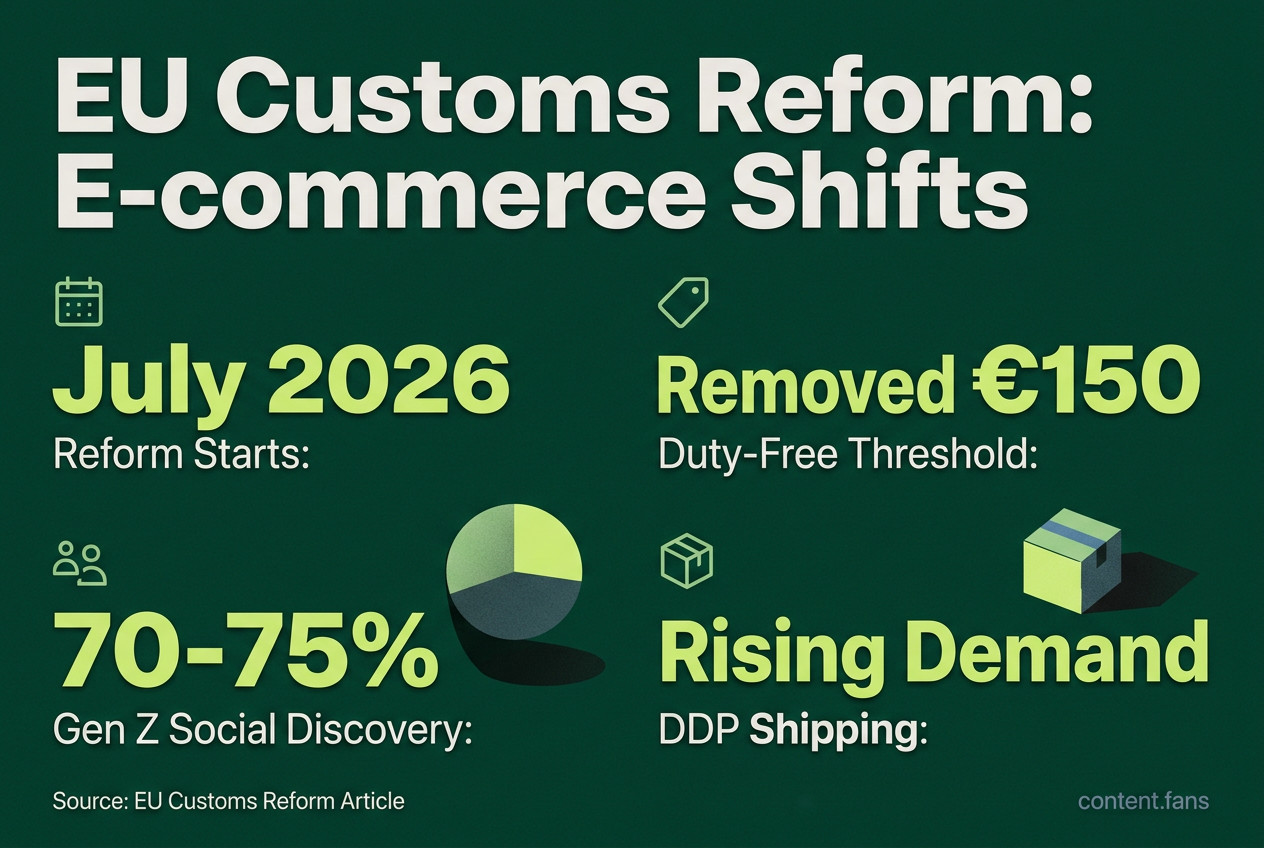
From July 1, 2026, every parcel entering the EU will be subject to customs duties and VAT based on its value and product classification. For items valued up to €150, duties will be calculated according to standard tariff rates rather than being exempt. This can significantly impact the unit economics for low-margin brands. In response, shoppers are already adapting their behavior. Marketplace data indicates a decline in single-item orders for products like fast fashion and phone cases. Instead, consumers are consolidating purchases into larger batches or choosing products already located in EU warehouses to bypass extra fees and paperwork. Consequently, demand for Delivered Duty Paid (DDP) shipping is rising, as it eliminates surprise charges that lead to delivery refusals.
Trust rules social commerce traction
While customs fees are changing checkout calculations, product discovery remains rooted in social media. Industry reports indicate growing adoption of social commerce among European consumers, though significant trust deficits hinder conversion. Many social commerce users report experiencing long delivery times and receiving items that didn't meet expectations. Such issues often drive shoppers back to established marketplaces for secure payment and reliable fulfillment. Although Gen Z shows higher trust in social shopping compared to older generations, many have become more cautious about direct purchases through platforms like TikTok Shop, while still using them for product discovery.
AI-assisted discovery raises the stakes
AI-powered discovery engines are becoming central to e-commerce, with retailers using them to create personalized product feeds that can significantly improve conversion rates according to industry reports. Social media serves as a primary discovery channel for approximately 70-75% of Gen Z consumers. This rise of AI brings new demands for transparency. A significant portion of younger shoppers want greater clarity about how recommendation systems work. As the customs reform takes effect, brands that combine AI-driven suggestions with clear, upfront information - including duty-inclusive pricing and delivery estimates - will be best positioned to win consumer trust.
What businesses are watching next
Key upcoming milestones that will further shape the market include:
- Finalized delegated acts that clarify marketplace liability under the Product Liability Directive
- Country-level guidance on Import One-Stop Shop registration
- Consumer response after the first holiday season under the new duty structure
- Implementation timeline for various temporary measures set to expire in 2026-2028
Each development could alter costs and consumer trust. In the interim, proactive retailers are mitigating risk by warehousing popular items within the EU, consolidating fulfillment operations, and offering transparent, duty-paid pricing to retain their increasingly savvy European customer base.
What exactly changes on July 1, 2026, and why is this reform being introduced?
From 1 July 2026, the EU removes the €150 duty-free threshold for all parcels arriving from non-EU countries. Customs duties and VAT will apply to all imports regardless of value, calculated based on the goods' value and tariff classification.
The goal is to level the playing field between direct-to-consumer imports and traditional retail, as millions of low-value parcels previously entered the EU duty-free.
How much more will my typical €25 order now cost?
The cost increase will depend on the specific product type and applicable duty rates.
Example: a €25 phone case that was previously duty-free will now carry customs duties based on its tariff classification plus applicable VAT. The exact increase varies by product category, but low-margin items (fast fashion, gadgets) are hit hardest, so many shoppers may abandon micro-purchases unless sellers absorb the increase.
Will I still be surprised by extra charges at my door?
Fewer cash-on-delivery shocks.
Platforms such as Amazon, Temu or Shein can collect duties and VAT at checkout when using the Import One-Stop Shop (IOSS). Shipments sent "DDP (Delivered Duty Paid)" guarantee you see the final price before clicking "buy". Refusal rates for parcels sent "DAP" (customer pays on arrival) are already rising.
Which shopping habits are Europeans adopting to avoid higher fees?
Consumer behavior shows several emerging trends:
- Consolidation: shoppers wait and bundle orders into larger parcels to reduce per-item duty impact.
- Domestic shift: preference for EU-warehoused stock (Amazon EU, Zalando) to skip customs entirely.
- Platform caution: increased scrutiny of social commerce platforms, with consumers prioritizing delivery transparency and established fulfillment networks.
Where can I read the official rules myself?
The European Commission has published guidance on customs reforms and the Import One-Stop Shop system. These documents detail duty calculations, IOSS usage, and marketplace liability rules that take effect with the regulatory changes.