
Nestlé Recalls 800 Infant Formula Products Across 60 Countries
Serge Bulaev
Nestlé recalled over 800 infant formula products in more than 60 countries due to possible contamination, but no confirmed illnesses have been linked to the products. Experts suggest that slow communication may have increased public worry. The recall caused a drop in nutrition sales and high costs for Nestlé, and total losses might reach 1 billion euros. Authorities warned that the contamination could cause vomiting and cramps, but no cases were reported. Trust may take a long time to recover, and clear, transparent information appears to help rebuild confidence.

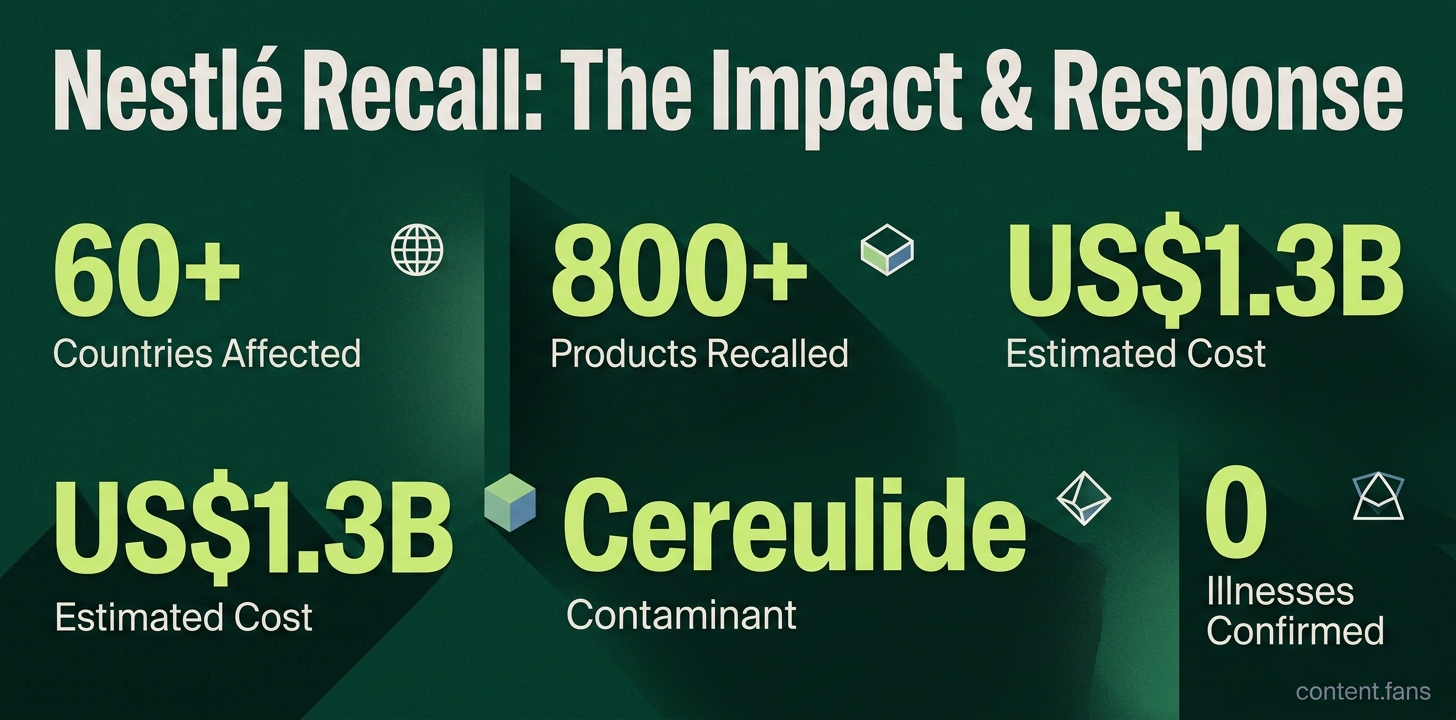
The widespread Nestlé infant formula recall has impacted over 60 countries, prompting the removal of more than 800 products from shelves due to potential contamination, according to Reuters. This crisis has raised significant questions about brand trust and supply chain safety.
The financial impact was immediate, with Nestlé's nutrition sales showing negative organic growth. The company reported significant recall costs according to industry reports. While no illnesses have been confirmed, experts suggest that slow communication from the company amplified public concern.
This article unpacks what happened, why trust eroded so quickly, and how a structured response can shorten the path to recovery.
Immediate financial and reputational hit
The recall was initiated after the discovery of cereulide, a toxin, in arachidonic acid oil provided by an external supplier. While authorities warned the contaminant could cause vomiting and cramps, Nestlé has stated that no confirmed illnesses have been linked to the affected product batches.
The contamination was traced to this ingredient from an external supplier. Food safety authorities, including the UK's Food Standards Agency, warned the toxin could cause symptoms like vomiting, but no cases were reported. Nevertheless, critics cited slow communication, creating an 'opacity problem' that damaged investor confidence. Financial analysts estimate the total cost could reach CHF 1.2 billion (US$1.3 billion), representing a substantial financial exposure for the company. The fallout includes share price instability and a criminal complaint in France, highlighting the high stakes for brand loyalty in the sensitive infant care market.
Step by step recovery playbook
Regaining trust in infant formula takes longer than in most food segments. A structured playbook can align functions and reassure regulators, retailers, and parents.
- Safety confirmation
- Halt production linked to suspect inputs and commission independent labs for parallel testing.
- Radical transparency
- Publish batch numbers, test protocols, and daily progress updates on a dedicated microsite, echoing FDA guidance on consumer-focused pages.
- Recall execution
- Direct consignee notices and geo-targeted push alerts reduce response lag.
- Re-certification
- Seek third-party audits plus visible seals on relaunch packs.
- Stakeholder engagement
- Hold webinars with pediatricians and retailers to explain corrective actions and shelf re-entry timelines.
Tracking the rebound
A narrow set of metrics keeps teams focused on the end consumer rather than headline sales:
- Repeat purchase rate versus pre-crisis baseline
- Share of shelf in top five pharmacy chains
- Net sentiment score from verified caregiver forums
- Pediatrician recommendation incidence in syndicated surveys
- Consumer complaint rate per 1,000 cans
Historical cases suggest sentiment can lag shipments by several quarters. Industry reports indicate that Nestlé expects a significant drag on projected organic growth, indicating that investors monitor organic growth guidance as a proxy for regained momentum.
Channel-specific considerations
Digital commerce lost ground fastest when the recall news broke, as algorithms suppressed affected SKUs. Re-entry requires search-term monitoring and paid reassurance banners clarifying the independent test results. In contrast, pharmacy and hospital channels value documented audits over marketing spend, so quality dossiers should precede any promotional push.
Crafting unified messaging across these channels may indicate control and sincerity. Crisis PR specialists quoted by Food Navigator argue that human-centered video statements from senior leaders outperform text releases in restoring confidence.
Closing the communication gap
The contamination episode shows that uncertainty can be more damaging than bad news itself. A disciplined cadence of facts, milestones, and scientific evidence helps replace rumor with data. While fines and lawsuits absorb attention, caregivers decide brand fate based on clarity, empathy, and proof of systemic fixes.
Which batches were recalled and why?
Nestlé has pulled more than 800 SKUs sold under brands such as SMA, Beba, Guigoz and Alfamino from store shelves in 60 countries after detecting cereulide, a heat-stable toxin, in an arachidonic-acid (ARA) oil supplied by a third-party vendor. The ingredient originated from one Dutch blending facility, but the ripple effect reached ten production sites worldwide. Although no medically confirmed illness has been tied to the batches, food-safety agencies class the toxin as "unsafe to consume" because it can trigger acute nausea, vomiting and abdominal cramps in infants within hours.
What is the immediate financial hit?
According to industry reports, the company has booked a substantial charge for the recall covering estimated sales returns and inventory write-offs and destruction. Management warns the incident will have a significant impact on organic growth and could push full-year growth toward the lower end of guidance ranges. Industry analysts see the ultimate exposure as substantial once lost future sales and litigation provisions are included, representing a significant portion of group sales.
How fast did Nestlé communicate?
Regulators and parents alike criticised the pace. According to industry reports, consumer-level alerts appeared after an internal "quality concern" was confirmed at the Dutch plant. Dutch watchdog Foodwatch has since filed a criminal complaint in France, alleging "slow and opaque communication" that breached EU traceability rules. CEO Philipp Navratil eventually posted a video apology, yet behavioural-finance experts say uncertainty, rather than the recall itself, did the greatest damage to Nestlé's share price, which fell 5 % intra-day before partially rebounding.
What must Nestlé do to win back trust?
Independent surveys show infant-nutrition recalls take significantly longer to regain baseline purchase intent than other food categories. A credible playbook includes:
1. Immediate transparency - publish all lab certificates, batch numbers and test results in one central, mobile-friendly hub
2. Independent, third-party audits of every formula line, with ISO-22000 re-certification completed before pallets leave warehouses
3. Predictive testing - install real-time sensors for cereulide and Bacillus cereus at ingredient inlets; share summary statistics monthly
4. Channel re-engagement - one-to-one calls with pediatricians, pharmacy chains and maternity wards; offer sealed "test packs" so professionals can verify safety themselves
5. Targeted reassurance marketing - micro-sites showing QR-coded provenance for each can; invite parents to watch live-streamed production tours
Which metrics will tell us the crisis is really over?
Look for sequential improvement in these five indicators:
- Repeat-purchase rate returning to a substantial portion of pre-crisis level within two quarters
- Share of shelf in key supermarkets back to a significant portion of historical average
- Net sentiment score (social + parenting forums) showing improvement within six months; positive mentions of "safety" outrank "recall" significantly
- Pediatrician recommendation index - monthly survey showing a growing number of sampled professionals "comfortable recommending" the brand
- Organic growth for the Nutrition division turning positive - showing consistent positive growth for multiple consecutive reporting periods
Tracking these together gives investors and families a forward-looking health check long before full-year accounts appear.