
Microsoft Updates AI Agent Guidance for 2026 Security
Serge Bulaev
Microsoft's 2026 guidance suggests AI agent security should be ongoing, not just a one-time checklist. Experts recommend tracking each agent, limiting their privileges, and watching their actions, with strong controls like short-lived credentials and human approval for risky tasks. Security teams may need to monitor agents all the time and review their use as tools and risks change. Guidance also suggests agents should be retired carefully, removing unused credentials and cleaning up dependencies. This approach appears to help manage new threats and prevent old agents from becoming security risks.
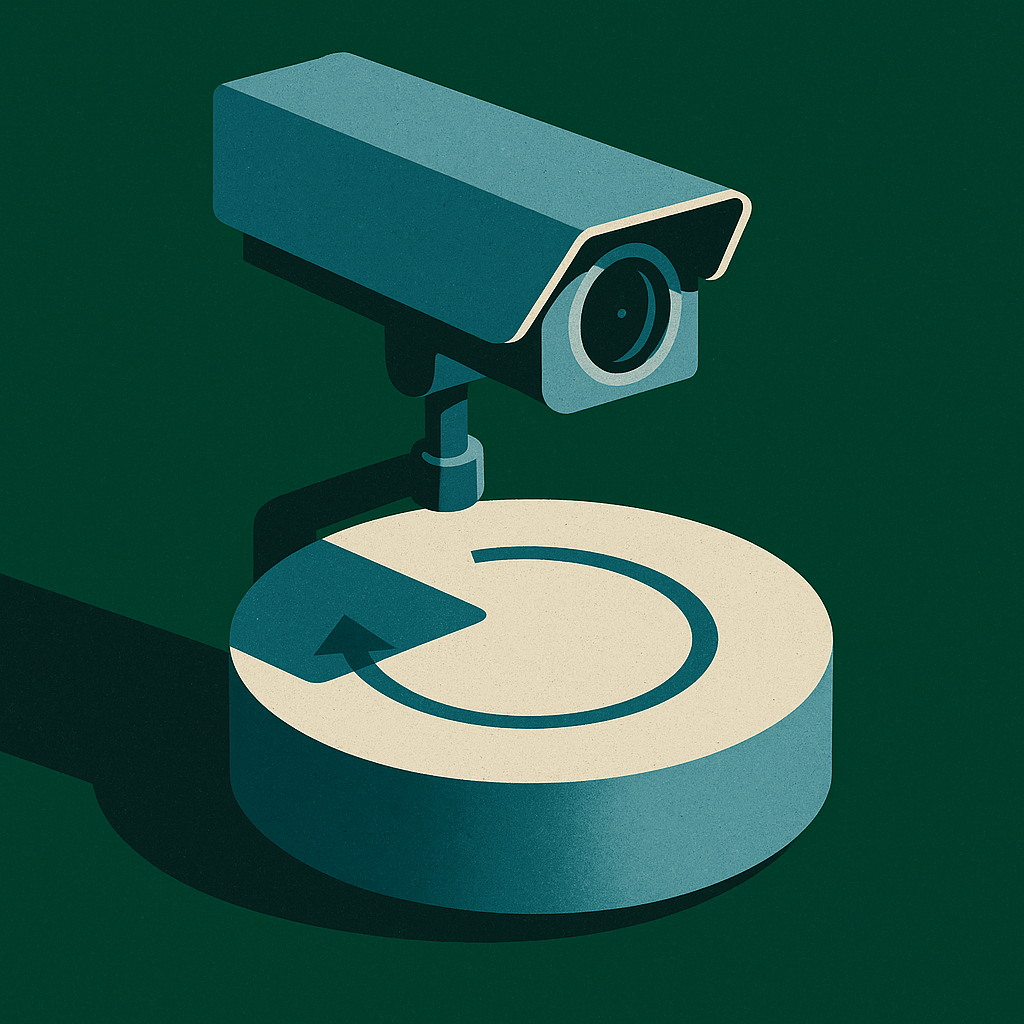
Microsoft's updated AI agent guidance for 2026 redefines security as continuous, iterative governance, not a one-time checklist. Security teams must now maintain a dynamic control loop that inventories agents, enforces least privilege, monitors tool usage, and can reverse unsafe actions. This approach treats each agent as an evolving system whose risk level changes with every prompt, tool, or business context update. Microsoft's enterprise guidance calls for a centralized baseline to enforce identity, access, and monitoring across all agent instances.
Why a lifecycle lens replaces the checkbox
This shift from static checklists to a dynamic lifecycle model is driven by the rapid evolution of AI agent threats. New vulnerabilities like prompt injection emerge constantly, demanding that security teams adopt a faster, more responsive cycle of mapping, measuring, and managing agent behavior to ensure continuous security.
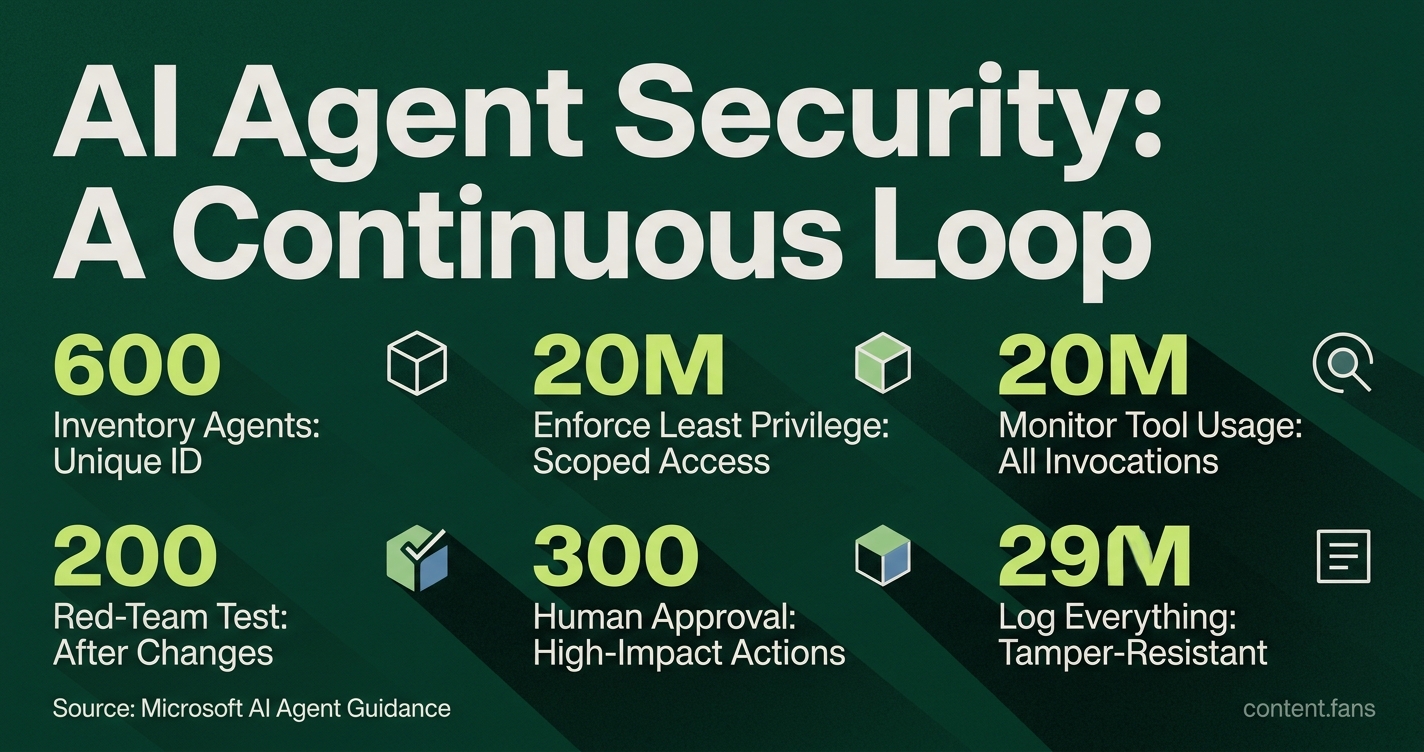
This lifecycle approach adapts established frameworks like NIST's AI RMF 1.0 (Govern, Map, Measure, Manage) for the high speed of AI development. Because threats like prompt injection can appear frequently, the governance cycle must accelerate. According to security research, a practical security cadence includes inventorying each agent, assigning it a unique identity, conducting red-team tests, deploying with least-privilege access, and monitoring all tool invocations.
Operating model: roles and checkpoints
Effective agent lifecycle management requires a clear operating model with defined roles and responsibilities. This model, which spans planning, building, testing, deployment, monitoring, and retirement, allocates accountability across key teams:
- Business owner - justifies the use case and approves retirement.
- Engineering - builds integrations and handles uptime.
- Security and IAM - enforces least privilege, logging, and kill switches.
- Data and QA - runs adversarial tests and quality evaluations.
- Operations - watches live metrics and escalates incidents.
This structure ensures every phase has clear ownership, with all decisions and approvals tracked in a central governance register that documents agent scope, credentials, and security gates.
Essential controls practitioners implement first
Leading organizations are converging on a set of essential security controls as a baseline policy for all production agents:
- No agent enters production without a named owner and inventory record.
- Credentials are short-lived, scoped, and never shared between agents.
- High-impact actions - financial transfers, external emails, database writes - require human approval.
- All prompts, tool calls, outcomes, and exceptions stream to tamper-resistant logs.
- Red-team tests repeat after every material change to the model, memory store, or tool stack.
These fundamental controls directly address leading threats outlined in the OWASP Agentic Top 10, such as goal hijacking, memory poisoning, and supply-chain attacks.
Monitoring for drift and abuse
Continuous monitoring and telemetry are critical for transforming static policies into an active defense system. Microsoft's guidance recommends logging the intent, parameters, and principal for every tool call an agent makes. To further harden security, security frameworks suggest sanitizing and labeling all prompts from external sources as untrusted. Combining these data streams with anomaly detection enables security teams to identify suspicious behavior, such as unusual tool chaining, repeated failures, or unauthorized data access.
Change and retirement governance
Agent governance must extend through the entire lifecycle, including change management and secure retirement. As agents can easily outlive their initial purpose, regular inventory reviews are essential to detect scope creep or behavioral shifts from model upgrades. The recommended practice is to re-run the full approval process when an agent's scope, tools, or owner changes. For decommissioning, security best practices recommend a formal process including credential revocation, log archival, and dependency cleanup. This rigor prevents abandoned agents and their credentials from becoming security backdoors.