
Meta Scales Back Employee Tracking After Backlash, Citing Battery Drain
Serge Bulaev
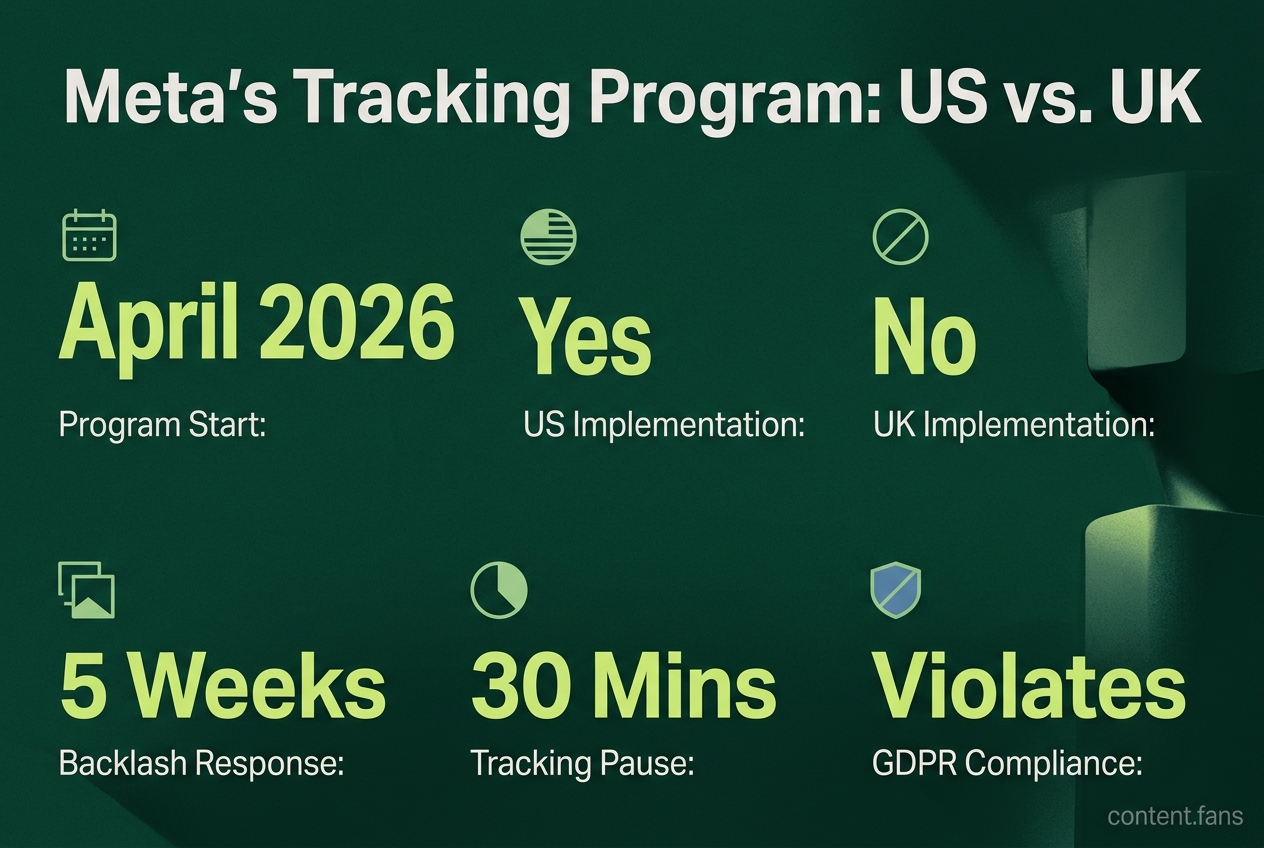
In April 2026, Meta started tracking employees' mouse movements, clicks, and keystrokes in the U.S. to collect data for AI, but quickly faced backlash from staff over privacy. Some employees worried this tracking might capture sensitive information, and the policy was not used in the UK because of stricter privacy laws there. After complaints, Meta allowed workers to pause the tracking for 30 minutes or ask for exemptions, though the tool still turns back on after a pause. There may be risks if private information like passwords is collected, and it appears Meta is still working on making the tool meet privacy rules in other regions.
Following significant employee backlash, Meta is scaling back its controversial employee tracking program that began in April 2026. The software, installed on U.S. employee laptops to harvest data for AI development, captured keystrokes, mouse movements, and screen content. According to a BBC News report, the initiative was presented as a research tool, not a performance monitor, but it launched without an opt-out option, sparking immediate privacy concerns.
The internal pushback centered on fears that the system could capture sensitive personal or client information. This widespread surveillance was never implemented in the UK, where strict GDPR rules require transparent and proportionate monitoring, including a mandatory Data Protection Impact Assessment for such high-risk activities.
First retreat after five weeks
Meta scaled back its employee data collection following significant internal backlash over privacy concerns and the lack of an opt-out. The company introduced new controls in response to employee backlash and privacy concerns for its U.S.-based workforce.
The company formally responded five weeks later. An internal memo on June 2 from VP Stephane Kasriel, detailed by AI Weekly, introduced two key concessions. Employees can now pause the tracking for 30-minute intervals or request a full exemption through management. While Meta framed the update as a response to feedback that would also reduce battery drain, the tool reportedly defaults back to "on" after each pause.
Why the UK rollout stalled
The decision to exclude the UK from the program stemmed from legal compliance challenges. Meta's legal team reportedly determined that blanket recording of employee activity would likely violate core UK GDPR principles of "data minimisation" and "purpose limitation." Under UK law, employers must demonstrate a specific, lawful necessity for monitoring and provide advance warning to staff. Proceeding without this clear legal basis would have exposed Meta to investigation by the Information Commissioner's Office (ICO) and potential significant fines.
What the system captures and why it matters
While the software logs low-level input events rather than entire files, the captured data streams present significant risks. Keystroke logs, in particular, could inadvertently capture sensitive information, such as passwords being typed into internal systems. If this data were to be included in an AI training set, Meta would be legally obligated to scrub or hash the information to prevent a data breach. Privacy experts warn that failure to properly sanitize such data could trigger breach disclosure requirements.
Employee sentiment and industry context
The internal reaction was described as "weeks of angry pushback," with employees questioning why Meta didn't use synthetic data or an opt-in pilot program instead. This incident reflects a broader industry tension, with Meta's large-scale deployment serving as a key test case. According to industry reports, repurposing worker data for AI training can conflict with existing privacy commitments, with keystroke logs being particularly sensitive information.
Currently, the 30-minute pause and exemption request process are the only safeguards available to employees. Meta continues to navigate compliance challenges in other regions, with no public timeline for expanding the program beyond the U.S.