
Meta reportedly plans Neocloud to sell AI compute and models
Serge Bulaev
Meta may be planning a new business, called 'Neocloud', to sell AI computing power and models, but this idea is still being discussed and no launch date has been set. Reports suggest Meta could rent out extra GPU power or offer access to its AI models, but insiders say the plan could still change. Mark Zuckerberg has said selling excess capacity is possible, and analysts note Meta is trying to use both outside and in-house resources for its AI needs. There are technical challenges Meta must solve before launching, and there is no detailed information yet about when or how the service might start. Overall, it appears Meta is exploring this idea but has not made any firm decisions.

Meta reportedly plans a cloud computing business to sell AI compute and models, an initiative officially known as "Meta Compute" that would position the social media giant as a major cloud infrastructure provider. The strategy centers on monetizing surplus data center capacity by offering raw GPU power and access to its powerful AI models, a move that could significantly disrupt the existing cloud market.
What is Meta's "Meta Compute" and When Might It Launch?
Meta is exploring a new business, officially called "Meta Compute," to sell its excess AI computing power and models to external customers. This initiative was announced in January 2026 and aims to monetize massive infrastructure investments.
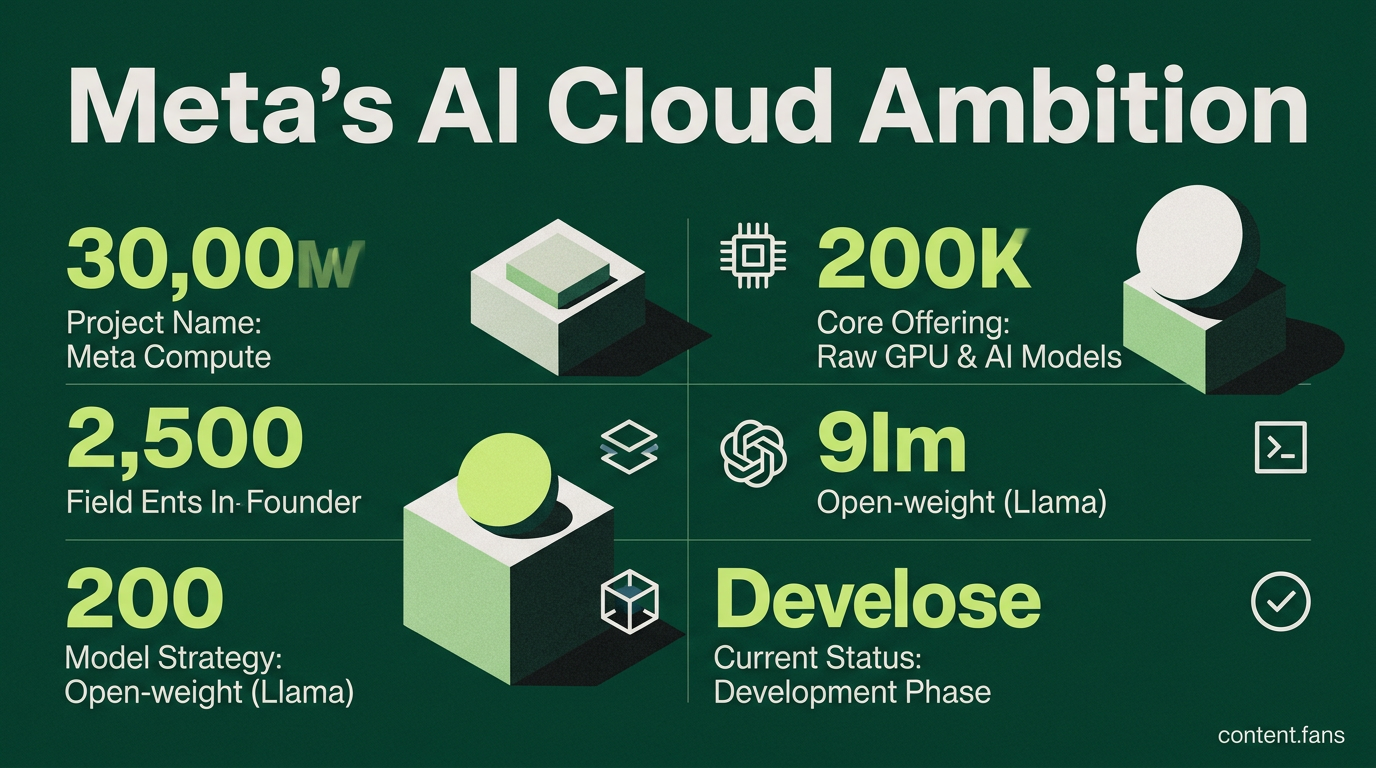
The initiative remains in the development phase. Executives have not committed to a launch timetable and no enterprise sales unit currently exists. However, CEO Mark Zuckerberg has publicly stated that selling surplus capacity is "definitely on the table," confirming the company's strategic interest.
Why Is Meta Pursuing a Cloud Strategy Now?
The timing reflects both a significant financial opportunity and a pressing strategic necessity in the AI infrastructure market. Meta has invested heavily in data centers for its own products, but with this capacity often having low average utilization, monetizing idle GPU cycles offers a direct return on capital expenditures.
Strategically, Meta currently lacks a commercial cloud arm but is actively launching one (Meta Compute) to compete with Google, Amazon, and Microsoft. This creates a vulnerability where Meta must pay competitors for burst capacity while being unable to monetize its own infrastructure. Meta is considering CoreWeave's business model as it develops its own cloud computing strategy.
How Would a Meta Cloud Differ from AWS, Azure, and GCP?
Meta's potential cloud service would compete directly with the hyperscale incumbents but with a fundamentally different, AI-native approach.
| Aspect | Meta's Potential Approach | Traditional Hyperscalers |
|---|---|---|
| Core Offering | Raw GPU rental & managed AI models | Broad-spectrum cloud services |
| Model Strategy | Emphasis on open-weight models (Llama) | Focus on proprietary models & APIs |
| Infrastructure | AI-native architecture from the ground up | General compute adapted for AI |
| Data Advantage | Potential for social graph integration | Established enterprise data ecosystems |
By offering high-performing open models like Llama at competitive rates, Meta could commoditize the "intelligence layer" and force competitors to compete on infrastructure price rather than exclusive model access.
Key Technical Hurdles: Isolation, Orchestration, and Pricing
Launching a secure and efficient multi-tenant cloud presents several major technical challenges that Meta must solve:
- Tenant Isolation: Moving beyond basic Kubernetes namespaces is critical to prevent "noisy neighbor" performance issues and ensure robust security. This includes developing tiered isolation models for customers with high-regulatory needs.
- Unified Orchestration: A seamless control plane is required to automate onboarding and manage workloads across Meta's global data centers and partner sites, reducing the operational overhead common in today's GPU rental market.
- Utilization-Based Pricing: Analysts expect Meta to pioneer more sophisticated pricing based on actual GPU occupancy rather than simple hourly reservations, better aligning costs with value.
Competitive Landscape and Market Impact
Meta's entry would transform the cloud market from a three-player to a four-player race, with major implications:
- For AWS and Azure: A direct threat to high-margin AI infrastructure revenue. Aggressive pricing from Meta could trigger a price war on GPU instances, while its open model strategy weakens the value of proprietary algorithms.
- For Google Cloud: A complex dynamic will emerge. Google, a key AI training partner for Meta, will have to balance this relationship while competing with Meta's new cloud service.
- For Enterprise Customers: The move is a net positive, promising downward pressure on pricing and reduced vendor lock-in. A strong fourth competitor validates multi-cloud AI strategies.
What to Watch Next
The initiative remains strategic rather than imminent. Observers should monitor for key signals that the project is moving from exploration to execution:
- Hiring Signals: The formation of a dedicated enterprise sales team.
- Product Documentation: The publication of official documents detailing pricing, isolation tiers, or service level agreements.
- Partner Strategy: Clarity on how Meta will balance its roles as both a major buyer from and a direct rival to other cloud providers.
While Meta Compute remains in development, Meta possesses many of the necessary components: significant GPU fleets, world-class models, and a history of open-source leadership. The key question is not if, but when and how, it will assemble them into a service that reshapes the cloud market.