
Meta expands AI tools across Instagram and Facebook apps in 2026
Serge Bulaev
Meta is testing new AI tools in Instagram and Facebook apps in 2026, including a shopping assistant, 24-hour support bot, and ad personalization, but how much personal data is used is not fully clear. Bluesky users pushed back against its first AI assistant, with many blocking the bot, and the platform now focuses on features that do not use more AI. The Washington Post has started working with independent video creators instead of hiring more staff, letting creators keep their work and share it on different platforms. These moves suggest that people may prefer AI features when they feel optional and transparent, rather than forced or unclear.

As Meta expands AI tools across Instagram and Facebook apps, the digital landscape is shifting. This analysis explores how social media giants are implementing or resisting new AI features to drive deeper user engagement. We'll examine the specific tools being tested, the user experience, and the critical questions surrounding data transparency and privacy.
How Meta is Integrating AI from Chat to Checkout
Meta is testing several consumer-facing AI tools inside its apps, including a personalized shopping assistant in Messenger, a 24/7 support bot for account issues, and a system that uses chat history to tune ad and feed content. These features aim to create a more integrated and personalized user experience.
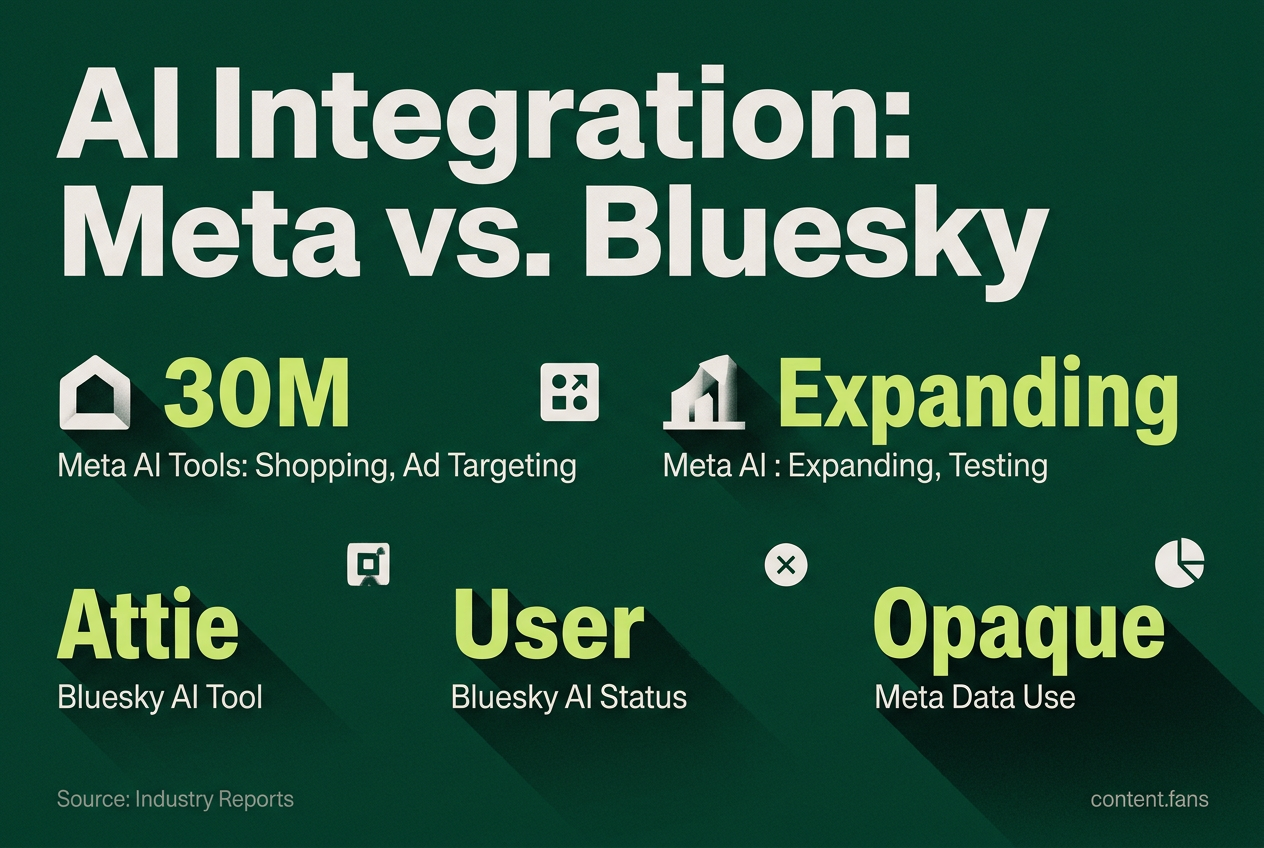
According to industry reports, Meta has been expanding its consumer-facing AI initiatives. Key experiments include:
- Meta AI Shopping Assistant: Limited testing in Meta AI web for US users shows product carousels from shopping queries, though no profile data personalization has been specified [Meta AI Shopping Tool].
- 24/7 AI Support: This automated assistant provides 24/7 AI support for general help including scams and content issues as part of AI enforcement systems [Boosting Your Support and Safety].
- Ad Targeting via Chat History: According to industry reports, conversations with Meta AI may influence the ads and content users see, a strategy the company describes as "natural" targeting.
While Meta has disclosed some aspects of its AI personalization, the full extent of data used for personalization remains unclear. Researchers highlight that the company possesses vast behavioral data across its apps, making the underlying AI logic largely opaque.
Bluesky's AI Rollout Reveals a User Trust Deficit
The decentralized platform Bluesky encountered significant user resistance to its AI integration. According to industry reports, its AI assistant "Attie" faced considerable backlash from users seeking to avoid the algorithmic surveillance common on other platforms [Attie Backlash]. Bluesky's roadmap emphasizes Discover feed improvements, longer video support, real-time features, and creator monetization. While creator monetization is on the roadmap, the reception to AI features indicates deep user skepticism toward algorithmic integration.
The Washington Post's Pivot: A Creator Network Model
According to industry reports, The Washington Post has launched an innovative creator unit. This model partners with independent video creators for limited series, allowing them to retain their intellectual property while co-publishing content on the Post's website and their own channels [creator-led video deals]. The structure, first sponsored by Samsung, minimizes costs by leveraging creators' existing equipment and avoiding fixed salaries. While official viewership data is not yet public, a Reuters Institute report indicates that approximately half of global media leaders are exploring similar creator partnerships. The Post is further supporting this strategy with related products, including a creator-focused newsletter and planned events.
Key Takeaways: Transparency and User Choice are Crucial
The contrasting approaches of Meta, Bluesky, and The Washington Post reveal a critical insight: success in the digital space may depend less on AI capabilities and more on user perception. While Meta forges ahead with rapid AI integration, Bluesky's experience demonstrates the power of user resistance. The Post's creator-led model highlights an alternative path to growth. Ultimately, audiences are more likely to embrace new technologies when they are optional, transparently implemented, and offer fair value.
What new AI-driven shopping features is Meta rolling out on Instagram and Facebook?
Meta is quietly testing a conversational AI shopping tool inside the Meta AI chatbot. When you ask for product ideas - for instance, "puffer jacket recommendations" - the bot embeds real listings from Meta's business catalog directly in the chat. Limited testing in Meta AI web for US users shows product carousels from shopping queries, though no profile data personalization has been specified. The goal, according to industry reports, is an agentic shopping experience that feels "uniquely personal" across Instagram, Facebook, WhatsApp and Messenger.
Read more
How does Meta's new AI Support Assistant improve account safety and user help?
Meta has been offering a 24/7 AI Support Assistant inside Facebook and Instagram apps, plus the desktop Help Centers. It handles common issues like account login problems and content-flag appeals, providing 24/7 AI support for general help including scams and content as part of AI enforcement systems. Meta says the assistant combines AI scale with human oversight and leaves Community Standards unchanged, while safeguarding against bias through rigorous testing and built-in appeal workflows.
More details
Will my private conversations with Meta AI be used to personalize the ads I see?
According to industry reports, user conversations with Meta's AI assistant may feed the ad-targeting engine. The company frames this as a "natural" extension of personalization already driven by your history, interests and relationships. While the scope of data used beyond chat logs is not fully disclosed, Meta says the result is ads and content that feel more relevant across Facebook, Instagram and other Meta apps.
How is Meta ensuring transparency in these new AI tools?
Meta publishes limited disclosures about its AI tools, though wider personalization details are often withheld. For support and moderation AI, the company spotlights accuracy checks, bias safeguards and appeal mechanisms yet offers no granular visibility into training data or error rates. Broader commitments include open-sourcing models for developers, but day-to-day users still see few explicit transparency dashboards inside the apps.
Can I opt out of Meta's AI personalization and still use the apps normally?
Meta has not announced a universal opt-out switch. Because ad and content personalization may lean on AI chat history, choosing not to engage the Meta AI assistant may reduce, but not eliminate, profile-based targeting. The company's stance is that existing ad controls (such as hiding ads or adjusting ad topics) remain available in settings, yet full disconnection from AI-driven personalization is not currently an option.