
Indian Brands Adopt AI-Native Marketing to Measure Revenue, Not Clicks
Serge Bulaev
Indian brands are moving from using AI to help with marketing to letting AI systems run campaigns based on company goals. Experts suggest that tracking clicks is not enough, as most of the buyer's journey may still be unseen. New privacy laws make it harder to track people online, so brands now focus on using their own customer data and measuring real results like sales and customer value. Some brands are already using AI to suggest budgets, measure conversions, and link spending to revenue. Experts believe that those who best connect AI-driven work with clear, useful results may do better in the future.

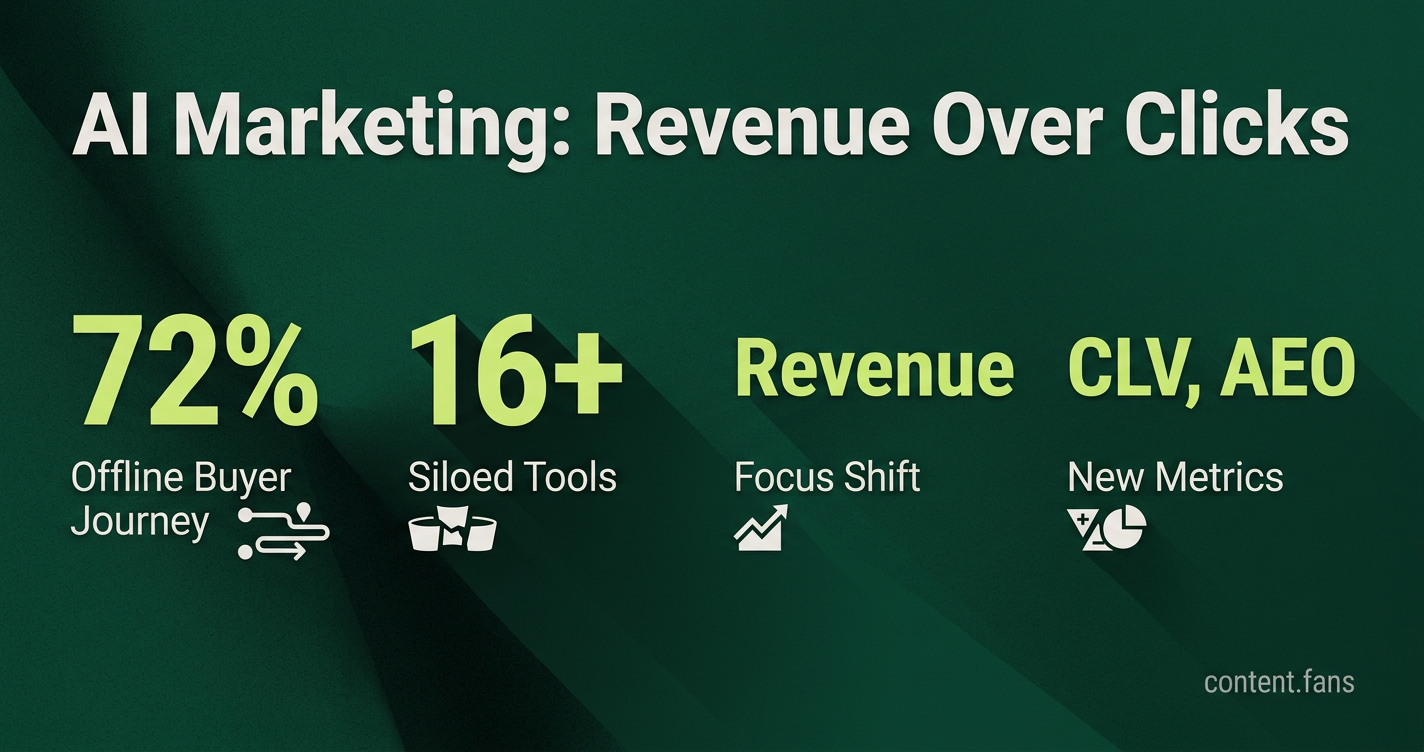
Many Indian brands are adopting AI-native marketing to solve a critical problem: traditional marketing measurement is broken. As they transition from AI-assisted tools to autonomous AI systems, the focus is shifting from tracking clicks to measuring direct revenue impact, especially since 72 percent of the buyer journey happens offline or in untraceable channels.
The solution, experts say, is AI-native marketing - a model where autonomous agents plan and execute campaigns based on business goals. This approach "automatically closes feedback loops," allowing each result to inform subsequent creative and strategic decisions, as explained by AI-native marketing principles.
Why the AI-native lens matters
Indian brands are adopting AI-native marketing to move beyond tracking simple clicks and instead measure tangible business outcomes like revenue and customer lifetime value. This shift allows them to prove ROI, navigate new privacy laws, and gain a competitive edge by optimising campaigns based on real performance data.
While many Indian marketing teams use AI, most only accelerate isolated tasks like copywriting. True value is lost when AI agents are added to fragmented tech stacks with 16 or more siloed tools. A unified architecture, however, allows AI to integrate customer data across all touchpoints to autonomously recommend budgets, channels, and timing, delivering a significant competitive edge.
Measurement gaps exposed by privacy laws and channel sprawl
With the Digital Personal Data Protection Act restricting third-party cookies and cross-app tracking, marketers must now rely on first-party data and contextual targeting. Despite this, vanity metrics persist. To counter this, new solutions like the ET MES 2026 framework provide deterministic attribution across TV, OTT, and digital video, enabling teams to measure conversions over mere reach.
Key measurement pain points cited by Indian practitioners:
- Fragmented journeys across retail media, influencers, and quick-commerce apps obscure revenue impact.
- Siloed campaign, CRM, and finance data slow optimisation cycles.
- CFOs demand proof of what each rupee delivered beyond impression counts.
Emerging metrics for AI-directed campaigns
AI-native platforms emphasize outcome-based metrics like pipeline contribution, customer lifetime value (CLV), and Answer Engine Optimization (AEO). As users increasingly query chatbots and voice assistants, a growing number of global teams now track AEO. In India, cross-screen measurement tools now connect top-of-funnel brand exposure directly to bottom-funnel sales leads, finally replacing the outdated click-through mindset.
What leading brands are doing now
As paid traffic costs increase, leading Indian brands are shifting focus to conversions, revenue, and retention. They are taking four practical steps to implement an AI-native measurement strategy:
1. Audit every platform where marketing data resides and create a single source of truth.
2. Secure consented first-party data to fuel AI recommendations.
3. Treat agents as builders that need strategic guardrails, not task helpers.
4. Pair outcome metrics with privacy-safe attribution methods like ET MES 2026.
Enterprise versus startup realities
Startups can build AI-native workflows quickly, but large enterprises face delays from IT reviews, compliance checks, and extensive sign-offs. Without integrated governance, these organizations add human checkpoints that limit the autonomy AI agents need to learn and optimize campaigns effectively.
The road ahead for Indian marketers
The future leaders in Indian marketing will be those who connect AI-native execution with accountable, revenue-focused metrics co-owned by sales and finance teams. As privacy laws tighten and new discovery channels emerge, the critical question is no longer if brands should adopt AI, but how they will measure its true financial impact. This fundamental shift will define marketing success for years to come.
What separates AI-native from traditional AI-assisted marketing?
AI-native marketing re-architects the entire campaign workflow instead of merely accelerating it. In AI-assisted setups, humans still assemble campaigns chunk by chunk while AI speeds up isolated tasks such as copy or image generation. In contrast, AI-native systems set goals and guardrails once and then autonomously plan, decide, and execute the campaign end-to-end. Each result is automatically fed back into the system, creating compounding learnings rather than resetting after every launch.
Why do most Indian dashboards still hide 72 % of the buyer journey?
Standard analytics tools are wired to show clicks, traffic, and impressions - vanity metrics that miss the "invisible 72 %" of consideration that happens off-platform. Indian marketers using traditional dashboards often impress CFOs with high reach numbers but fail to answer the sharper question: "What revenue did that ₹20 crore actually drive?" AI-native revenue dashboards unify CRM, creator, chatbot, and retail-media data to surface the full path from impression to rupee, allowing teams to prove every rupee in under three minutes.
How does the DPDP Act change what Indian brands can measure?
The Digital Personal Data Protection Act has made third-party cookies unreliable, cutting cross-platform tracking to a trickle. Brands now rely on first-party data, clean rooms, and CDPs. Measurement shifts from tracking users across the web to contextual targeting and consent-driven cohorts, making conversion value, ROAS, and customer lifetime value the only metrics that still paint a reliable picture.
Which new KPIs are becoming table-stakes in 2026?
- Answer Engine Optimization (AEO) - A growing number of teams now track how often their content surfaces inside AI assistants.
- Revenue-attributed creator pipeline - instead of influencer reach, brands monitor how much pipeline each creator actually influences.
- AI share-of-voice - real-time ranking against competitors inside ChatGPT, Gemini, and Perplexity prompts.
Marketers who operationalise these metrics gain significant content ROI improvements and revenue growth compared to teams still optimising for clicks.
What practical steps help an Indian team move to AI-native measurement?
- Audit data silos - list every platform where marketing data lives (ads, CRM, WhatsApp, Flipkart Ads, influencer links).
- Build a single source of truth - integrate campaigns, customer feedback, sales pipeline, and budgets into one AI-ready stack.
- Grant AI limited autonomy - let agents execute routine A/B tests and budget re-allocation while humans focus on high-impact strategy, audience logic, and authentic local voice - the elements many Indian consumers say make them prefer homegrown brands.