
Google Search shows extreme ranking volatility in late April 2026
Serge Bulaev
In late April 2026, Google Search rankings showed very high volatility, with tracking tools reporting big changes for several days. This may be due to Google continuing to adjust its ranking system after the March 2026 core update ended. Some analysts suggest these changes are not a new algorithm, but further tweaks. Site owners noticed large drops in visibility for affiliate and health sites, while major brands mostly stayed stable. Experts recommend watching for sudden ranking shifts and drops in website traffic, as ongoing changes may still affect results.

Reports of extreme ranking volatility in Google Search in late April 2026 dominated SEO discussions as tracking tools signaled major algorithmic shifts for several consecutive days. This instability is widely believed to be an aftershock or recalibration of the March 2026 core update, as documented in an analysis from Search Engine Roundtable. Analysts suggest these are continuing tweaks rather than a new, formal algorithm launch.
What the data showed
According to industry reports, the late April 2026 volatility manifested as significant shifts in Google's search results, with ranking tools measuring severe fluctuations. Metrics from SEMrush, Sistrix, and MozCast all spiked to 'very high' levels, indicating that a significant percentage of top-ranking pages were changing positions over a short period.
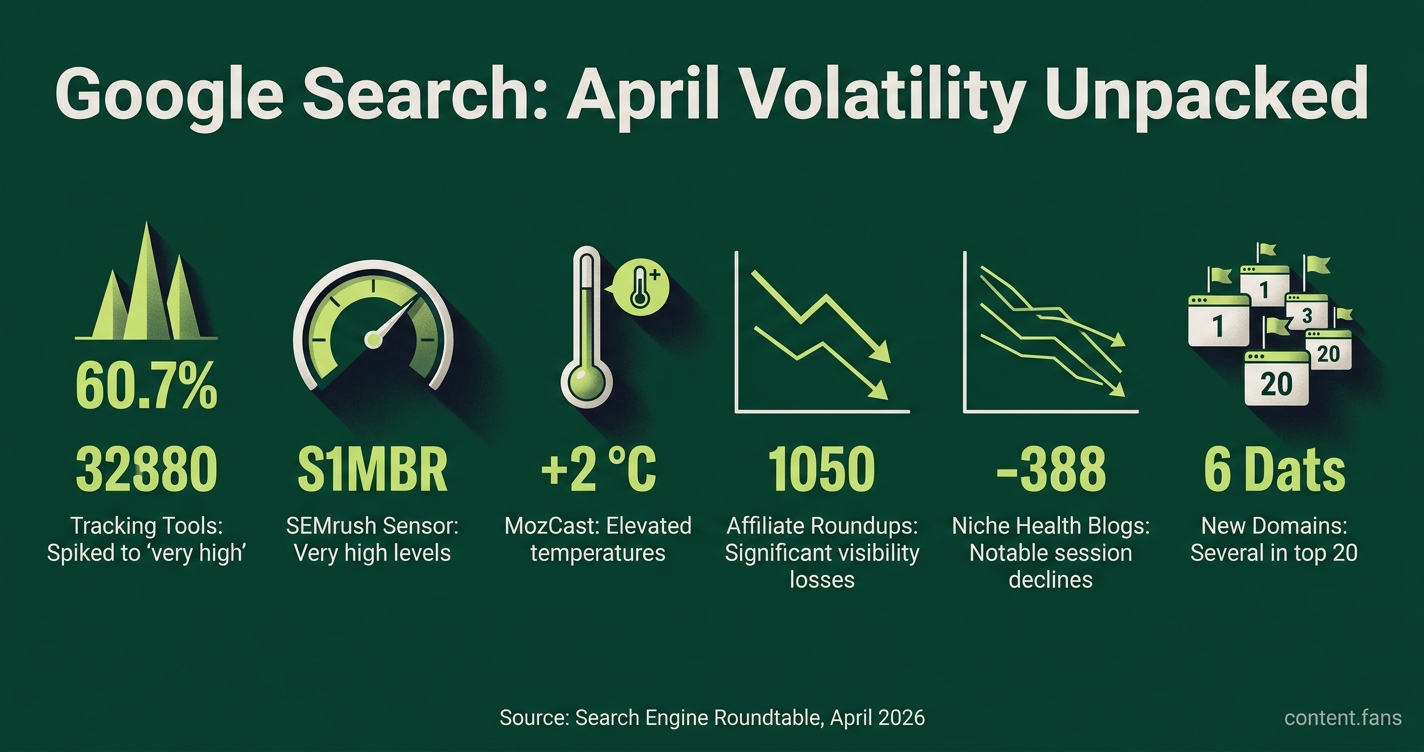
Key industry sensors confirmed the turbulence. SEMrush Sensor readings reached very high levels across multiple categories, while MozCast registered elevated temperatures - a sign of major flux in top-10 results. This event continues a trend of what some analysts call "permanent volatility" seen throughout the year, with numerous ranking swings recorded in January, February, and March.
Possible drivers
Industry analysis suggests the volatility stems from Google continuing to refine its quality signals after the March core update. The algorithm appears to be elevating sites with strong brand authority, such as clinical health sources and direct retailers, while de-emphasizing intermediaries. These ranking shifts are believed to be distinct from recent spam or Google Discover updates, as Google has offered no official comment.
Impact signals from the field
Webmaster forums and social media channels reflect a clear pattern of impact:
| Observation | Reported effect |
|---|---|
| Affiliate "best of" roundups | Significant visibility losses |
| Niche health blogs | Notable session declines |
| Major retail brands | Small gains or flat |
| Newly launched domains | Several new entries like .lol (#5), .vip (#14), .cn (#15), .co (#19) appeared in top 20 for March 2026 |
SEO consultant Lily Ray noted that more volatility occurred in the weeks after the core update concluded than during the rollout itself. She advises publishers to focus on auditing thin content and improving off-site brand signals to build resilience.
What site owners are monitoring now
To navigate the ongoing changes, experts recommend closely monitoring these key metrics in Google Search Console:
- Sudden Position Changes: Isolate queries where average positions have shifted by five or more spots.
- Impression Losses: Identify groups of URLs losing impressions across both desktop and mobile devices.
- CTR Drops: Correlate any significant drop in aggregate click-through rate with the volatility spikes reported by tracking tools.
Context within 2026's nonstop churn
This latest flare-up reinforces the idea that Google has shifted from periodic, named updates to a state of continuous, daily adjustments. As detailed in analyses from Search Engine Roundtable covering April and March volatility, the search landscape is now in constant flux. The late-April volatility serves as a stark reminder that significant ranking changes can happen at any time, even immediately following a major confirmed update.