
Mars integrates $250M fund, capex to boost decarbonization
Serge Bulaev
Mars is combining capital spending for factory upgrades with a $250 million sustainability fund to help cut emissions while continuing to grow. This approach may help Mars and its suppliers meet energy goals by making it easier to finance low-carbon technologies. Reports suggest that more CFOs expect bigger returns from sustainability projects and plan to increase green spending, though many still see these efforts as a cost. Mars appears to align its investments with equipment renewal, and uses supplier finance programs to encourage emissions cuts in its supply chain. These actions might become common as more companies see benefits in linking capital planning with climate goals.

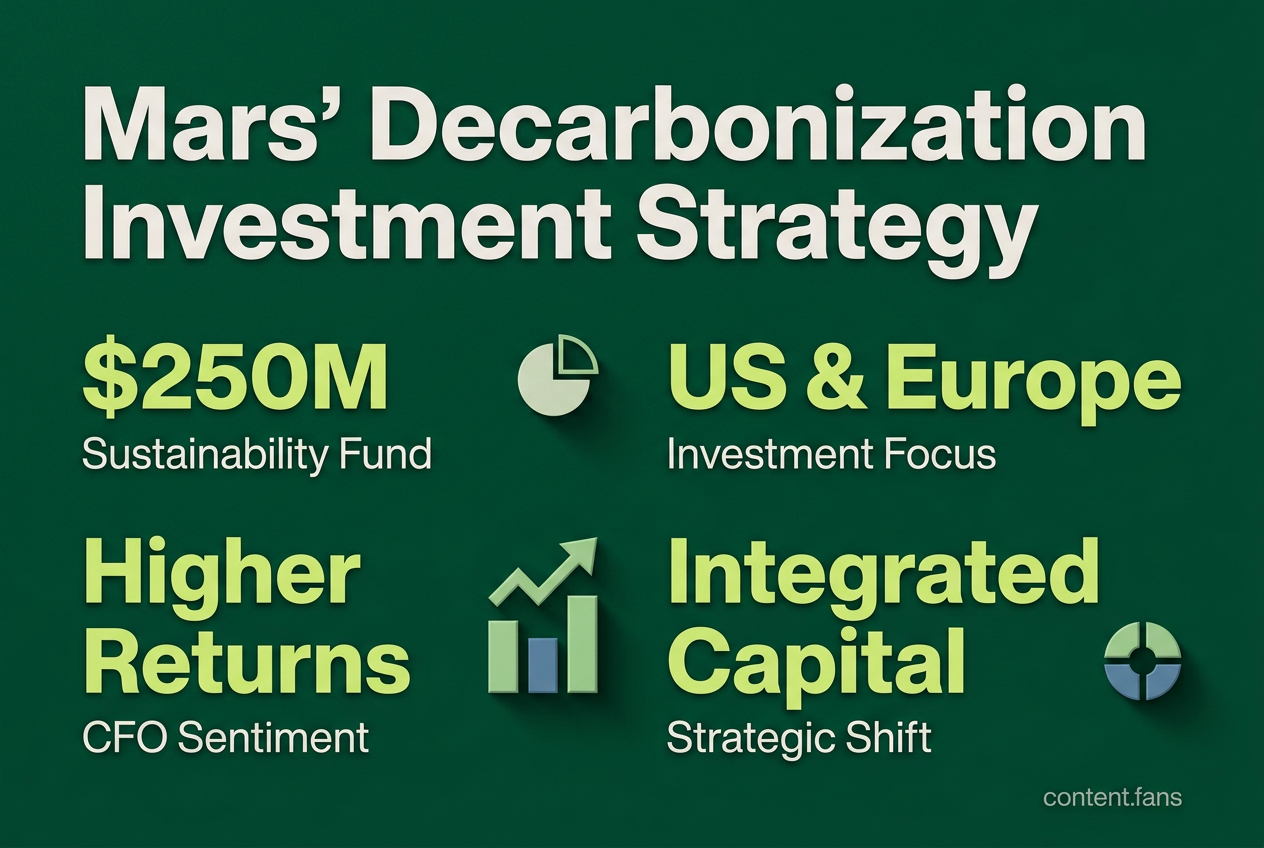
To accelerate corporate decarbonization, Mars integrates its US$250 million Sustainability Investment Fund with its capital expenditure (capex) strategy. By pairing this fund with major manufacturing investments across the U.S. and Europe, the company can finance both factory modernization and pivotal low-carbon supplier projects. This integrated model provides a powerful playbook for CFOs and sustainability leaders aiming to achieve ambitious emissions targets without sacrificing financial returns or growth.
Why Merge CapEx and Sustainability Funds?
Combining operational capital expenditure with a dedicated sustainability fund allows a company to align its growth and climate goals. This integrated approach embeds decarbonization into core business planning, enabling strategic investments in efficiency, electrification, and supplier initiatives without creating separate, competing budget requests or slowing execution.
An integrated capital strategy overcomes the common obstacle of separate budgets, where sustainability projects must compete for funding against other operational priorities. Industry reports indicate that business leaders are increasingly moving to strategically allocate capital to mainstream decarbonization efforts. This unified approach delivers two key advantages:
- Unified Planning: In-house upgrades and supplier initiatives can be sequenced under a single, coherent financial plan.
- De-risking the Supply Chain: Risk-sharing capital becomes available for Scope 3 partners who might otherwise struggle to secure affordable financing for green projects.
This strategic shift is backed by CFO sentiment. Industry surveys suggest that a significant portion of finance chiefs expect higher returns from sustainability investments than from traditional projects, with many planning to increase green spending. However, with a substantial number still viewing sustainability as a cost, integrated financial modeling is critical for securing project approvals.
The Mechanics of Integrated Capital Planning
Effective integrated capital planning aligns decarbonization spending with natural asset renewal cycles. Following expert guidance from firms like Verco Global, companies can sequence investments for maximum impact: starting with proven retrofits, moving to integrated solutions like heat pumps, and finally investing in R&D-intensive pilot projects. This tiered approach allows finance teams to balance near-term returns with long-term strategic goals.
A successful framework groups these financial levers into three core categories:
- Allocation: Directing CapEx toward essential factory upgrades, electrification, and smart energy controls.
- Financing: Using instruments like green bonds and sustainability-linked loans to reduce the cost of capital for projects with verified emissions reductions.
- Engagement: Implementing supplier finance programs that link preferential terms, such as invoice discounts, to demonstrated progress on emissions targets.
How Dedicated Funds Accelerate Scope 3 Reductions
A dedicated sustainability fund is crucial for tackling Scope 3 emissions within the value chain. By offering suppliers access to capital for renewable energy, equipment upgrades, or regenerative agriculture, companies can unlock more accurate emissions data and build a more resilient supply chain. The Mars fund, for example, extends financial support to agricultural and packaging partners beyond the company's direct operational control.
According to PwC, sustainability-linked supply chain finance is a powerful tool in this process. By tying financial incentives like reduced invoice costs to the achievement of carbon metrics, companies can translate climate goals into tangible economic benefits for their suppliers, encouraging proactive change over mere compliance.
Key Financial Indicators for CFOs
The business case for integrated capital planning is strengthening, with several key trends signaling a shift in financial leadership priorities.
| Financial Indicator | Supporting Evidence (2024 - 2026) |
|---|---|
| ROI Expectations | 92% of CFOs plan to increase sustainability investment; 99% reported increased revenue from sustainability strategies. |
| Capital Availability | Many CFOs plan to increase green spending, even amid policy uncertainty. |
| Payback Flexibility | Industry reports suggest that longer payback periods for strategic climate projects are becoming more acceptable. |
The Blueprint for Credible Decarbonization
These trends confirm that integrated capital strategies can satisfy both fiduciary duties and climate objectives, provided projects are accurately costed and tied to performance incentives.
Mars has made significant progress in renewable energy adoption and credits this success to its synchronized investment model. Other industry leaders are adopting similar playbooks. Prologis utilizes green bonds to finance energy-efficient buildings, while Levi Strauss has directed over US$2.1 billion in sustainability-linked financing to its supply chain partners. These examples show how blending internal CapEx with external funding creates a unified and effective decarbonization pathway.
Ultimately, a successful integrated capital strategy depends on three pillars: a disciplined project pipeline, an internal fund to address supplier needs, and financing terms tied to verified emissions reductions. As reports from leading organizations like PwC and the NGFS confirm, this comprehensive approach is becoming the new standard for companies committed to a credible and impactful climate transition.