
Mars Digital Store Labs tests AI to boost online candy sales
Serge Bulaev
Mars Digital Store Labs is testing ways to boost online candy sales by using AI and digital tools to show snacks to shoppers at the right time. Online impulse buying is lower than in stores, possibly because digital displays lack the same eye-level triggers. Mars is trying things like pop-up prompts, special offers, and smarter recommendations, which may help increase impulse buys if they feel relevant to shoppers. Early feedback from retailers suggests these tests could lead to more sales, but the results will be reviewed in late 2025. The best methods might depend on the shopping app and how shoppers react to digital prompts.

To boost online candy sales, Mars Digital Store Labs is testing AI-powered experiments in digital shelf placement, data analytics, and shopper insights. This initiative, part of Mars' broader digital push for 2026, aims to unlock online impulse purchasing in confectionery, according to a FoodNavigator-USA report.
The Labs collaborate with grocery partners to close the significant gap between in-store and digital basket building. They test methods for surfacing candy and snack SKUs at the critical moment shoppers review their carts, aiming to replicate the success of physical checkout aisles.
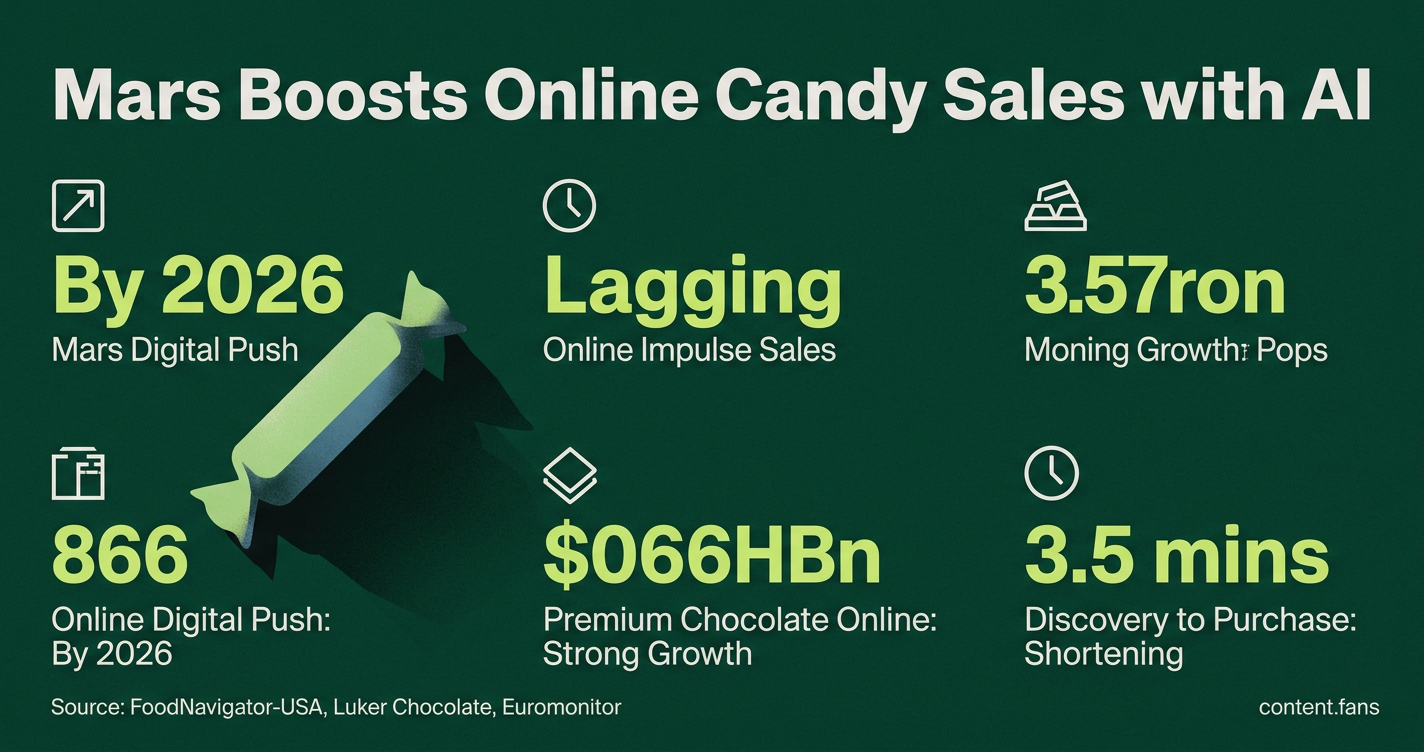
Why the online impulse category lags
Mars Digital Store Labs was created to solve the challenge of low online impulse sales for confectionery. The initiative uses AI and data analytics to test digital merchandising tactics, like targeted pop-ups and personalized recommendations, that recreate the effective "impulse moment" of physical checkout counters online.
Impulse purchases online lag behind those in physical stores because digital interfaces lack the eye-level disruption of a checkout lane. While many consumers discover new confectionery online, conversion for impulse items is significantly lower, a Luker Chocolate analysis highlights. This indicates brands must proactively create digital trigger moments instead of relying on end-of-funnel ads.
How Mars is testing
Mars and its retail partners analyze heat-map data to optimize the placement of add-to-basket prompts. Initial concepts focus on cart pop-ups, "frequently bought together" widgets, and seasonal banners timed to spikes such as Halloween or Valentine's. There is significant upside, as relevant prompts can capitalize on industry reports suggesting consumers may be more likely to make grocery impulse purchases online versus in-store.
Key Lab experiments include:
- Deploying sponsored shelf tiles that automatically rotate based on real-time stock levels.
- A/B testing ad copy to emphasize flavor profiles, portion sizes, or gifting occasions.
- Using limited-time digital coupons that expire within the shopping session to create urgency.
Industry context
Industry trends support this digital push. Analysts observe that platforms like TikTok Shop are shortening the path from discovery to purchase, driving brands to use creator content that links directly to retailer carts. Furthermore, with a growing number of shoppers buying snacks online - and many of them using subscription boxes - a successful impulse buy has the potential to convert into a recurring order.
The trend of premiumization is also powerful in e-commerce. Citing Euromonitor figures, Luker reports strong year-on-year growth for premium chocolate online, outpacing mass-market sales. Consequently, Mars' digital strategy includes featuring gifting bundles and single-origin bars to increase average order values.
Early retailer feedback
Initial feedback from retail partners is positive. They report valuing the shared dashboards that provide real-time attachment rates for promoted products. One grocery operator noted a double-digit sales lift on promoted SKUs when cart add-ons were powered by predictive recommendation engines instead of static ads.
Next steps being explored
Looking ahead, Mars is exploring the use of AI chat to integrate impulse suggestions directly within search results. Available original reporting suggests AI shopping-assistant usage is much lower in the U.S. general population (e.g., 14% in YouGov), while other surveys report different metrics such as 39% using generative AI for online shopping. The complete results from the initial pilots will be reviewed with retailers in the coming months. These findings will determine whether scaled roll-outs should target holiday peaks, routine grocery trips, or a combination. Continuous iteration will be necessary to adapt to each retailer's unique app layout and varying shopper tolerance for digital prompts.