
Marketers prepare for 2026 summer travel, consumer behavior shifts outdoors
Serge Bulaev
Marketers are preparing for the 2026 summer travel season, which may see consumers spending more time outdoors and making faster buying decisions. Studies suggest families will travel together, and people might want convenience and quick offers while on the go. Local businesses are encouraged to use tactics like flash sales, festival discounts, and social media contests. Experts recommend using different channels such as email, SMS, and updated online listings to reach customers. Working with local events and partnerships, as well as keeping visuals and promotions fresh, may help attract more visitors and boost summer sales.

Marketers are actively preparing for the 2026 summer travel season, as consumer behavior is projected to shift towards outdoor experiences, family trips, and more spontaneous purchasing. Based on insights from small business studies, this guide provides actionable strategies for local businesses to capitalize on these trends without overextending their budgets or staff.
Consumer behavior is moving outside
Summer travelers are spending less time online and more time enjoying outdoor activities and experiences. This behavioral shift creates more opportunities for spontaneous, in-person purchases, requiring businesses to focus on convenience, on-the-go relevance, and offers that can be redeemed quickly with minimal friction.
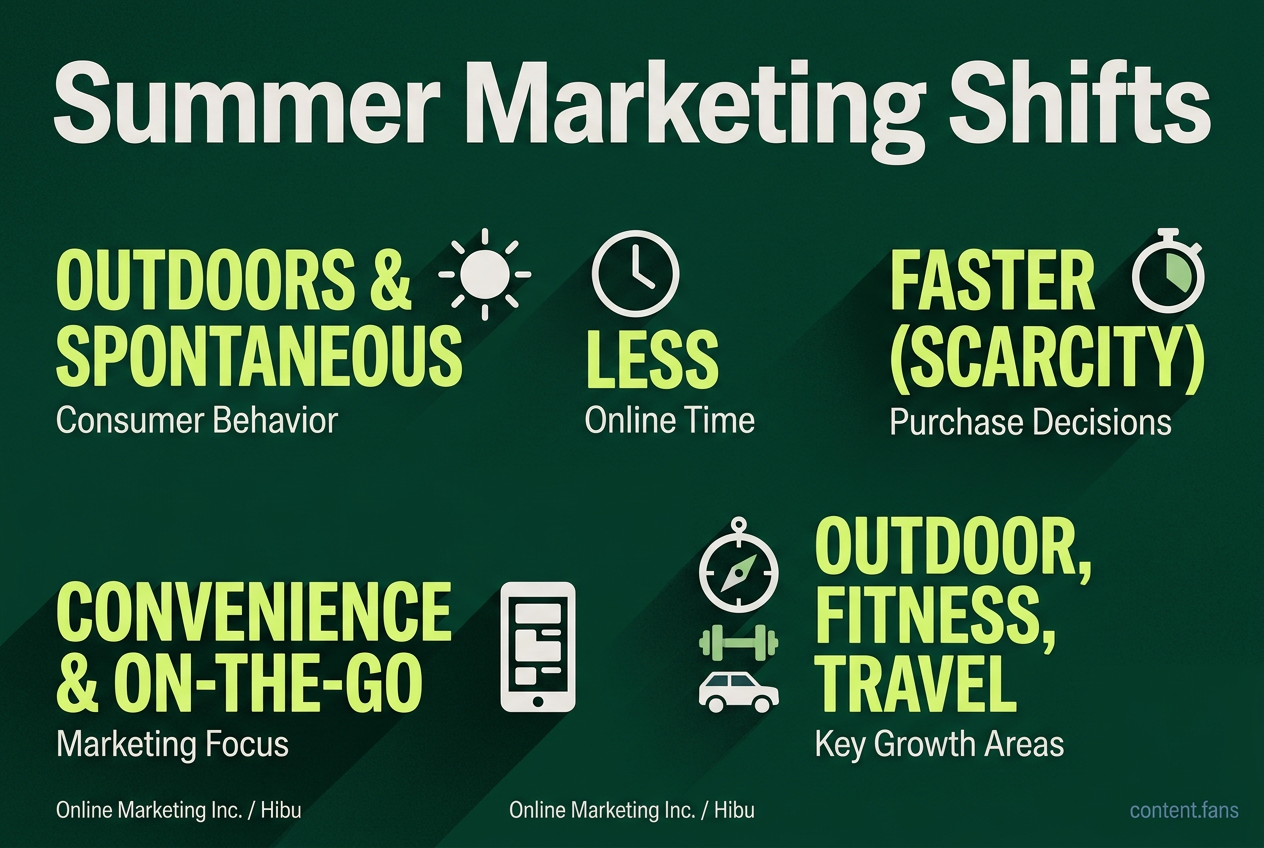
Studies confirm this trend: school breaks and vacations lead to more spontaneous, offline buying. As shoppers "shift their habits in summer - spending more time outdoors, traveling, and seeking experiences that align with the season," marketing must adapt (Online Marketing Inc.). The focus should be on convenient, easily redeemable offers. Key growth areas include outdoor services, fitness, and travel preparation. Seasonal events like Father's Day, July 4th, and back-to-school shopping also provide timely promotional opportunities (Hibu).
Summer Promotion Ideas For Local Businesses
Even a small team can capitalize on summer trends with a targeted set of promotions:
- Flash sale tied to the first 90-degree day, using SMS for two-hour reminders.
- "Show your wristband" discount during a nearby festival weekend.
- Vacation-prep bundle (luggage tags plus travel-size products) at a gift shop.
- Double-points day inside an existing loyalty app.
- Photo contest asking customers to post how they use the product on vacation.
To drive faster purchase decisions, consider incorporating scarcity with 24-hour coupons. Social media contests are also highly effective for lead generation.
Build an omnichannel plan
An omnichannel strategy ensures your marketing reaches customers wherever they are. A successful mix includes a mobile-optimized landing page, an updated Google Business Profile with summer visuals, direct mail with a QR code, and geofenced social ads targeting festival attendees. Timing is also critical; since summer audiences check devices outside of typical work hours, schedule emails for early mornings or late evenings. For immediate engagement, use SMS to announce last-minute events or openings.
Leverage events and partnerships
With events becoming a primary driver for travel, local businesses should capitalize on their proximity to venues. Offer event-specific packages like pre-show menus or parking deals. Focus your marketing efforts on a few key holidays for maximum impact. Partnerships are a cost-effective strategy; consider cross-promotions with local festivals or joint giveaways with neighboring businesses. To improve conversions with tourists, include practical details like parking information and extended hours in your marketing materials.
Keep listings and visuals fresh
Keep your digital presence vibrant and current. Refresh your website and Google Business Profile with bright, seasonal imagery and updated information, including summer hours and limited-time offers. This significantly boosts local search visibility for tourists searching "near me." Additionally, foster community engagement by encouraging user-generated content (UGC). Invite customers to share their summer photos with your products or at your location to generate organic social media reach at no extra cost.
Why are 2026 travelers moving outside the digital funnel?
70 % of summer visitors now start with a feeling - nostalgia, awe, calm - and then look for a place that delivers it.
That shift pushes them off screens and into parks, patios, pop-ups and main-street festivals where local businesses can intercept the moment.
How can a small budget still win the "experience first" traveler?
- Micro-bundle: pair a core product with a "festival survival kit" (water bottle, mini-sunscreen, map).
- Geo-fence only the venue footprint for the three hours before headliners - CPMs stay low and intent is sky-high.
- Swap discount codes for wrist-band scans; scanners feel exclusive, codes feel generic.
Which summer events deliver the highest dwell-time for nearby shops?
Food-and-music combos keep visitors in town 2.3 nights on average, compared with 1.4 for single-theme fairs.
Marketers who run "post-show late-night menus" or "cool-down lounges" capture that extra stay-spend.
When should creative switch from "get ready" to "stay longer"?
- Mid-July: flights are booked, closets packed - message flips to "keep the vibe alive".
- Swap "pack your bags" subject lines for "extend the vacation feeling".
- 24-hour uplift seen by brands that pivot visuals on 15 July versus waiting until August.
What metrics prove festival traffic is your traffic?
Track three festival-specific KPIs:
- Coupon scans tied to event wrist-band ID
- Google Business Profile "directions" taps inside a one-mile radius during event hours
- Email opt-ins tagged with the event name - repeat-open rate averages 38 % higher than generic summer lists.