
Marketers Adopt AI, Native Ads to Boost 2026 Spend ROI
Serge Bulaev
Marketers are moving from focusing on ad impressions to looking for real business results, with native ads and AI playing important roles. Recent research suggests native ads get more attention than banners, and using AI may help brands reach users better and faster. As cookies go away, advertisers might use page content and real-time data to place ads where they work best. Interactive formats, like quizzes and games, appear to increase engagement and help prove the value of ad spending. Experts suggest that clear data, quick content testing, and relevant stories could help brands turn their ad budgets into profit by 2026.

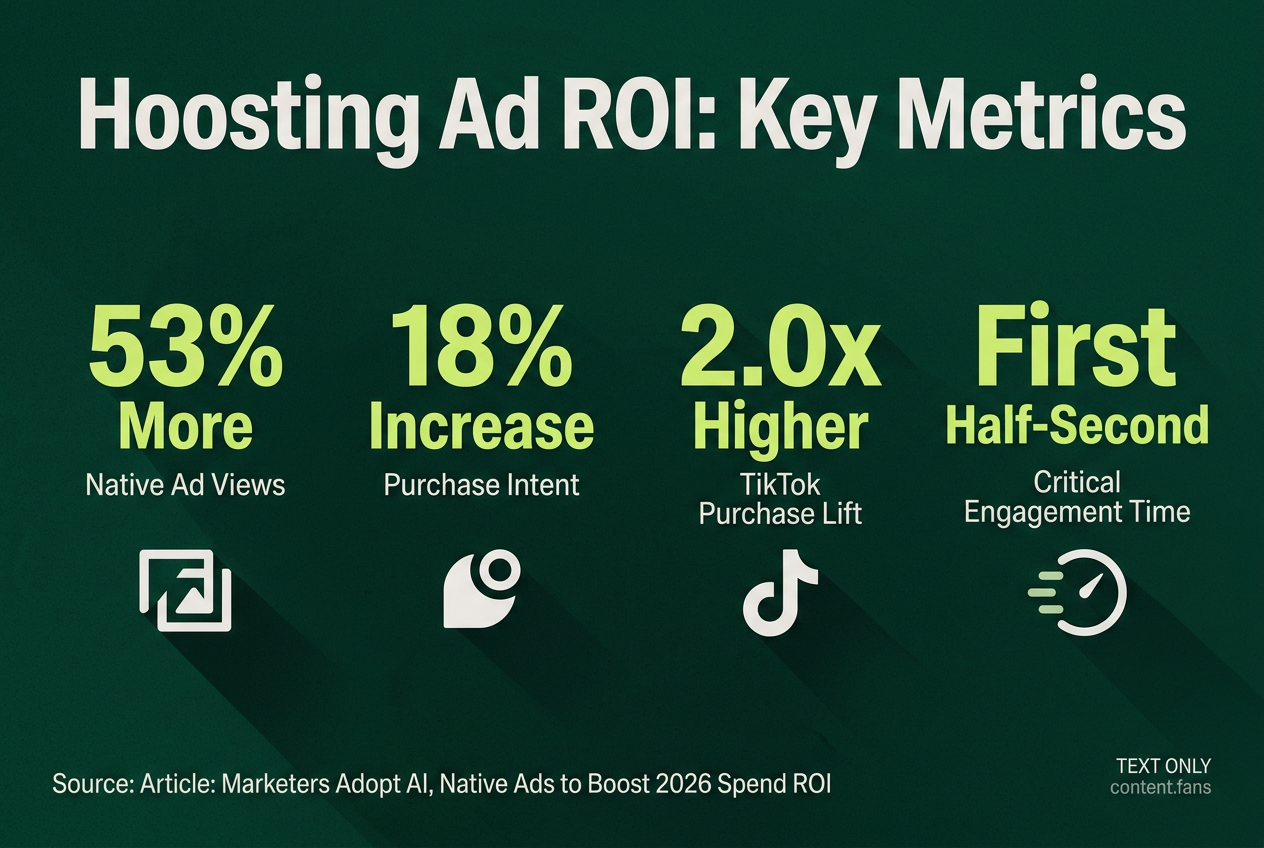
As marketers adopt AI and native ads to drive profit over impressions, paid advertising strategies are rapidly evolving. Consumers view native ads 53% more frequently than banner ads, and exposure produces an 18% increase in purchase intent. This guide explains how to leverage AI-driven creative and contextual placements to transform ad spend into measurable returns.
Generative AI meets machine-legible content
To boost ROI, brands are preparing content for Generative Engine Optimization with structured data and fast load times. This strategy involves using AI to create high volumes of authentic, 'native ugly' content while relentlessly testing the opening frames of ads to maximize user retention.
According to a report from Erlin AI on marketing trends, brands must optimize for 'Generative Engine Optimization' to ensure AI chatbots and voice agents recommend their products. Key steps include implementing structured product data, precise metadata, and ensuring sub-second mobile load times. In response, advertisers are building pages with advanced schemas and monitoring AI crawler activity.
Industry reports suggest an algorithmic preference for the 'native ugly' aesthetic - content that appears homemade and authentic over polished studio productions. AI tools facilitate this by generating same-day creative variations, reducing production cycles to mere hours. With the first half-second being critical for engagement, marketers now test and optimize opening frames before committing any ad spend.
Contextual targeting without cookies
In a world without third-party cookies, contextual targeting relies on predictive models that analyze page semantics and real-time user signals to place native ads effectively. Industry research indicates that high-attention impressions can significantly increase conversions over low-attention placements, shifting the focus from raw viewability to attention quality. Retail Media Networks (RMNs) are also becoming crucial, with a growing number of marketers planning to increase RMN budgets. These networks integrate first-party data with programmatic bidding to reach shoppers at the point of discovery.
Interactive formats that prove ROI
Interactive formats consistently deliver superior performance and clear ROI, as these case studies demonstrate:
- Mercedes: Interactive quiz campaigns have shown strong engagement rates and qualified lead generation in major publications.
- TikTok: TikTok activations with dedicated Search Ads Campaigns drove 2.0x higher purchase lift compared to initiatives without search. Emotional dimensions of TikTok ads positively affect purchase intention.
- Renault Austral: Gamified microsites have demonstrated significant improvements in brand awareness according to industry reports.
By using quizzes, dynamic visuals, and micro-games, these brands successfully extended user dwell time and captured first-party engagement data, providing the concrete revenue proof that leadership teams demand.
Creative volume as insurance against ad deficiency
A new challenge for marketers is 'ad deficiency,' the failure to produce enough fresh creatives to satisfy platform algorithms. Platform algorithms increasingly favor fresh creative content, requiring teams to produce substantial creative variations monthly. Generative AI is the solution, enabling brands to clone a successful ad's core 'psychological engine' while rapidly swapping out personas, settings, and offers. This allows for extensive message segmentation without costly reshoots.
Measuring business outcomes
The focus of measurement is shifting from vanity metrics to tangible business outcomes. Streaming TV and Connected TV (CTV) advertisers now prioritize sales and reservation signals over simple view counts. With dynamic creative optimization allowing for real-time campaign refinement, marketers are benchmarking native ads against concrete results like registrations and retail conversions instead of outdated CPMs.
Ultimately, success with native advertising in 2026 hinges on clarity, speed, and relevance. Brands poised to turn ad spend into profit will be those that master structured data for AI, optimize initial ad frames for immediate impact, and deliver compelling interactive content within trusted editorial environments.
How is AI changing the creative process for native ads in 2026?
AI transforms successful ads into durable 'psychological engines' by keeping the core concept while using generative tools to vary visuals, personas, and settings. This allows for the rapid launch of same-day creatives based on real-time trends. Platforms increasingly favor 'native ugly' content that looks authentic and user-generated, a style AI can efficiently mass-produce.
What volume of creatives should teams plan for in 2026?
Teams should plan for a substantial number of new creative assets per month. This counters 'ad deficiency,' as platforms like Meta and TikTok now reduce the reach of repetitive ads. Consequently, maintaining a diversity of creative hooks has become a critical factor for successful ad delivery, not merely a recommendation.
Which interactive formats are driving the highest engagement right now?
Quizzes and scroll-triggered stories are currently among the most effective formats. Interactive campaigns have shown strong click-through rates and engagement metrics across major publications. These formats succeed by feeling editorial and proving that user participation drives measurable results.
How do you segment audiences without third-party cookies?
Without third-party cookies, audience segmentation relies on contextual and predictive signals. AI analyzes page content and semantics to serve relevant ads based on a user's current activity. Furthermore, predictive models enable anticipatory marketing by forecasting user intent, allowing ads to be served before a need is even searched for.
Where is native advertising growing fastest?
The Asia-Pacific region shows strong growth driven by 5G adoption and short-form video. Globally, generative AI is a main catalyst for growth, as a significant portion of marketing professionals anticipate it will have a major impact on their 2026 media strategies.