
Impulse Space, Supabase, Coralogix raise $1.2B for enterprise infrastructure
Serge Bulaev
Impulse Space, Supabase, and Coralogix together raised about $1.2 billion in large funding rounds, most of it aimed at enterprise infrastructure and not consumer businesses. Venture funding reached $79 billion in the last quarter, driven by big investments in companies that already have revenue or strong demand. These deals may be happening because AI is putting pressure on backend systems, and enterprise customers want reliable, cost-effective tools. There may be risks for space tech companies due to high upfront costs and unpredictable government funding. Some experts suggest this trend might attract top talent to infrastructure startups and change how mergers and acquisitions happen in the industry.

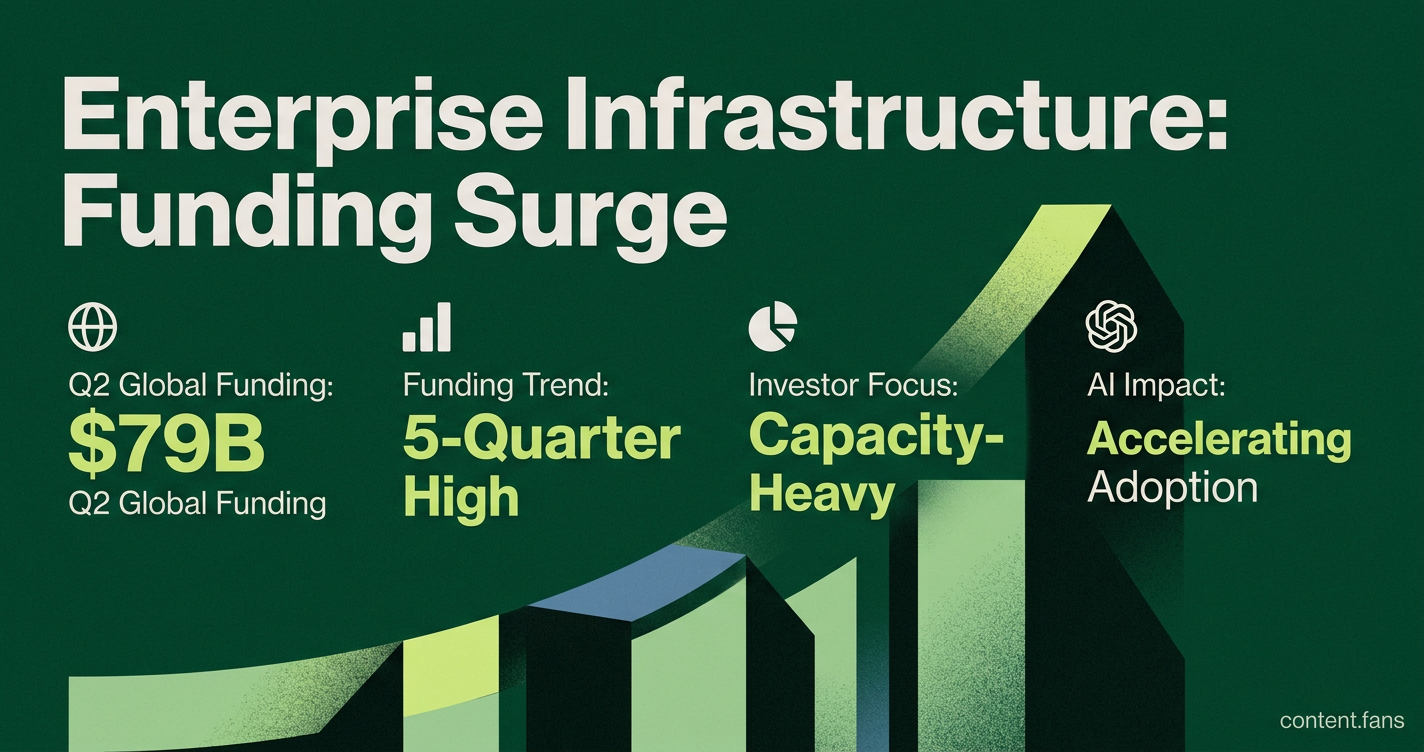
Recent significant funding rounds for Impulse Space, Supabase, and Coralogix suggest growing investor interest in essential enterprise infrastructure. This concentration of capital on capacity-heavy businesses over consumer tech comes as global funding rose to $79B in Q2, a five-quarter high fueled by AI's growth and mega-deals. This article unpacks the motivations behind these large investments, the associated risks, and the potential impact on talent and M&A.
Surge of Mega Late-Stage Rounds Across Space, Observability, and Infra
This wave of mega-rounds is driven by enterprise demand for scalable infrastructure capable of supporting intensive AI workloads. Investors are prioritizing companies with proven revenue and the capacity to provide reliable, cost-effective solutions for developer platforms, cloud observability, and orbital logistics, signaling a market shift to tangible performance.
A quick look at the week's largest tickets highlights sector focus:
- Impulse Space - significant funding for orbital logistics
- Supabase - major round for PostgreSQL-based developer infrastructure
- Coralogix - substantial investment for cloud observability
Confirming this trend, industry reports note that investors are now "pricing capacity" - like compute power and regulated infrastructure - over user growth metrics. This clustering of capital indicates that while late-stage funding is available, it is highly selective, favoring companies with established revenue streams or significant contracted demand.
Drivers behind the capital concentration
- AI's strain on backend systems: As AI adoption accelerates, it creates bottlenecks that require robust physical and governance infrastructure. Industry reports indicate that many of the largest Q2 investments target these foundational layers, from data centers to silicon.
- Demand for reliability and consolidation: Enterprise customers are prioritizing stability. Industry studies suggest that a significant majority of organizations plan to maintain or increase observability budgets, with many aiming to consolidate tools to manage costs effectively.
- A premium on proven models: Visionary pitches are being sidelined in favor of tangible results. According to industry analysis, investors are backing companies that can demonstrate existing partnerships, key certifications, and clear IPO potential.
Observability and developer infrastructure demand signals
The demand for unified platforms is clear. Industry research shows observability spending is driven by multi-cloud monitoring needs and cost optimization priorities. Concurrently, IBM notes that AI is accelerating the adoption of open telemetry standards for data portability. Coralogix's recent funding round demonstrates this principle in action, as it offers a unified, AI-ready monitoring platform at a predictable cost.
For developers, the trend is similar. Platform-engineering research highlights the rise of internal developer platforms (IDPs) that balance team autonomy with central compliance. Supabase's PostgreSQL-based service directly addresses this need, providing a managed stack that accelerates development while ensuring data integrity.
Risk landscape for space tech mega rounds
Space technology faces unique hurdles, primarily high capital intensity and long payback periods for in-space manufacturing and logistics, as noted by the OECD. Compounding this, industry analysis highlights unprecedented unpredictability in U.S. federal funding cycles, creating volatility for government-reliant firms.
Regulatory friction further complicates the landscape. Industry reports indicate that national security and foreign ownership reviews can add significant delays to M&A timelines. Market analysis also points to growing valuation gaps in capital-heavy sectors, which could challenge investors seeking future exits.
Market implications investors are watching
Early signals suggest three developing themes:
1. Talent Migration: These significant funding rounds act as a magnet, drawing senior engineering and policy experts away from established tech giants toward infrastructure startups that can now offer competitive compensation packages.
2. M&A Polarization: The acquisition landscape may become a barbell, with large corporations leveraging their deep pockets for strategic purchases while mid-market buyers are sidelined by rising diligence costs and complexity.
3. Increased Dilution Risk: As investment capital concentrates around proven operators, space startups lacking consistent launch schedules or secured government contracts may face harsher funding terms and greater dilution.
These developing themes are critical for investors to monitor, as they will likely shape deal velocity and valuations throughout the rest of the year.