
HR leaders link capability data to mission readiness, accelerate talent funding
Serge Bulaev
Research suggests that when HR leaders connect workforce skills data directly to business goals, executives may decide to fund talent improvements faster. The framework described moves through five steps, like identifying key goals, checking skill gaps, and updating training based on those needs. Technology helps spot skills gaps, but experts say interviews are still needed to check the data. Tracking progress with specific metrics every month appears to give leaders a clearer view of how ready their teams are. This process may help organizations make better decisions about talent and prepare teams for important missions.

HR leaders link capability data to mission readiness to prove their workforce can achieve strategic goals. This approach, which connects skills metrics directly to business outcomes, consistently accelerates executive approval for talent investments. A proven five-stage framework systematically converts abstract skills data into tangible operational readiness.
1. Mission analysis and capability inventory
Linking capability data to mission readiness involves a structured process. It starts by defining the organization's strategic objectives. Then, you identify the specific knowledge and skills required to achieve those goals. This creates a direct, evidence-based connection between your workforce's abilities and the company's mission-critical outcomes.
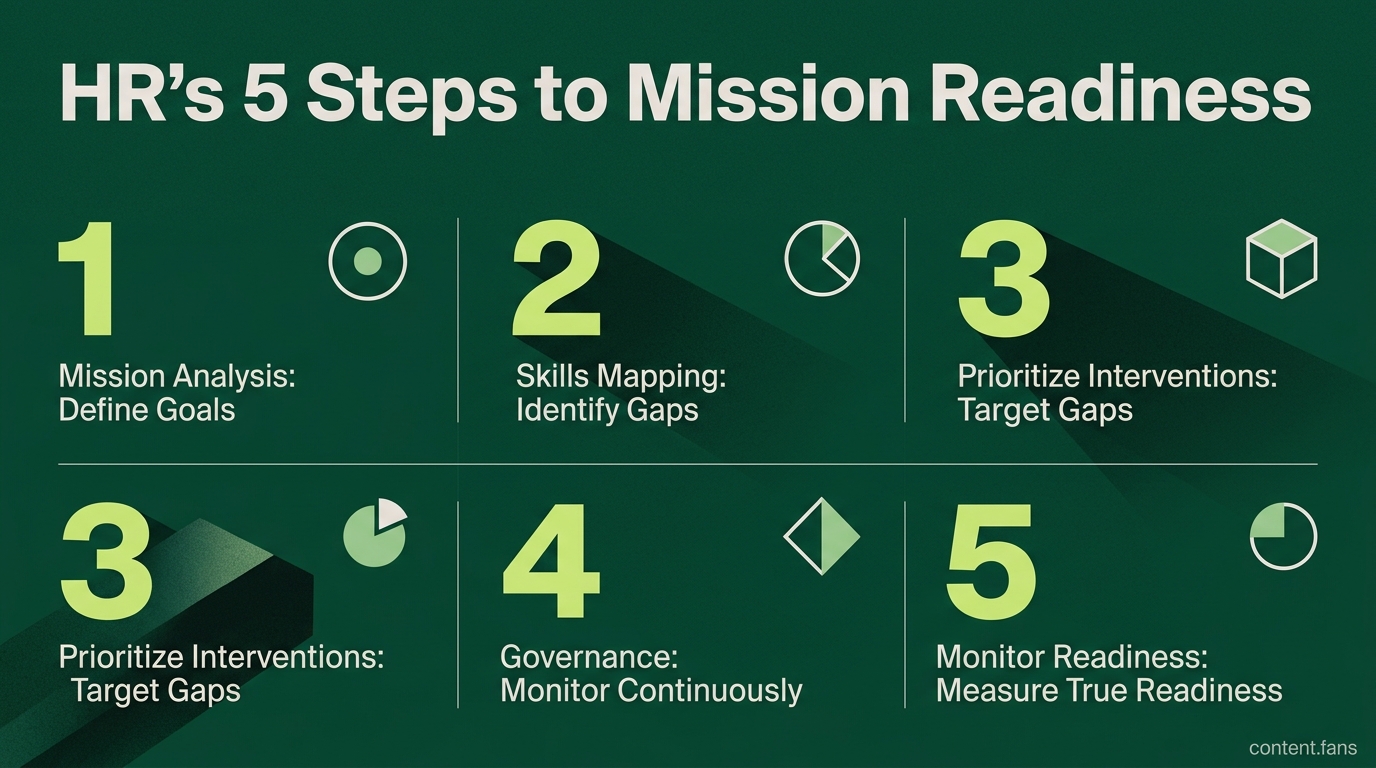
The first step is translating strategic goals into required competencies. Leading organizations have adopted a "people strategy is business strategy" mindset, mapping every role to growth drivers like revenue expansion and customer retention. This process begins by identifying critical business outcomes and then defining the capabilities necessary to achieve them.
2. Workforce skills mapping and gap analysis
Modern talent intelligence platforms powered by AI, like Eightfold AI and SeekOut, can automate skills mapping and gap analysis. These tools provide real-time skills inventories. However, analysts caution that their proficiency estimates are based on historical data, making qualitative validation through interviews essential.
3. Prioritised interventions
Once gaps are identified, prioritize interventions based on business impact. Organizations are redesigning their leadership programs to target specific competency gaps, helping to smooth cultural shifts during expansions. Effective interventions can range from targeted reskilling and role redesigns to strategic hiring.
4. Governance and iteration
Strong governance requires executive sponsorship and continuous monitoring by HR analytics teams. Advanced analytics tools allow for scenario modeling. This enables teams to proactively identify emerging skills gaps ahead of standard quarterly reviews.
5. Monitoring mission readiness
To monitor progress, shift from tracking course completions to measuring true readiness. Organizations are developing new models that focus on the coverage, depth, and resilience of critical knowledge. Companies combine these insights with traditional personnel metrics to get a complete picture of deployment strength.
Sample KPIs aligned to the framework
- Percent of mission critical roles validated at required competency level
- Time in days to stand up a fully staffed capability team after requirement signal
- Knowledge readiness score trend across high risk functions
- Critical grade fill rate compared with target strength
Reviewing this blend of metrics in regular cycles provides executives with clear visibility into current readiness and future risk. A disciplined approach to linking capability data with mission objectives builds executive confidence and ultimately accelerates funding for critical talent initiatives.
What makes capability data "mission-ready" instead of just "HR-ready"?
Mission-ready data starts with the mission, not the org-chart.
Translate each strategic objective into the knowledge, skills and behaviors required to deliver it, then tag every role in the workforce to those items. Leading organizations insist that every L&D dollar be traceable to a revenue or customer-outcome OKR; the result is a single operating model where talent investments are treated as business investments rather than HR expenses.
Which metrics convince executives to release talent funding the fastest?
Move from attendance counts to risk-weighted readiness scores.
Executives release budget faster when they see:
- Coverage of mission-critical knowledge across teams
- Depth of understanding (not just course completion)
- Resilience of knowledge (minimizing single-point-of-failure roles)
Traditional fill rates still matter for audit, but readiness indicators link learning spend to operational risk, the language finance speaks best.
How do we keep the diagnostic phase from stalling in spreadsheets?
Use AI talent-intelligence platforms that build living skills graphs.
Tools such as Eightfold AI and Workday Skills Cloud auto-ingest HRIS, project and labor-market data to map current skills in weeks, not months. Many organizations are adopting AI-powered talent intelligence to close critical gaps; early adopters report faster capability deployment compared with manual inventories.
What if we uncover more gaps than budget can fix?
Build a prioritized roadmap that ranks gaps by:
1. Mission failure risk
2. Customer or revenue impact
3. Speed and cost to close
Organizations are aligning leadership development to growth strategies by funding only the capabilities tied to business outcomes; they avoid spreading L&D too thin and accelerate time-to-capability for priority roles.
How often should the framework be re-run?
Embed quarterly capability reviews inside existing business cycles, with a light-touch monthly flash indicator on the two headline KPIs:
- Percent competency-certified in mission-critical roles
- Time-to-deploy capability teams
Leading organizations pair these metrics with iterative change-management sprints so HR becomes a standing agenda item for business-unit reviews instead of an annual compliance exercise.