
HR adopts behavioral data for AI workforce planning, skill mapping
Serge Bulaev
HR teams may start using behavioral data - like digital footprints from daily work - to plan for AI changes and skill needs by 2026. Early evidence from companies like IBM and Walmart suggests this data can help map real skills and make staffing decisions more accurate. Experts warn that strong rules and employee trust are needed to use this data safely, such as clear policies and human review for important choices. Personalized learning and reskilling may happen more often, but questions about fairness and privacy still remain. Ethical safeguards appear to be essential for these new HR practices to work well.

The use of behavioral data for AI workforce planning is increasingly transitioning from theory to standard practice. This data, the "digital trail that work leaves behind," empowers HR teams to map actual workflows before automation reshapes jobs, according to HR Executive. This evidence-based approach replaces headcount guesswork with clear insights into how tasks flow across roles. This shift is critical, as a McKinsey report notes that many companies currently lack a long-term view of workforce capacity. Organizations that adopt behavioral analytics early can proactively manage reskilling and avoid future talent gaps.
From digital footprints to skill maps
Behavioral data, captured from digital work artifacts like project histories and collaboration tools, allows organizations to infer employee skills dynamically. Instead of relying on static job titles, this approach creates a live inventory of capabilities, enabling more accurate, evidence-based planning for future workforce and reskilling needs.
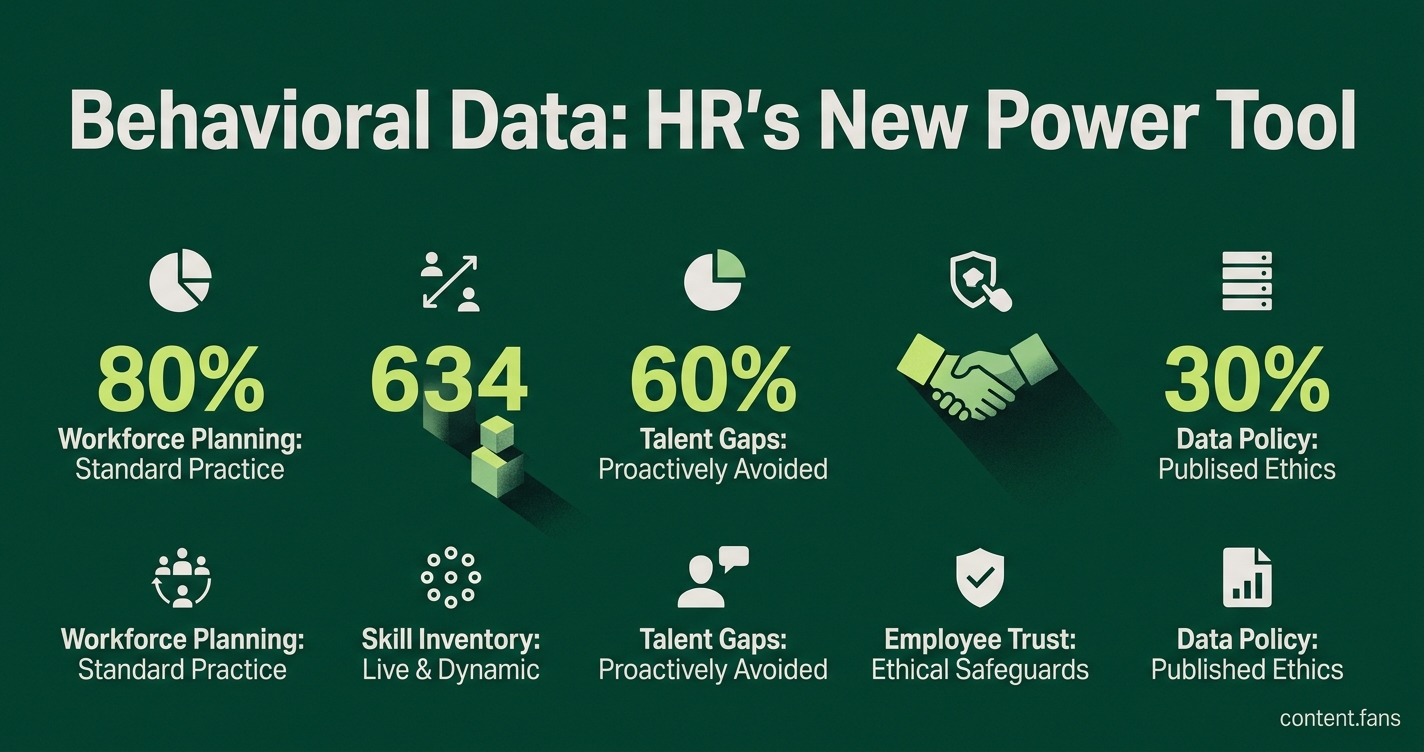
Leading companies like IBM, Walmart, and BT are already demonstrating how behavioral analytics can shape strategic workforce planning. IBM, for example, uses machine learning to infer employee skills from project histories, creating a dynamic talent inventory. Similarly, Walmart applied AI-driven staffing models to optimize schedules, which reportedly achieved significant labor cost reductions (Deloitte). Meanwhile, BT uses scenario modeling to compare current competencies with future needs, identifying the most efficient path for training or hiring. These examples highlight three practical applications:
- Derive skill supply from real work artifacts rather than static job titles.
- Track adoption rates, capacity shifts, and friction indicators after any AI rollout.
- Segment readiness by role, function, and tenure instead of imposing uniform timelines.
Governance and employee trust
The effectiveness of behavioral data hinges on robust governance and employee trust. Without strong ethical safeguards, the potential benefits quickly diminish. Experts from Gartner and MIT Sloan emphasize the need for clear purpose, data minimization, and transparent communication about how the data benefits employees. To maintain trust, organizations must implement non-negotiable guardrails. Key best practices cited in recent literature include:
- Publish an employee data ethics policy with permitted and prohibited uses.
- Maintain a central inventory showing what is collected, where it lives, and who can access it.
- Offer notice and, where feasible, opt-in or opt-out mechanisms.
- Restrict access through role-based controls and review entitlements yearly.
- Require human review for automated decisions that affect pay, promotion, or disciplinary outcomes.
Ultimately, as stressed by HR Executive, workers must trust that the insights will support their growth. Transparent communication is essential to prevent surveillance fears from derailing these powerful analytics initiatives.
Personalized learning paths
Beyond mapping current skills, behavioral data can create highly personalized learning and development paths. For instance, internal talent marketplaces, like the one at Schneider Electric, use this data to recommend projects aligned with an employee's observed strengths. This allows HR to identify underutilized capabilities and deliver targeted micro-courses, effectively integrating continuous reskilling into daily work. This represents a strategic shift from generic training catalogs to just-in-time, embedded guidance.
However, organizations must still address challenges related to algorithmic bias and evolving privacy laws. Best practices consistently call for regular audits, explainable AI protocols, and consultation with employee representatives. This demonstrates that ethical rigor is not a constraint on innovation but a prerequisite for earning the social license to operate large-scale behavioral analytics programs.