
How algorithms evolved from 9th-century math to shape today's AI
Serge Bulaev
Algorithms began with 9th-century math from al-Khwārizmī, whose name became the word "algorithm." Over time, the meaning widened from simple arithmetic to any step-by-step rules, especially in computer science. Today, algorithms may shape what people see online, sometimes leading to bias or echo chambers. Studies suggest that small changes in how content is ranked might affect what news or media people consume. The history of algorithms shows their rules have always helped organize how we find and use information.
Understanding how algorithms evolved begins with 9th-century polymath Muḥammad ibn Mūsā al-Khwārizmī. His Latinized name, Algoritmi, became the root for the term that now powers our digital world. A modern NASA summary shows how the spelling was later refined, but the core idea of step-by-step arithmetic calculation remained.
Modern readers encounter algorithms with every refreshed newsfeed or new song on a playlist. The word's long journey from ancient arithmetic to complex computer procedures highlights why understanding its history is crucial for discussing modern AI design and its societal impact.
From al-Khwārizmī to the computing lexicon
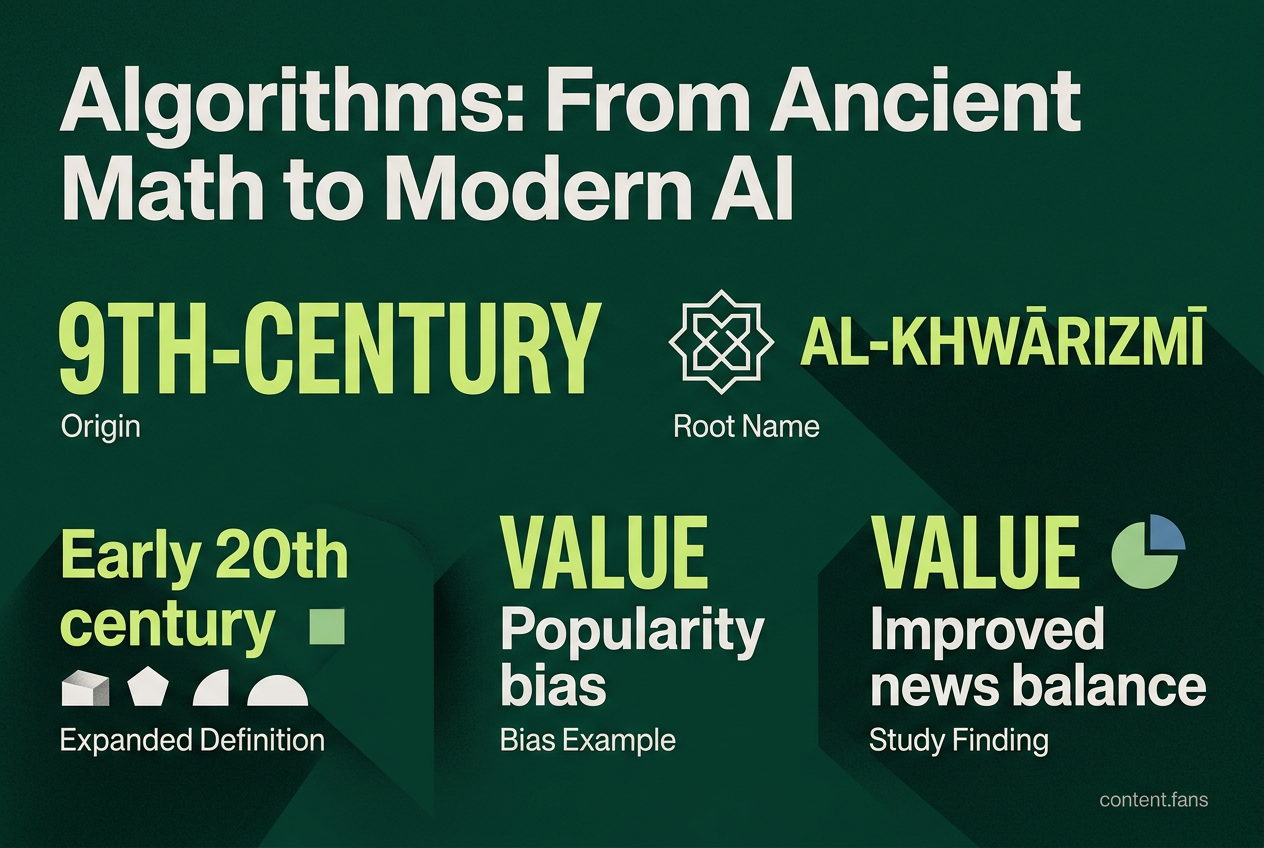
The word "algorithm" originated from the name of 9th-century mathematician al-Khwārizmī. Initially referring to arithmetic using Hindu-Arabic numerals, its meaning expanded by the 20th century to describe any finite, step-by-step procedure for solving a problem, a definition perfectly suited for the rise of computer science.
Early Latin translations of al-Khwārizmī's work helped European merchants adopt the Hindu-Arabic numeral system. The practice was called "algorism" in Middle English. The term developed from Latinized forms such as 'algorismus' and later English/French forms before settling into the modern "algorithm."
It was not until the early 20th century that mathematicians broadened the term to mean any finite, ordered procedure. This expanded definition was essential for the new field of computer science, which relies on formalizing instructions into discrete, executable steps that produce a clear output.
How recommendation engines guide attention
Today's digital platforms apply this definition at an immense scale. Recommendation engines use complex ranking functions, informed by thousands of weighted signals, to determine what content users see. This process has led to well-documented patterns of algorithmic bias:
- Popularity bias: frequently clicked items crowd out niche content.
- Exposure bias: repeated position at the top attracts more feedback, creating feedback loops.
- Ideological bias: ranking can narrow the range of political viewpoints a user encounters.
For example, a 2024 PNAS Nexus study found that adjusting YouTube's recommender to favor verified, cross-ideological news sources improved the balance of users' news consumption without reducing watch time. This suggests that targeted ranking adjustments can diversify information diets, though creators note potential trade-offs with user engagement.
Academic research confirms that popularity bias is a widespread issue across many major technical studies. Policy experts warn these algorithmic imbalances can amplify existing social inequities. While researchers are developing methods to counteract this, there remains a fundamental tension between promoting fairness and maximizing platform revenue.
Everyday effects on taste and habits
Beyond news, scholars find that algorithms on Spotify, Netflix, and TikTok shape cultural tastes through autoplay and "next up" features. Industry reports position these systems as powerful gatekeepers of culture, guiding viewers to specific genres. This deep personalization is gaining acceptance, with Deloitte materials reporting that nearly 40% of fans would accept AI-created content if it is clearly labeled, and about 70% of Gen Zs and millennials would share data for a more personalized digital experience.
On platforms like X (formerly Twitter), algorithmic feeds often replace chronological order, concentrating attention on a small number of accounts. This can create "echo chambers," even for users who follow diverse sources. Researchers are actively experimenting with interface designs that could reduce this clustering without causing information overload.
The long history from al-Khwārizmī's arithmetic to modern ranking code reveals a core truth: algorithms have always been about translating rules into ordered outcomes. Recognizing their origins frames current debates on AI bias not as new problems, but as the latest chapter in a centuries-long discussion about how we organize knowledge.
How did the word "algorithm" get its name?
The term traces back to 9th-century Persian mathematician Muḥammad ibn Mūsā al-Khwārizmī, whose Latin translations were titled Liber Algoritmi. Over centuries the spelling drifted from algorism (arithmetic with Hindu-Arabic numerals) to algorithm as it expanded to mean any finite set of instructions for solving problems.
What does an algorithm actually do in modern platforms?
In streaming apps, social feeds, and news aggregators, an algorithm is a precise sequence of steps that decides what appears on your screen next. It transforms your past clicks, watch time, and demographic signals into ranked recommendations designed to maximize engagement and keep you on the platform.
How do today's algorithms influence what we watch or read?
- News feeds: A 2024 experiment showed that nudging YouTube's recommender toward ideologically balanced news increased consumption of less-seen sources and reduced partisan skew, especially among conservative viewers (PNAS Nexus study).
- Music & video: Spotify's auto-generated playlists and YouTube's autoplay queues steer users toward adjacent genres, gradually shaping what feels familiar and preferred.
- Streaming: Netflix's own data suggest its recommendation engine guides two-thirds of viewing choices, reinforcing loops that can narrow taste over time.
What recent studies reveal about algorithmic bias?
The literature reports multiple forms of recommender bias, including popularity, demographic, exposure, and ideological bias. Research shows that bias-reducing tweaks often trade off with short-term engagement, making platforms hesitant to adopt them.
Why should users care about algorithmic history?
Understanding that a 1,200-year-old word evolved from medieval arithmetic tables to real-time personalization engines highlights how much human judgment is encoded in the software that curates our culture. Recognizing this can encourage critical engagement and support calls for transparent, accountable design rather than blind trust in what appears on your screen.