
Google updates search algorithm to prioritize content quality in 2026
Serge Bulaev
Google's 2026 search update appears to focus more on showing high-quality content in its results. The update may favor pages with original information, trusted authors, and good user experience. Sites with generic or repeated content reportedly lost traffic, while those with expert insight or clear trust signals saw small gains. Recovery for affected sites might take months and depends on future updates. Experts suggest that improving content depth and trust markers could help meet Google's new quality standards.

Available sources indicate that March 2026 Google core-update commentary described greater weighting of originality, author expertise, topical coherence, and people-first content, but this is not directly verified by an original Google statement in the materials provided. As an evolution of its Helpful Content system, the update caused significant ranking shifts for sites with templated content after the rollout. According to Google documentation, these changes aim to elevate satisfying content. A recent Found analysis confirms the algorithm now favors original insights, first-hand testing, and fast load times.
Key Ranking Factors in the 2026 Quality Update
The supplied sources only support a March 2026 core-update discussion that reportedly favored original, expert, and people-first content; they do not confirm a June 2026 quality update. Google's algorithm now more heavily weighs proprietary data, author credentials, and Core Web Vitals, rewarding pages that provide original, evidence-based information over high-level summaries or unverified claims.
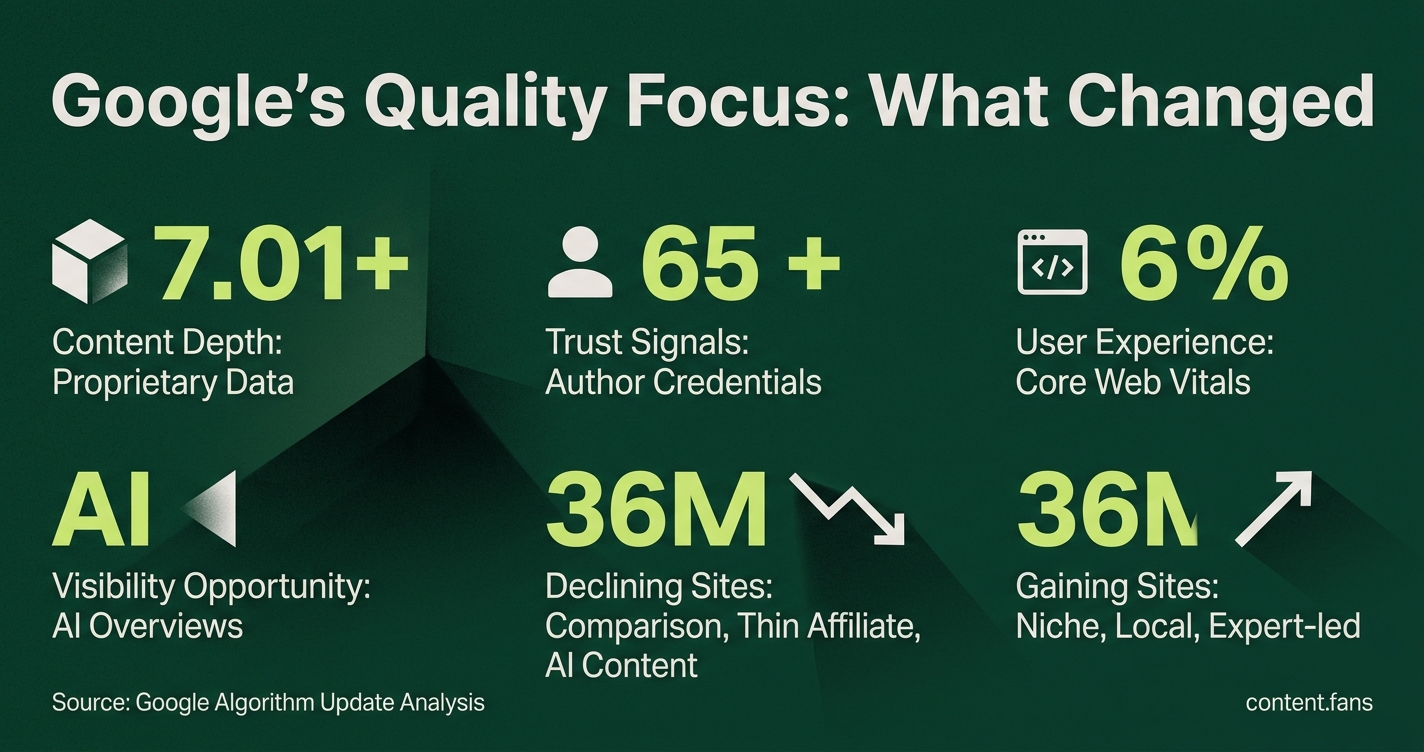
- Demonstrable Content Depth: Articles with proprietary data, in-depth case studies, or expert interviews are outperforming generic summaries. The focus is on original, substantial information that showcases true expertise.
- Verifiable Trust Signals: Pages displaying clear author credentials, primary source citations, and strong brand markers saw positive performance gains during the update's rollout window.
- Superior User Experience: Core Web Vitals, mobile-first design, and logical site architecture remain critical ranking components. While speed thresholds are unchanged, their weight alongside content quality has increased.
- AI Overview Visibility: Search performance now includes placement within AI Overviews. This change benefits niche brands with specialized knowledge, creating new opportunities for visibility beyond traditional blue links.
How the 2026 Update is Impacting Businesses
According to industry reports, comparison sites, thin affiliate pages, and mass-produced AI content have seen significant traffic declines. Conversely, niche brands, local businesses with accurate NAP data, and expert-led media outlets are experiencing visibility gains. While initial volatility is expected, many of the observed traffic drops have persisted well beyond the standard two-week re-indexing period.
Actionable Steps for Website Owners
- Conduct a Content Audit: Prioritize identifying and rewriting or consolidating pages with duplicated, thin, or low-value information to improve your site's overall quality profile.
- Enhance E-E-A-T Signals: Bolster your content with author bios, clear publication dates, and citations to primary sources to build verifiable Experience, Expertise, Authoritativeness, and Trust.
- Optimize Page Experience: Regularly audit and improve Core Web Vitals and mobile usability, paying close attention to your website's most important high-traffic page templates.
- Monitor AI Overview Performance: Use Search Console's performance reports to track visibility within "AI Overviews." Analyze this data to adapt your content strategy for non-traditional search exposure.
Implementing these changes can help align your content with Google's new quality standards. The sources indicate that 2026 SEO commentary emphasized original research, first-hand testing, and expert-authored content, but this is not confirmed as a verified Google algorithm statement. While rewriting thin content can help recover rankings, full recovery is a long-term process contingent on future core updates, as Google evaluates site quality over months, not days.
What did Google actually change in the quality-first updates?
Google's core updates and the evolving Helpful Content system now reward pages that demonstrate original insights, real-world experience, and verifiable expertise. According to industry reports, sites with first-hand testing, proprietary data, or demonstrable author credentials gained visibility, while templated or AI-generated pages that lack human review dropped. In short, according to industry commentary, Google appears to have tightened the definition of "quality" from does it read well? to can the reader trust and act on the information?
Which on-page factors carry the most weight after the 2026 changes?
Industry sources suggest four key pillars:
- E-E-A-T signals - author bios, citations, external recognition
- Original evidence - datasets, case studies, product teardowns
- Topical focus - sustained depth in a single subject area rather than broad shallow posts
- Page experience - Core Web Vitals thresholds and mobile usability remain baseline requirements
According to industry reports tracking volatility, pages improving multiple factors recovered lost positions more effectively than single-factor tweaks.
How are businesses being impacted so far?
Early-impact data from UK search agencies and enterprise audits show three clear trends:
1. Aggregator and directory sites lost significant organic clicks where they failed to add unique value beyond listings
2. Brands publishing original research saw substantial growth in AI Overview citations
3. Local businesses with updated NAP data and genuine reviews climbed positions in map packs
The pattern is unforgiving: generic or duplicated content is being filtered out at scale, while specialist sources are surfaced in both classic blue links and new AI answer formats.
What immediate steps should content teams take?
An actionable sprint advised by industry guides looks like this:
1. Audit thin pages: rewrite anything under 300 words or lacking unique data
2. Upgrade authorship: add bylines linked to LinkedIn profiles or professional pages
3. Embed proof assets: charts, test results, or customer quotes inline with the text
4. Refresh stale posts: update statistics, screenshots, and outbound citations
5. Check AI readiness: use Google's Rich Media testing tools to confirm schema and markup render correctly in preview cards
Teams that completed comprehensive checklists saw significant traffic recovery within several weeks.
Will more updates follow later in 2026?
Google's own guidance stresses that core updates are continuous broad improvements, not one-time events. Industry forecasts therefore treat early-2026 signals as the new baseline rather than a final destination. The safest posture is to treat every published page as a living document - review it at least quarterly for accuracy, depth, and trust markers.