
Google Expands Demand Gen with AI-Powered YouTube Creator Tools
Serge Bulaev
Google has expanded Demand Gen with new AI-powered tools for YouTube creators, which may help turn videos into direct response ads. The update includes AI-assisted setup, new ways to measure branded searches, and tools to test different ad versions. Features like Shoppable CTV and Travel Feeds suggest advertisers can now reach users on more devices and show live product details. Some early analysis from Google suggests brands using several best practices saw about 40 percent more conversions, but sample sizes were not shared. Regular updates mean advertisers may need to check settings often as new features appear.

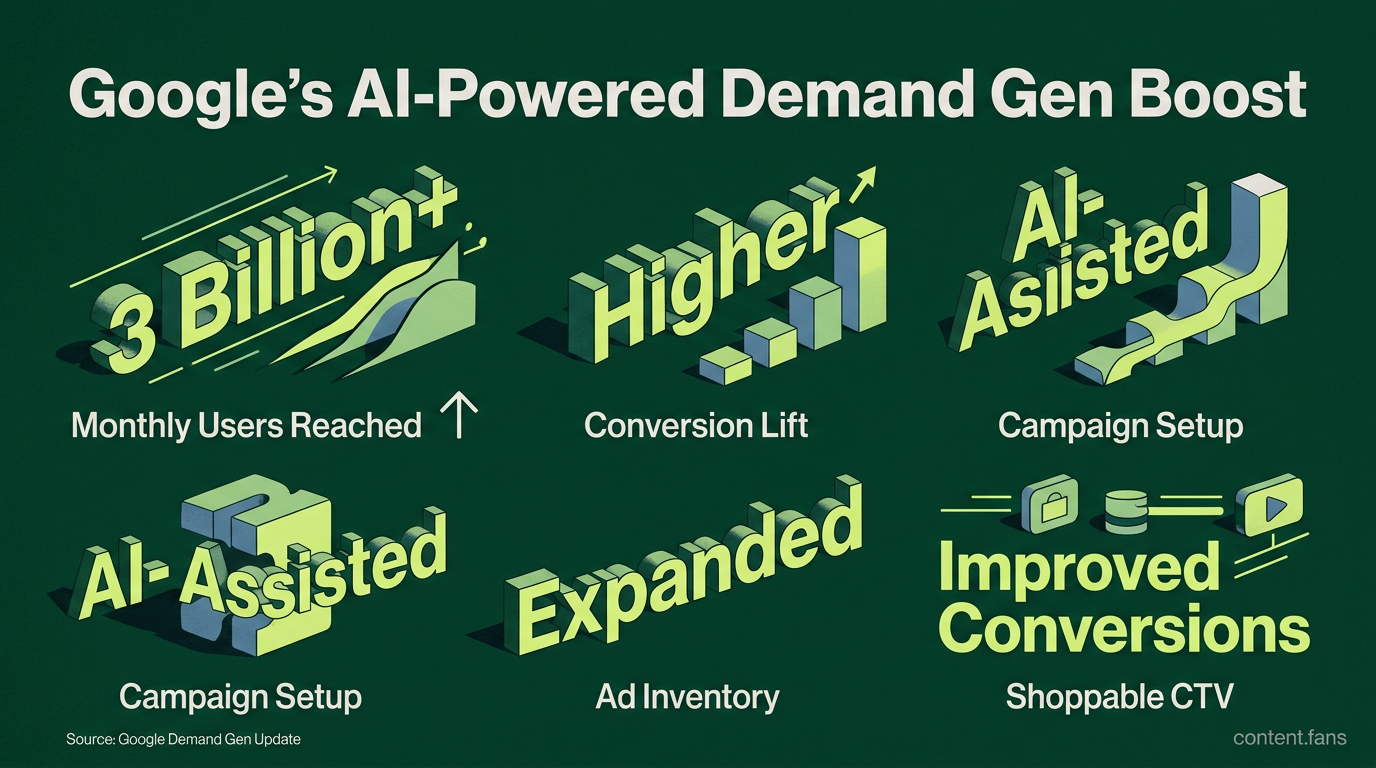
Google is enhancing its Demand Gen campaigns with new AI-powered YouTube creator tools, introducing an AI-assisted setup and new ad inventory designed to transform creator content into direct-response advertisements. The updated workflow significantly expands advertiser reach to over 3 billion monthly users across YouTube, Discover, Gmail, and the Google Display Network.
What Are Google's New AI-Powered Demand Gen Tools?
The update integrates AI into the campaign setup process, introduces new ad formats like Shoppable CTV, and provides enhanced measurement tools such as Attributed Branded Searches. These features aim to help advertisers convert creator videos into performance-driven ads and better quantify their upper-funnel impact on brand interest.
A key part of this update is the "YouTube Creator Partnerships" workflow, now embedded directly in the Google Ads interface. This allows advertisers to find creator profiles, review content, and request usage rights without leaving the platform. This focus on creator-led content is backed by early Google tests showing that creator-made Shorts drove significantly higher conversion lift than brand-produced vertical video, indicating a strategic shift toward performance-centric video on Google's visual platforms.
How AI Streamlines Campaign Setup and Testing
The Google Ads interface now features an AI setup assistant that guides advertisers through a pre-launch checklist. A traffic-light dashboard flags potential issues across four areas: conversion goal tracking, bidding strategy, audience size, and creative asset specifications. This automated review significantly reduces campaign launch time.
During setup, Google's AI also assembles optimal creative combinations, applies lookalike segments to broaden reach beyond existing customer lists, and offers A/B experimentation tools. While automation is central, advertisers can still manually select channels to weight spend toward specific surfaces like Shorts or Gmail. Presence-based targeting has also been added, and while some advertisers report seeing experimental access to Google Maps promoted pins, this inventory is not yet officially supported.
Expanding Reach with New Commerce and Travel Features
A recent update expanded Demand Gen's capabilities into new contexts, particularly for commerce and travel advertisers:
- Shoppable CTV: Viewers can now browse product details and make purchases directly from a YouTube ad playing on their connected TV. According to Google's January blog, campaigns using TV screens showed improved conversion performance at similar return on ad spend.
- Travel Feeds: By connecting to Hotel Center data, travel advertisers can create dynamic video ads that display live pricing and availability.
- Product Feed to Video: For advertisers without a creator partnership, a new toggle turns Merchant Center product feeds into automatically generated vertical video ads.
Measuring Full-Funnel Impact Beyond Clicks
To help advertisers quantify brand-building efforts, Google has introduced two new metrics in the "Lift" column, which must be enabled by a Google representative:
- Attributed Branded Searches: This metric surfaces the volume of incremental brand-related queries on Google.com that occur after a user sees a Demand Gen ad, helping to measure upper-funnel interest.
- Follow-on Views: Advertisers can optimize for channel growth by tracking users who watch additional videos on their channel within seven days of viewing an ad.
These new metrics complement existing conversion and search impact reports. Early internal analysis from Google suggests that brands adopting multiple recommended best practices saw significantly more conversions, though specific sample sizes for this data were not provided.
What Advertisers Should Do Next
The rapid pace of "Demand Gen Drops" - monthly bundles of feature updates - means that advertisers should regularly audit their campaign settings. This ensures that new surfaces like Shoppable CTV are aligned with creative strategies and budget rules. As automation continues to handle targeting and bidding, the primary levers for success will increasingly be high-quality creative strategy and deep audience insights.