
GameDiscoverCo unveils 5 factors for predicting Steam game success
Serge Bulaev
GameDiscoverCo suggests that predicting Steam game success may work better with a model that uses several signals instead of just wishlists. They point to five factors: demo engagement, Discord or forum activity, influencer reach, follower-to-wishlist ratio, and wishlist velocity. Each factor is adjusted based on the game's genre and audience. The final prediction appears as a probability range, such as a 30-45 percent chance of reaching 100,000 sales in the first month. However, results may still be uncertain due to outliers and unique events.

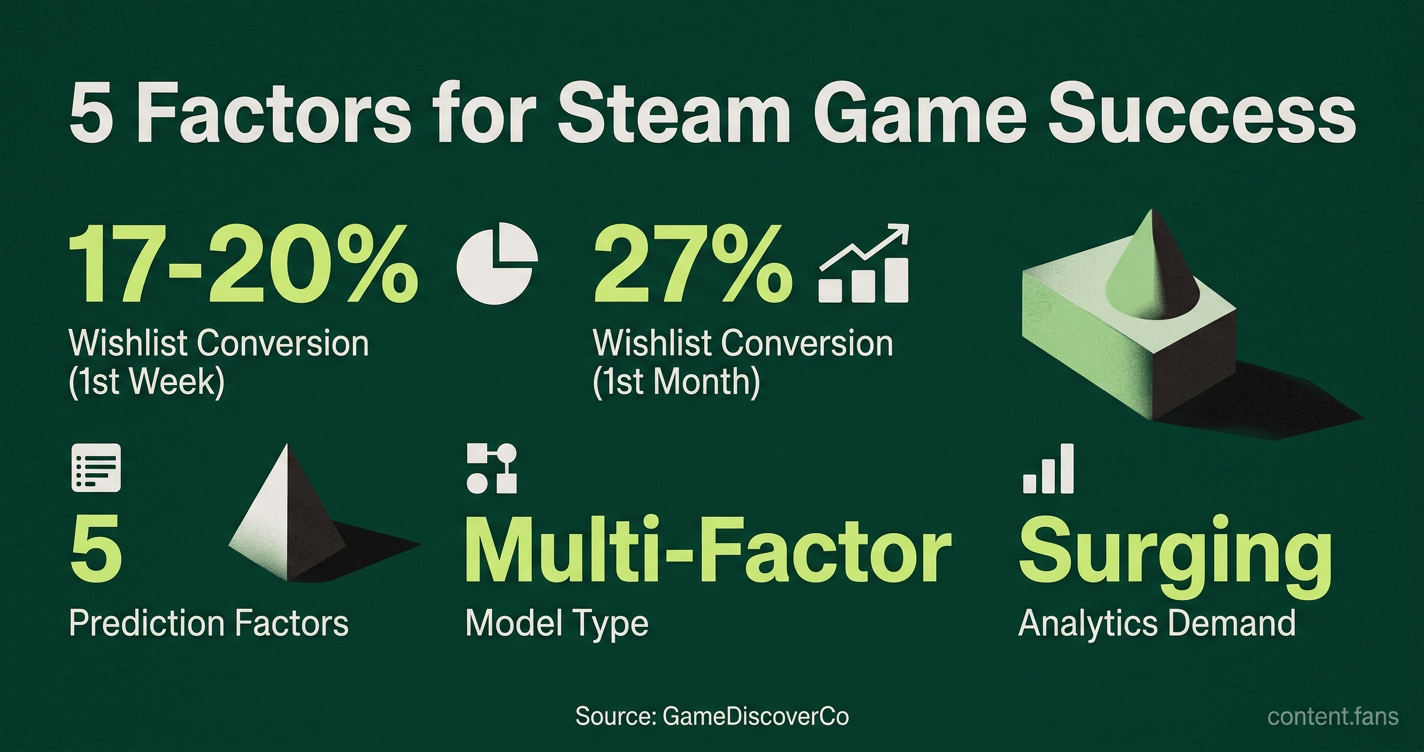
Predicting Steam game success is a challenge publishers increasingly face, and a multi-factor model offers a more reliable forecast than relying on wishlist numbers alone. The concept is to weight multiple engagement signals to get a clearer picture of launch potential. GameDiscoverCo's research highlights the problem with wishlists; their own data on Steam wishlist conversions shows median first-week conversion of approximately 17-20%, with first-month conversions reaching around 27% in recent analysis. A blended model helps create a more accurate probability band for sales.
The 5 Key Factors for Steam Sales Prediction
GameDiscoverCo's model for predicting Steam success uses five core inputs: demo engagement, community activity on platforms like Discord, organic influencer coverage, the follower-to-wishlist ratio, and wishlist velocity. These signals are weighted by genre to create a more nuanced sales forecast than wishlists can provide alone.
The model tracks the following repeatable inputs that correlate with launch outcomes:
- Demo Engagement: Player retention rates and Net Promoter Score (NPS) surveys from game demos.
- Community Activity: Traffic volume and sentiment analysis from Discord servers and forums.
- Organic Influencer Reach: Unpaid coverage and viewership on platforms like Twitch and YouTube.
- Follower-to-Wishlist Multiplier: A key ratio indicating audience resonance. GameDiscoverCo's launch success data shows significant variance between top and bottom performers.
- Wishlist Velocity: The rate of new wishlists over time, not just the cumulative total.
The model normalizes each signal and applies specific weights based on the game's genre. For instance, a live-service shooter might prioritize Discord activity, whereas a narrative RPG would focus more on demo completion rates. The result is a probabilistic forecast that provides likelihood ranges for sales performance, though the company remains cautious about publishing the full model due to the impact of outliers.
The Growing Demand for Predictive Analytics in Gaming
The demand for reliable predictive analytics is surging. Industry reports identify AI-powered analysis as a critical tool for publishers. This trend is amplified by significant market growth projections, with analysts forecasting substantial increases in U.S. industry spending in the coming years. Such high stakes increase pressure on leadership to model financial risks accurately and early.
While GameDiscoverCo's model is one prominent example, some publishers develop custom pipelines that combine Steam data with community sentiment APIs. However, every predictive model must account for the "blockbuster effect," where a few hit titles skew market totals. To avoid misleading forecasts, analysts often use scenario planning or cap the influence of any single variable to manage these fat-tail events.
Practical Applications and Future Outlook
Packaging these predictive models into a SaaS tool is a viable path forward. A dashboard that ingests a studio's private data and returns percentile forecasts could save publishers significant time. However, experts emphasize that credibility hinges on transparency, including clear confidence intervals, regular back-testing, and honest communication about outlier risks.
As a best practice, teams should first test any predictive model on their past launches. This internal validation helps identify and correct systematic biases - for example, if the model consistently underestimates a genre like cozy life-sims - before it's used for critical green-light decisions.