
Food brands integrate protein, fiber for metabolic health in 2026
Serge Bulaev
Interest in metabolic health appears to be rising as more people want foods that may help blood sugar, fats, and inflammation. This is partly linked to the growing use of GLP-1 medications and new ways for shoppers to track their own glucose. Experts suggest shoppers now look for foods with more protein and different kinds of fiber, and they may choose products that can be measured for wellness benefits, not just for dieting. Many brands are adding protein, fiber, and special ingredients like prebiotics and probiotics to common foods to support these needs. Spending data suggests people might buy less overall but pay more for foods that help with satiety and metabolic health, showing demand for products that could support energy and balance in simple, everyday ways.

As metabolic health goes mainstream, leading food brands integrate protein, fiber for metabolic health benefits into staple products. This trend is fueled by the rising popularity of GLP-1 medications and personal glucose monitors, which empower consumers to see the direct impact of food on their blood sugar. With a mid-2024 KFF poll showing 6% of U.S. adults currently taking GLP-1 drugs, the focus is shifting from dieting to achieving measurable, daily wellness outcomes.
Why Shoppers Care About Metabolic Outcomes
Consumers are increasingly focused on metabolic health to achieve stable energy levels and long-term wellness. Prompted by new health-tracking tools and medications, they now evaluate foods based on their direct impact on blood sugar, inflammation, and satiety, shifting from calorie-counting to seeking measurable metabolic benefits.
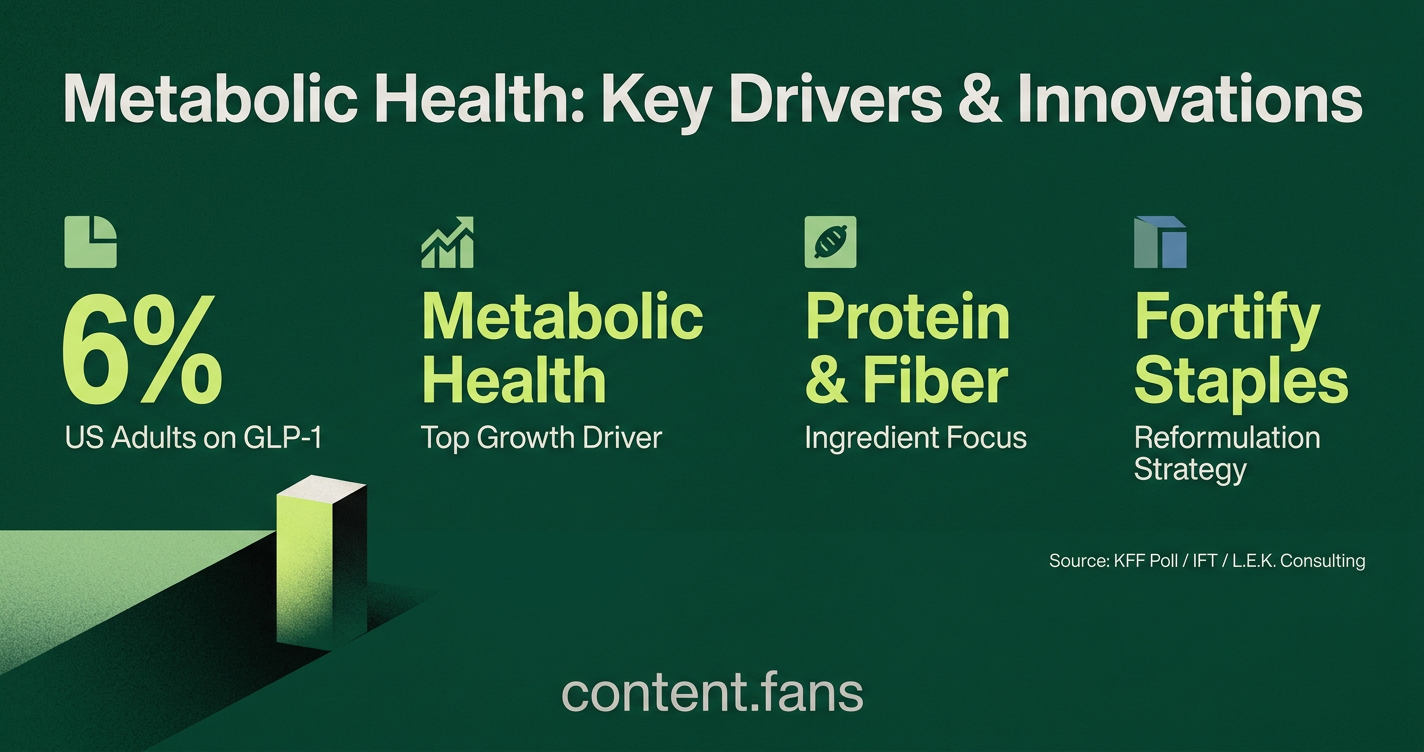
This consumer shift prioritizes foods that deliver sustained energy, hormonal balance, and improved insulin sensitivity. According to industry reports, there is growing demand for "fiber diversity" to support the gut-metabolic axis and lower inflammation Food Trends 2026. According to the Institute of Food Technologists, this places metabolic health and weight management as top drivers of growth in the functional foods category. Shoppers are seeking "measurable wellness" from recognizable ingredients, even as they manage grocery budgets amid inflation.
Reformulation Opportunities in Familiar Aisles
To meet this demand, experts like Mark Boyd-Boland of L.E.K. Consulting advise brands to fortify existing staples rather than creating niche products. Core grocery items like waters, teas, breads, and cereals are being enhanced with protein, diverse fibers, and micronutrients that promote satiety and slow glucose absorption.
Successful examples include:
* Pepsi's Prebiotic Cola: Fortified with chicory root fiber and featuring reduced sugar.
* Rise Wellness Protein Pop: A clear protein drink providing significant protein content per bottle.
* UK Retailer Ready-Meals: Designed with smaller, higher-protein, and fiber-dense portions.
These innovations integrate seamlessly into established shopping routines while delivering clear metabolic advantages.
Key Ingredients for Blood Sugar and Gut Health
Product developers are combining biotic ingredients with slow-digesting carbohydrates to create powerful formulations. According to Nutrition Insight, prebiotics like BENEO's Orafti® inulin are popular for promoting beneficial Bifidobacteria and supporting blood sugar management. Probiotics are also key, with strains like AceBiome's BNRThin™ gaining approval for their ability to reduce visceral fat and improve glucose balance.
Protein remains a cornerstone ingredient, especially for GLP-1 users who need to preserve muscle mass on a reduced calorie intake. Products like Nestlé's Boost Pre-Meal Hunger Support, which offers significant protein content with calcium and vitamins, are designed to help this demographic manage hunger and stabilize glucose before meals.
How Retail Spending Is Shifting
Retail data confirms a significant change in consumer spending. Cornell studies show a 5.3-5.5% grocery spending drop within 6 months for households using GLP-1 medications, with larger decreases for high-income households (8-8.6%), driven by reduced purchases of calorie-dense items; nutrient-dense spending is directionally up but statistically insignificant. This is accompanied by a dramatic drop in traditional snack consumption and a rise in purchases of yogurt, fresh fruit, and meat snacks.
This trend challenges brands to deliver powerful nutrition and satiety in smaller product formats at a competitive price point. Furthermore, according to industry reports, a significant functional supplement market has emerged to address medication side effects like nausea and constipation, signaling a durable, long-term demand for metabolic support products.
As consumers continue to scrutinize ingredient lists for quantifiable benefits, the brands poised for success will be those that effectively combine protein, diverse fibers, and microbiome-friendly ingredients. The winning formula lies in creating satisfying, everyday foods that cater to smaller appetites while delivering a maximum metabolic payoff.
Why is metabolic health suddenly on every grocery list?
Metabolic health - how your body handles blood sugar, fats, and inflammation - is no longer a niche concern for diabetics.
According to industry reports, a growing number of U.S. adults have used GLP-1 weight-loss drugs and continuous-glucose monitors have gone mainstream. The result: shoppers now judge everyday products by how steady they keep their glucose curve. Food companies are responding by turning bottled waters, breakfast cereals, and even cookies into satiety-supporting, blood-sugar-friendly staples.
Which ingredients are brands rushing to add?
According to industry reports, protein, fiber, and targeted micronutrients are topping reformulation priorities.
- Protein preserves muscle on smaller portions
- Prebiotic fibers such as chicory-root inulin or soluble corn fiber blunt post-meal glucose spikes and feed gut bacteria
- Chromium, magnesium, and B-vitamins support insulin sensitivity and energy metabolism
Early movers include Nestlé Boost pre-meal shakes with significant protein content and added chromium, and Coca-Cola Simply Pop delivering prebiotic fiber per can.
How big is the business opportunity?
According to industry reports, the GLP-1 influence has created a significant sub-category of functional nutrition. Households using these drugs spend more per unit on high-protein, low-calorie items even as their total grocery volume drops.
Analysts forecast that GLP-1-influenced shoppers will drive a significant portion of U.S. food and beverage sales, making metabolic positioning a mainstream necessity, not a premium niche.
What claims can be made without medical jargon?
Regulators still police disease references, but measurable wellness language is wide open. Acceptable flags include:
- "Helps maintain steady blood-sugar release" (supported by low-GI data)
- "Protein for lasting fullness"
- "Prebiotic fiber for a balanced gut microbiome"
Claims tied to energy stability, satiety, or digestive comfort resonate across age groups and avoid age-restricted labeling.
Where will the next wave of products land?
Watch snacks and beverages first. Portion-controlled protein popcorn, fiber-charged oat milks, and "micro-meal" bars with significant protein and fiber content are being developed.
Retailers are carving out dedicated "metabolic friendly" shelves, and PepsiCo's prebiotic cola signals that even indulgent formats are fair game for metabolic upgrades.