
Food Alert: AI-generated evidence triggers fake food safety complaints
Serge Bulaev
Experts say there is a growing problem with fake food safety complaints made using AI-generated photos and letters. Current food safety laws rarely cover digital or synthetic evidence, which may let fraudsters trick regulators and hurt businesses. Reports suggest that fake complaints can cause real inspections, damage reputations, and encourage more scams. Experts recommend new rules to label AI-generated evidence, track where files come from, and require online complaint sites to spot fake uploads. These steps may help stop fraud while keeping genuine safety reports possible, though how quickly changes might be adopted is uncertain.
The food industry is facing a growing threat from AI-generated fake food safety complaints that use synthetic evidence to defraud businesses. These sophisticated scams, powered by AI image generators and chatbots, exploit regulatory loopholes and can trigger costly, damaging consequences for brands of all sizes.
How AI-Generated Complaints Harm Food Businesses
Fraudsters use AI to create fake evidence, like photos of damaged food or legal-sounding demand letters. These complaints can trigger investigations by food safety authorities (e.g., Environmental Health Officers), but sources do not confirm they automatically trigger mandatory inspections by general regulators. This can lead to real-world consequences for businesses, including fines for unrelated issues, lowered hygiene ratings, and significant reputational damage.
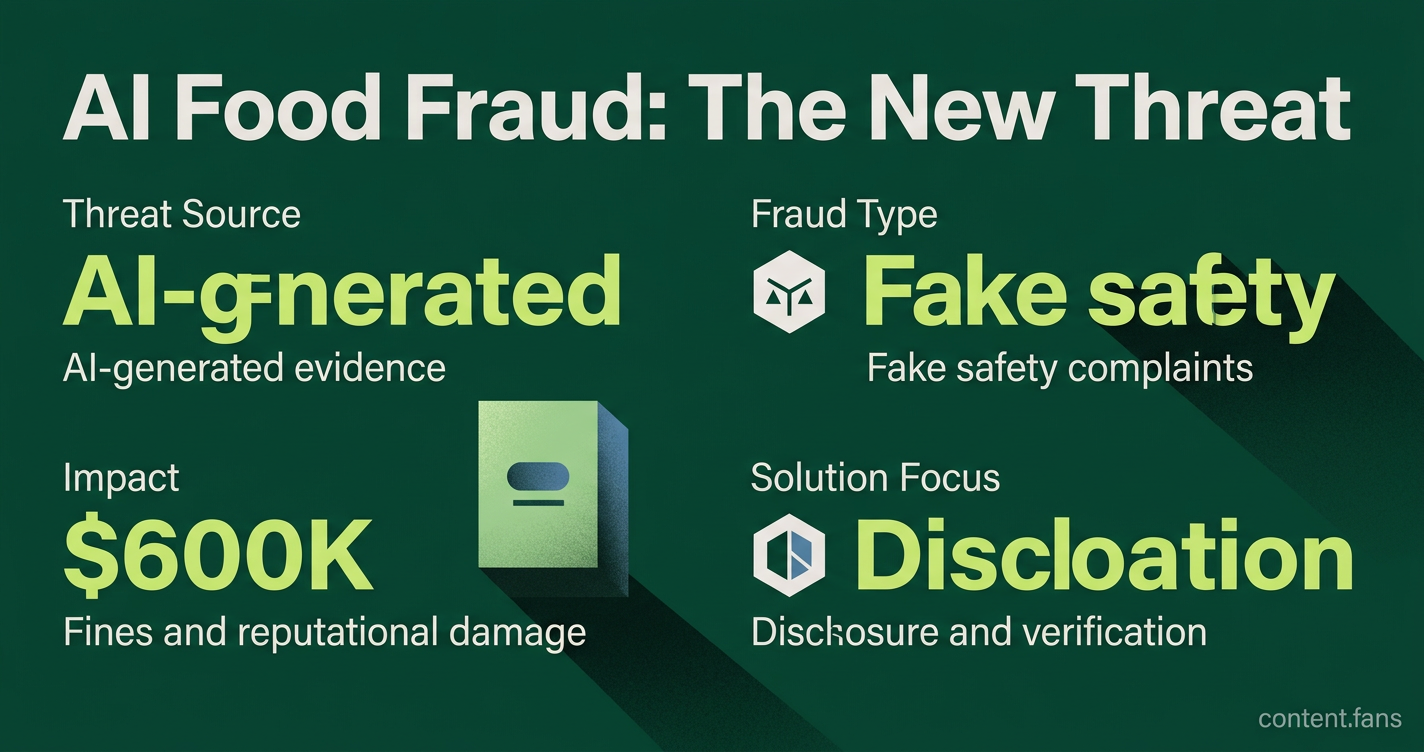
Food fraud legislation was designed for physical tampering and rarely addresses digital artifacts. This creates a loophole where, according to Food Alert, fraudsters can submit AI-generated photos and persuasive letters to demand refunds. Refund complaints are handled by customer service or fraud prevention teams; no mandatory inspection by an Environmental Health Officer occurs for e-commerce refund claims. The consultancy told Food Safety News that these repeated fake complaints undermine the entire system.
The reputational harm can be immediate and severe. As reported by Bakery and Snacks, AI images alleging product damage are used to secure refunds; while consumer inability to spot fakes amplifies fraud, this often pressures businesses into a "refund-first" culture that inadvertently encourages more fraud.
Policy Solutions to Combat Synthetic Evidence
Legislators and regulators are developing a layered approach to close these regulatory gaps and raise the cost of fraud. The key policy proposals include:
- Disclosure and Labeling: Require any AI-generated image or text submitted as evidence to carry a clear, machine-readable label, aligning with frameworks like the EU's AI Act.
- Provenance Verification: Mandate or encourage the use of C2PA (Coalition for Content Provenance and Authenticity) credentials. This metadata would allow inspectors to verify a file's origin, creation time, and edit history.
- Platform Accountability: Obligate online complaint portals to screen uploads for signs of manipulation and to log cryptographic receipts, creating a clear audit trail from the point of capture.
Immediate Actions for Food Businesses
While waiting for new laws to pass, food businesses can take immediate steps to protect themselves from fraudulent complaints. Industry experts recommend a multi-layered defense:
- Strengthen Evidence Collection: Use secure camera apps that embed verifiable metadata (like timestamps and location) for all food-related photos, from the kitchen to delivery. This creates a cryptographic alibi against fakes.
- Train Customer Support Teams: Instruct staff to always request original, unedited photo files (not screenshots) and to perform reverse image searches to check for prior use online.
- Verify Before Refunding: Implement a policy of "verify before refunding." Cross-check complaint details, such as timestamps on photos, with point-of-sale records. Refunding too quickly can encourage repeat fraudulent claims.
- Partner with Experts: For high-stakes claims, work with third-party forensics labs that can perform deep analysis on digital evidence to distinguish authentic images from AI-generated fakes.