
Far Far West Uses Playtests to Trigger Steam Discovery Algorithm
Serge Bulaev
Far Far West may have triggered Steam's Discovery Queue in early 2025 by running two tightly scheduled public playtests and using creator streams. These events created short bursts of engagement, like high player numbers and many wishlists, which seem to be important for Steam's recommendation system. Developers report that these concentrated playtests can help games appear in "Because you played" and "More Like This" sections, especially when paired with positive ratings and creator coverage. Recent changes to Steam's algorithm appear to favor sales and wishlists over tag similarity, making these activity spikes more important for visibility. This strategy might keep working as long as Steam's algorithm continues to value short-term engagement signals.

The strategy for how indie developers can use playtests to trigger Steam's Discovery Algorithm was demonstrated when Far Far West launched into Early Access on April 28, 2026. By running tightly scheduled public playtests alongside creator streams, the game generated powerful engagement signals favored by Valve's systems. This resulted in players seeing the title in the personalized queue, as explained on Steam's about page.
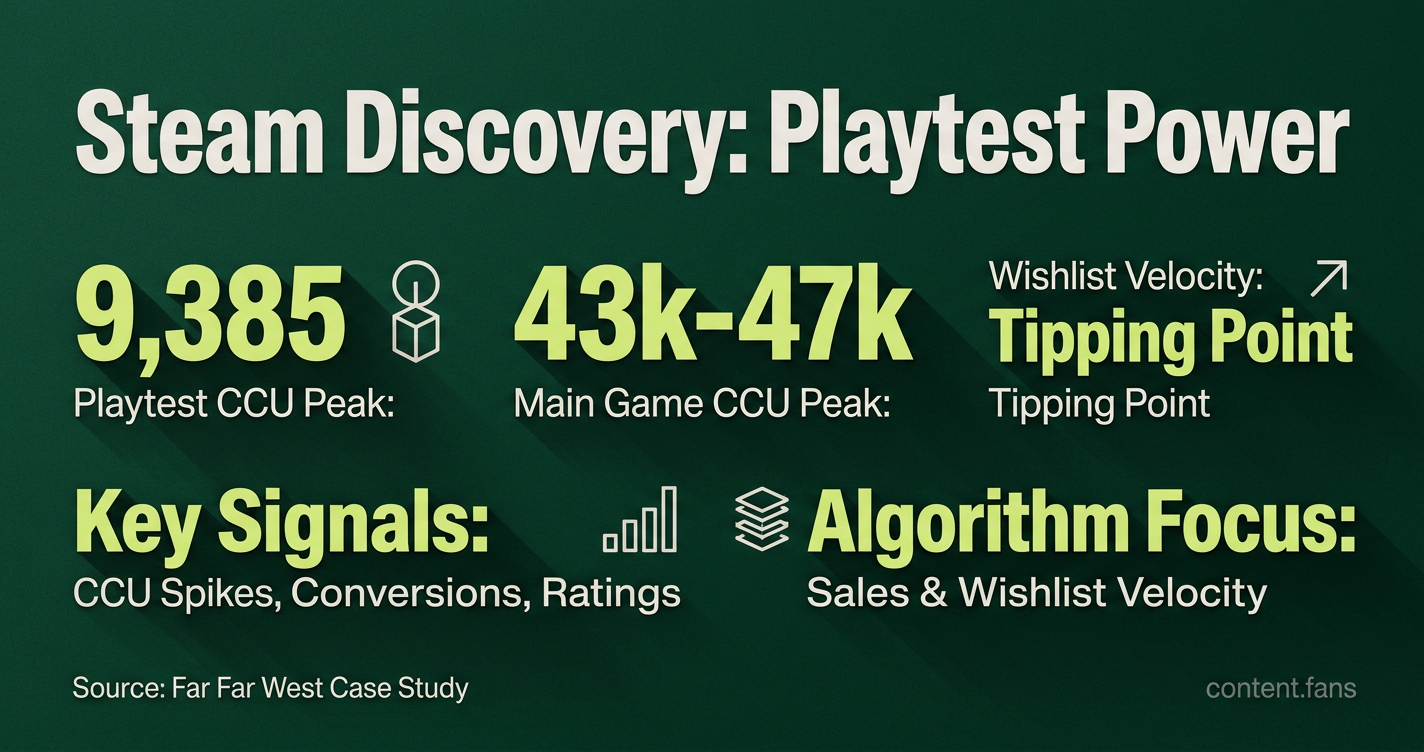
A developer on the project reported that the playtest peaked at 9,385 CCU, while the main game peaked at approximately 43,000-47,000 CCU. This surge was reportedly enough to push the game into key visibility carousels like "Because you played" and "More Like This." The case highlights that temporal concentration - short, intense bursts of player activity, wishlists, and stream viewership - is a heavily weighted factor in Steam's recommendation algorithm.
How playtests can trigger platform algorithmic discovery on Steam
Concentrated public playtests trigger Steam's algorithm by generating rapid, high-volume engagement signals in a short window. These signals include spikes in concurrent users, a high ratio of wishlists to players, and positive initial ratings, which the algorithm interprets as signs of a trending or high-potential game.
Valve's algorithm processes several key metrics to determine visibility. A high conversion rate and positive user ratings are top-tier signals, similar in importance to sales performance. Far Far West achieved rapid conversions, with playtesters immediately wishlisting the game and providing a strong positive feedback loop. According to a Naavik podcast, significant daily wishlist velocity is often the tipping point for triggering substantial Discovery Queue traffic for indie games.
Key signals for the algorithm include:
- Sharp spikes in concurrent users (CCU) within a 48-hour window.
- A high conversion ratio of demo players to wishlists.
- Sustained coverage from creators on YouTube and Twitch.
- Positive early user ratings during Next Fest or other official events.
Recent algorithm shifts developers track
Developers have tracked recent shifts in the Steam algorithm, with industry reports suggesting changes that increased the weight of sales and wishlist velocity while reducing the influence of tag similarity. An article in Game Developer magazine noted such changes temporarily disrupted the "More Like This" section by over-promoting top-selling titles. Although patches restored some balance, the emphasis on sales data remains, forcing games without existing revenue to generate even sharper engagement spikes to gain visibility.
The Far Far West strategy aligns perfectly with this new reality. Its team strategically timed playtests to coincide with coordinated creator pushes, concentrating player activity within the demo's critical first 48 hours. This resulted in a significant portion of new wishlists that weekend originating directly from Steam's algorithmic recommendations, not external marketing channels.
Industry analysis suggests that concentrated playtests serve a dual purpose: they are invaluable for gathering quality assurance data while simultaneously manufacturing the engagement spikes essential for visibility on the modern Steam platform. This strategy will likely remain effective as long as Valve's algorithm continues to prioritize short-term interaction signals.
How did Far Far West get algorithmic boosts before release?
By running concentrated playtest windows and inviting creators to stream, the team sent product signals - CCU spikes, longer average playtime, rapid wishlists - that Steam's Discovery Queue reportedly reads as "launch-like" momentum, even for an unreleased title.
According to industry reports, Valve's recent ML adjustments push high-interaction demos to the front page for limited windows, so timing the playtest immediately after a fresh demo upload can amplify the effect.
Why does temporal concentration matter more than total numbers?
Industry reports suggest Steam's updates favor revenue velocity over raw wishlists; a one-day burst of significant wishlists or CCU counts for far more than the same volume spread across a month.
Far Far West stacked press, keymailer drops and streaming marathons so all metrics peaked inside a single daily reset window, earning prominent visibility placement.
Can other indies repeat similar strategies?
Yes, but developers report the rules have shifted: "More Like This" now reportedly privileges franchises you already played and big publishers.
Indies compensate by:
- Seeding genre micro-creators first; targeted organic keys can outperform paid ads for wishlist ROI.
- Running multi-wave creator pushes (pre-launch, launch week, post-launch) to keep the velocity graph sloping upward.
- Using post-launch Discovery Queue visibility opportunities (available to developers via Steamworks) to recapture traffic.
How big is the creator multiplier on Steam page visits?
Coordinated coverage can deliver thousands of store visits within hours and trigger significantly more organic visibility through Discovery Queue, New & Trending and front-page specials.
Industry case studies suggest titles that achieve substantial daily wishlist velocity see a significant portion of all wishlists flow directly from Discovery Queue recommendations.
What checklist should a small studio follow today?
- Open Steamworks > Marketing & Visibility and explore available post-release visibility windows.
- Upload a fresh demo and announce the date at least one week ahead.
- Mail personalized keys to niche YouTubers/Twitch streamers; cite specific videos to show you are not spam.
- Run concentrated playtests immediately after the demo goes live; seed keys to Steam curators at the same time.
- Track wishlist velocity, not count; if daily adds drop, stagger additional creator drops or events to maintain momentum.