
Extreme Weather Forces Companies To Rethink Office Return Policy
Serge Bulaev
Some reports suggest that unsafe commutes during these events may reverse the push for employees to return to offices.

As extreme weather forces companies to rethink office return policies, events like heat waves, storms, and wildfires are reshaping corporate schedules. This new reality demands strategies that balance employee comfort with volatile weather data and energy budgets. A LinkedIn News analysis, titled "Extreme heat could reverse RTO", predicts that unsafe commutes may reverse return-to-office mandates. Furthermore, many employees are experiencing weather-related work disruptions, with a significant number reporting decreased productivity. This data reframes climate adaptation as a core operational need, not just a facilities issue.
Integrating Thought Leadership: Rethinking Office Climate Policy in the Post-Pandemic Return-to-Office Era
Extreme weather impacts business continuity by disrupting commutes, compromising workplace safety, and reducing employee productivity. To adapt, companies are developing data-driven policies that trigger remote work or adjusted schedules based on clear thresholds for heat, air quality, or storm severity, ensuring operational resilience and employee well-being.
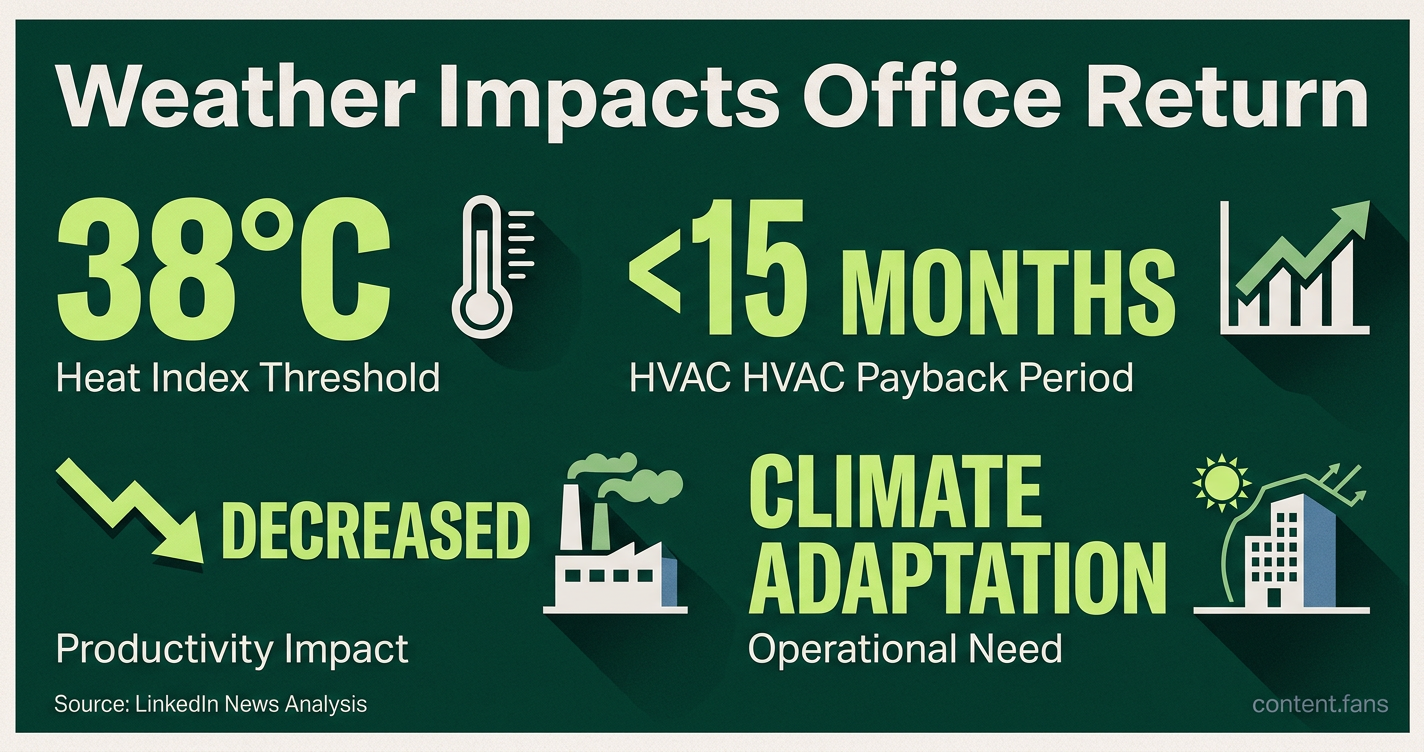
Thermal comfort directly impacts attendance, retention, and feelings of inclusion. Because temperature extremes disproportionately affect vulnerable groups - including pregnant workers, older staff, and those with medical conditions - it is fundamentally an equity issue. To address this, organizations can add comfort-related questions to engagement surveys, use sensors to monitor different zones, and establish clear accommodation processes within HR. Establishing firm, data-driven policies, such as mandating remote work when the heat index exceeds 38°C, eliminates inconsistent decision-making by managers. Relying on discretion can erode trust, as some employees may receive flexibility while others do not.
Investment levers: from sensors to hybrid schedules
Strategic investments can yield significant returns. Smart HVAC controls can cut energy use substantially, with payback periods often under 15 months. Predictive maintenance platforms further boost ROI by preventing costly emergency repairs. These building-level upgrades can be paired with inexpensive personal devices like desk fans or heated pads, allowing for more efficient temperature setpoints without sacrificing individual comfort.
Technical fixes should be complemented by hybrid scheduling. Since even moderate heat can lower cognitive performance, shifting non-essential in-person tasks away from peak heat days reduces building energy loads, mitigates health risks, and sustains employee engagement.
Metrics that matter
To ensure policies are effective, a cross-functional team should track key metrics across comfort, energy, and human resources. Important KPIs include:
- Comfort Outcomes: Track average satisfaction scores, complaint volume, and the frequency of identified hot/cold spots by zone.
- Energy & Cost: Monitor energy consumption dashboards and HVAC operational costs.
- Employee Impact: Analyze absenteeism logs and employee retention data.
Consolidating this data into a single scorecard for quarterly reviews makes DEI, ESG, and facilities targets visible and interconnected. This transforms climate policy from a reactive, seasonal scramble into a proactive, integrated part of the employee experience.
Why are extreme weather events forcing companies to rethink rigid return-to-office mandates?
Extreme weather events like heatwaves, storms, and floods make commuting and working onsite less reliable and often unsafe. Evidence shows these disruptions are becoming more frequent. Data indicates that many employees have faced weather-related work disruptions, and a significant number report that their productivity falls during these events, making rigid RTO policies impractical.
How does thermal comfort connect to DEI and overall employee experience?
Thermal comfort is a key diversity, equity, and inclusion (DEI) issue because temperature stress affects vulnerable employee groups more acutely, including pregnant workers, older staff, and those with medical conditions. By adding comfort questions to inclusion surveys and mapping complaints by zone and demographic, companies can identify and fix inequities, making it a measurable part of the employee experience.
What practical levers can employers use to balance comfort, energy use, and ESG goals?
Employers can balance competing goals with four practical strategies:
1. Optimize Building Systems: Conduct thermal audits and use zoned controls to manage energy use efficiently.
2. Enable Personal Control: Provide personal comfort devices to employees instead of over-conditioning entire floors.
3. Implement Hybrid Schedules: Allow remote work on extreme weather days to reduce peak building loads.
4. Codify Policies: Publish clear, data-triggered remote work rules to ensure fairness and maintain trust.
These initiatives can generate significant HVAC energy savings with typical payback periods of 12-36 months.
What KPIs should cross-functional teams track before scaling climate-adapted policies?
Before a full rollout, run a pilot program and track these key performance indicators (KPIs):
* Employee Metrics: Monitor satisfaction/inclusion scores related to thermal comfort, absenteeism rates on extreme weather days, and retention signals.
* Facility Metrics: Measure energy use intensity (kWh/m²) before and after implementing changes.
Transparently sharing this data in quarterly dashboards helps build trust and provides justification for further investment.
How can HR, Facilities, and Sustainability leaders secure executive buy-in and budget?
To secure executive buy-in, frame the proposal around three core business benefits:
1. Financial ROI: Highlight energy savings and rapid payback periods, bolstered by predictive maintenance.
2. ESG & Compliance: Explain how these investments contribute to certifications like LEED and ENERGY STAR, improving corporate ESG scores.
3. Talent & Risk Management: Position the policy as a way to mitigate talent risks from unsafe work conditions and gain a competitive advantage in retention.
Present this information in a concise, CFO-ready ROI model that clearly shows costs, savings, and ESG impact.