
External CHRO Hires Soar 56% in Q1 2026 for AI Transformation
Serge Bulaev
External hiring for Chief Human Resources Officers (CHROs) rose sharply in early 2026, with 56 percent of new CHROs coming from outside their companies, and even higher rates in top firms. This increase may be tied to growing interest in artificial intelligence, as most CHROs say AI and digitization are their main concerns for the future. Boards seem to want leaders with experience in major change, especially those who understand both AI and people management. Many of these new hires have worked as CHROs before, suggesting that companies may prefer proven leaders over newcomers. The data suggests companies are looking for CHROs who can combine technical and ethical skills to guide their workforce through AI-related changes.

The trend of hiring external Chief Human Resources Officers (CHROs) is rapidly accelerating as companies pivot toward AI-driven business transformation. Facing urgent pressure to integrate artificial intelligence, boards are looking outside their own ranks for leaders with proven experience in managing large-scale technological and cultural shifts. Data from early 2026 shows a significant spike in external appointments, underscoring a strategic search for executives who can blend AI fluency with ethical workforce stewardship.
Why External CHRO Hires are Surging
Fresh data reveals that the external hiring of CHROs is reshaping corporate leadership. Globally, 56% of CHRO appointments in Q1 2026 were external candidates, a notable rise from 46% a year prior. The trend is even more pronounced in the S&P 500, where the share of external hires jumped to 67% in the same quarter meaningful numbers. This shift coincides with AI rocketing to the top of the C-suite agenda.
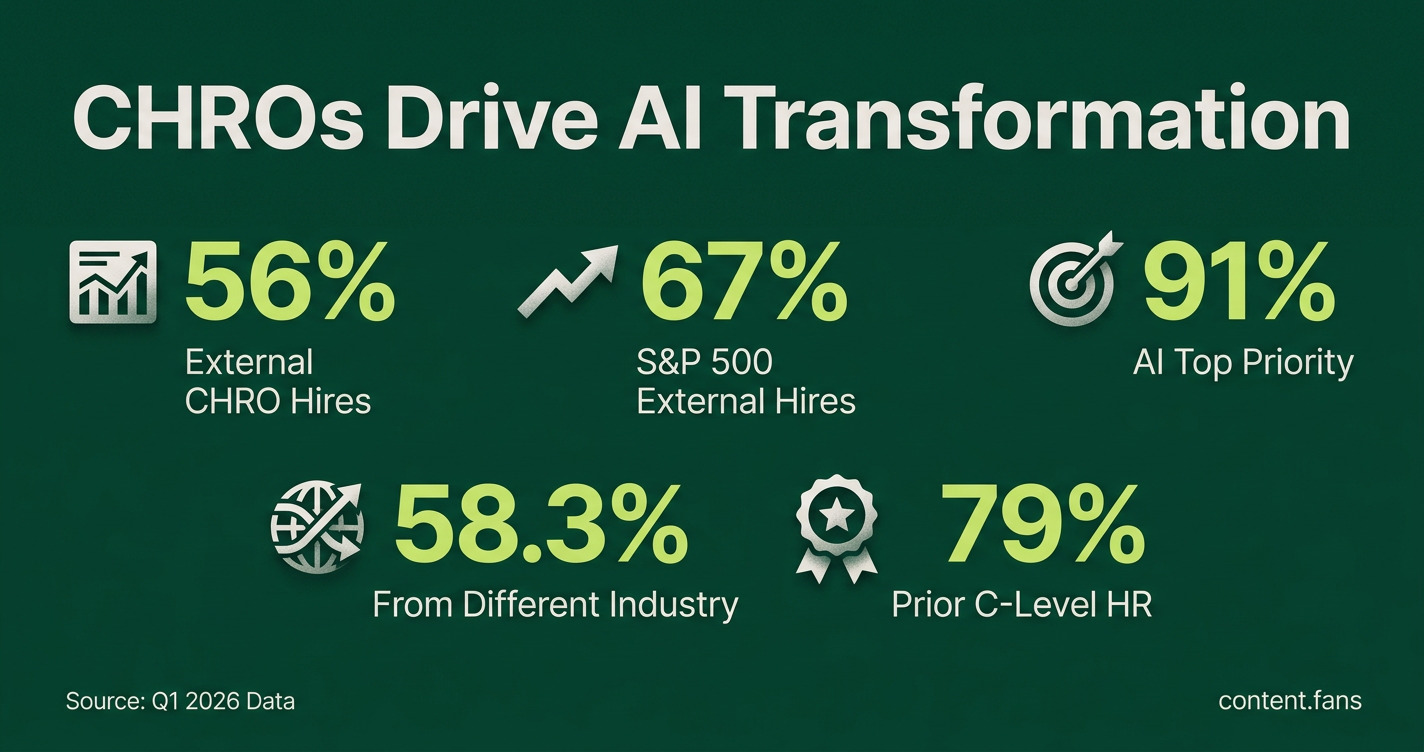
Boards are hiring external CHROs to spearhead AI transformations. With reports showing 91% of people leaders list AI as a top priority survey signals, companies want proven leaders who can deploy new technologies, redesign the workforce, and manage large-scale change without derailing compliance or culture.
The Modern CHRO Skillset: What Boards Now Prioritize
As companies seek leaders for this new era, a distinct CHRO profile has emerged that blends technical expertise with human-centric leadership leadership profile. Search committees are prioritizing candidates with a track record in transformation, as evidenced by N2Growth data showing 58.3% of new S&P 500 CHROs came from a different industry. Key capabilities include:
- AI Literacy: The ability to evaluate AI use cases and establish robust governance guardrails.
- Workforce Redesign: Skills to deconstruct and re-task roles around automation while preserving essential human judgment.
- Data-Driven Planning: Expertise in using predictive people analytics to inform strategic workforce decisions.
- Large-Scale Reskilling: Proven experience managing enterprise-wide programs to prepare employees for new ways of working.
- Ethical Governance: The ability to create frameworks that address AI-related bias, data privacy, and transparency.
Underscoring the preference for experience, The Talent Strategy Group found that 79% of external CHRO hires in 2024 already held a C-level HR title, suggesting boards favor a proven playbook during periods of significant change.
Early Outcomes and ROI from AI-Focused CHROs
The strategic shift to hiring external, AI-savvy CHROs is already yielding measurable results at leading companies:
- Mastercard: The "Unlocked" internal talent marketplace, championed by CHRO leadership, has enrolled 93% of the global workforce, with a third of participants moving into new roles or promotions.
- Unilever: AI-powered recruiting tools cut time-to-hire by 90%, saved over 50,000 interview hours, and increased diverse hires by 16%.
- IBM: Its AskHR virtual agent managed 11.5 million employee queries in 2024 with a 94% containment rate, helping to reduce HR operating costs by 40% over four years.
- Eaton: Implementing AI-enabled recruiting tools led to a nine-day reduction in time-to-offer and delivered $2.4 million in savings in the first year alone.
Beyond HR: The CHRO's Role in Enterprise-Wide AI Strategy
Successful AI integration requires more than isolated HR projects. Forward-thinking external CHROs are accelerating adoption by co-owning the enterprise AI strategy alongside the CIO and CFO. For example, Marriott CHRO Ty Breland co-chairs a company-wide AI council with the heads of Technology and Customer Experience. This cross-functional governance model ensures that workforce design, technology roadmaps, and skills funding remain synchronized. It's a key reason why 92% of CHROs anticipate deeper AI integration into their workforce this year.