
Every Unveils 33 AI Questions for Executives, Offers Roadmap for Adoption
Serge Bulaev
Every has released a guide called "33 Questions Executives Ask About AI - Answered," which gives advice to company leaders about using AI. The guide covers strategy, convincing skeptics, choosing tools, and making sure leaders are involved. Natalia Quintero suggests a 60-day plan to help companies get more value from AI, including setting clear goals and sharing early successes. Mike Taylor describes eight levels of AI adoption, and says good documentation may help companies move faster. Leadership involvement and picking the right tools also seem important for successful AI use, but the guide does not guarantee one solution for everyone.

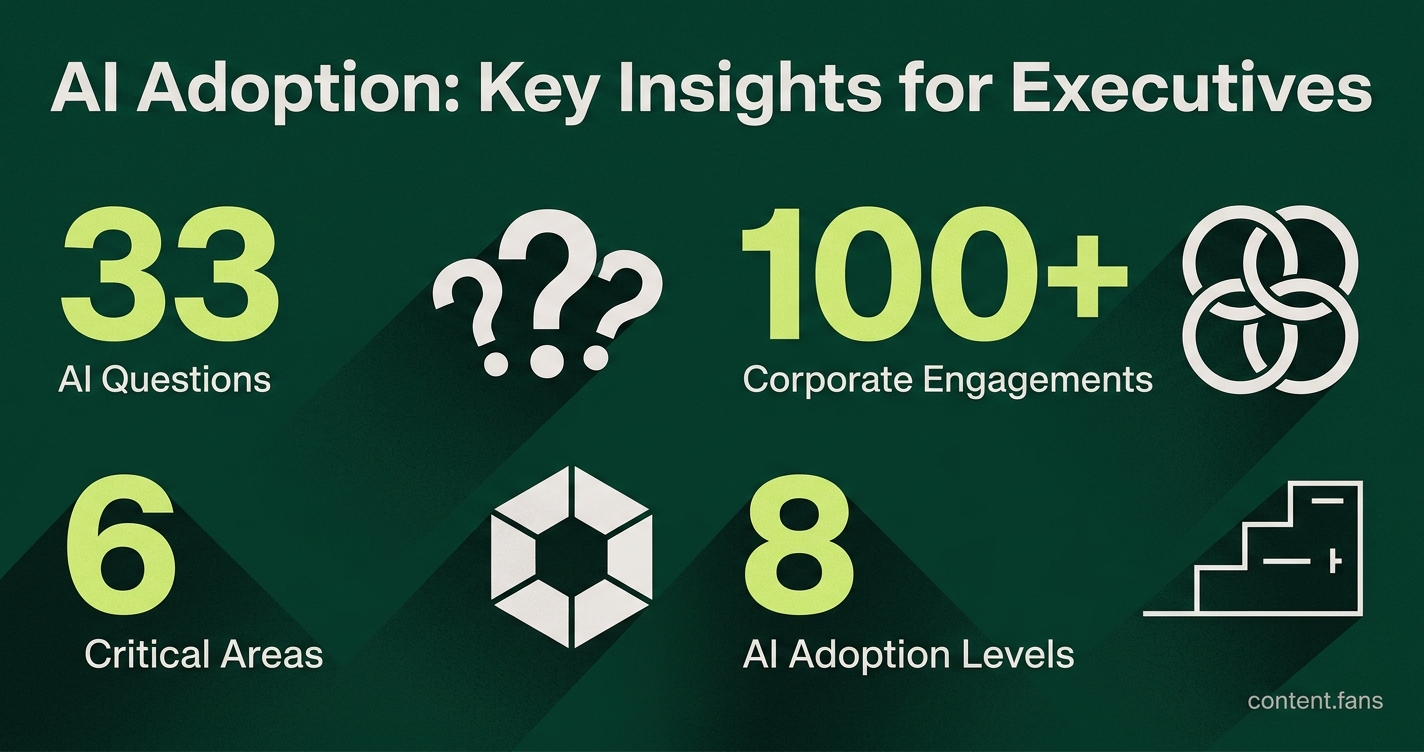
Every has released its definitive guide, "33 AI Questions for Executives," offering a clear roadmap for AI adoption based on insights from over 100 corporate engagements. Authored by consultants Natalia Quintero and Mike Taylor, the guide synthesizes common boardroom challenges into actionable advice on strategy, governance, and tool selection for building an AI-native organization. This article explores the key frameworks and strategies from their playbook.
Key Themes: From Strategy to Organizational Culture
The guide is structured around six critical areas for leadership: strategy, stakeholder buy-in, governance, tool selection, AI fluency, and organizational change. A central theme is that AI adoption is a management challenge, not a technology one. Quintero and Taylor argue that AI should be managed like a new employee - requiring clear goals and performance reviews - shifting the focus from models to organizational culture. The complete guide links directly to each question and answer for easy reference.
The guide's core insight is that successful AI integration hinges on organizational readiness, not just technology. It provides actionable frameworks for leaders to define a clear vision, secure executive sponsorship, implement strong governance, and cultivate a culture of continuous learning to drive measurable business results with AI.
Quintero's Roadmap: From Pilot to Scale
For organizations struggling to see returns on their AI investments, Natalia Quintero provides a structured roadmap. The plan is designed to build momentum and convert isolated experiments into scalable, reusable skills. Key steps include:
- Define Vision: Set a clear vision tied to a single business metric.
- Appoint Sponsor: Assign a single executive sponsor with budget authority.
- Identify Workflows: Document three high-value workflows to target for improvement.
- Assign Champions: Empower "AI champions" within teams to lead prompt engineering and testing.
- Share Wins: Publicize early successes to build support and expand ownership across the company.
Taylor's Eight Levels of AI Adoption Maturity
To complement the roadmap, Mike Taylor introduces an "eight levels of AI adoption" maturity model. This framework helps organizations benchmark their progress, from initial experimentation by a single employee (Level 1) to sophisticated, multi-agent orchestration across business units (Level 8). Taylor stresses that strong documentation and process discipline are the key differentiators for companies that successfully advance through these levels.
Aligning Governance and Tool Selection
The guide emphasizes that tool selection must be driven by governance needs. Successful organizations first identify their largest governance gaps - be it model risk, runtime monitoring, or data security - and then select fit-for-purpose tools. Quintero advises leaders to establish clear criteria for scope, evidence standards, and integration requirements before engaging with vendors to avoid common pitfalls.
The Critical Role of Executive Leadership
While structural changes like appointing a Chief AI Officer are on the rise, Every's consultants argue that leadership behavior is the true catalyst for success. According to industry reports, many organizations are reshaping C-suite roles for the AI era, but the guide contends that these changes are only effective when senior leaders personally engage with the technology. This "get your hands dirty" approach is a recurring recommendation, highlighting that direct experience is non-negotiable for effective AI leadership.
Ultimately, the public release of "33 Questions" serves as both a mirror for identifying internal adoption hurdles and a practical checklist for navigating them. It provides a flexible yet structured framework for executives to lead their organizations toward becoming truly AI-native, without offering a rigid, one-size-fits-all solution.