
Enterprises Curb AI Costs, Shift to 'Tokenminimizing'
Serge Bulaev
Enterprises are starting to limit how much AI their employees can use, because costs and risks are rising. Some big companies, like Meta and Microsoft, now ask workers to be careful with AI usage, and firms like Walmart and Amazon have put new limits in place. Experts suggest this shift may be due to the difficulty in predicting AI costs, as spending varies with how many tokens are used. Companies are now tracking AI usage closely and setting alerts or caps to avoid surprise bills. It appears that keeping AI costs under control might become a permanent practice if these measures keep working.

The new boardroom mandate is clear: enterprises are curbing AI costs by shifting from unchecked experimentation to a disciplined 'tokenminimizing' strategy. Citing budget pressures and governance risks, Fortune 500 companies are moving away from encouraging unlimited generative AI use and are now demanding that employees scrutinize every token.
This strategic shift is driven by a need for cost visibility. After one firm reportedly spent half a billion dollars on AI before implementing controls, major players are taking notice. According to industry reports, many companies are now urging employees to use AI more efficiently or reduce usage. In the retail sector, Walmart restricted its internal AI coding assistant (Code Puppy) by limiting token usage to avoid duplicative work, as noted by Business Insider.
Why Token Counts Are Now a C-Suite Concern
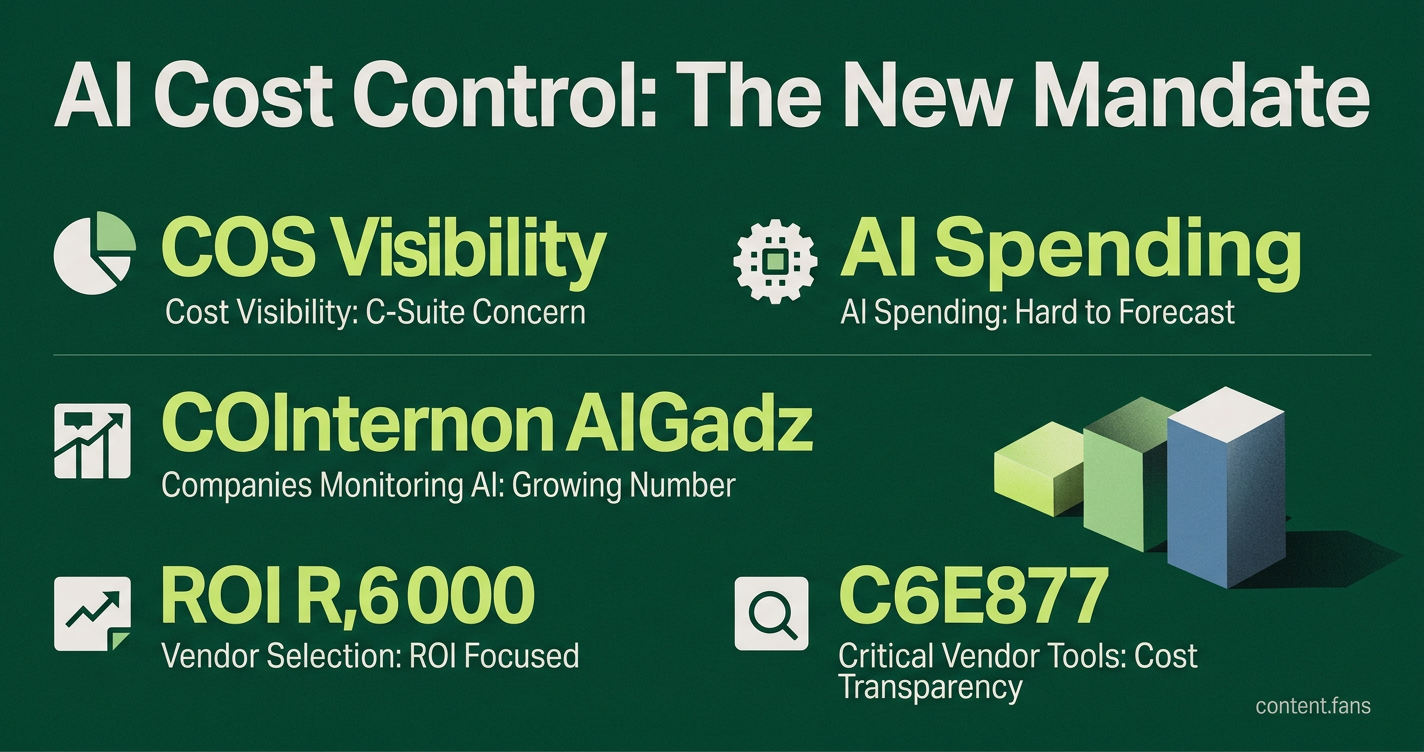
The core issue is that AI spending is difficult to forecast due to variable pricing models based on tokens, tasks, and model complexity. As a result, finance teams are demanding real-time data to avoid budget overruns. According to industry reports, a growing number of companies now monitor AI usage, making cost tracking an increasingly standard operational practice.
Enterprises are curbing generative AI costs to gain control over unpredictable spending tied to token-based pricing. This 'tokenminimizing' trend involves setting usage caps, monitoring employee activity, and implementing stricter governance to prevent runaway budgets, mitigate security risks, and ensure a clear return on AI investments.
Common Levers for Controlling AI Spend
- Implementing Usage Quotas: Setting per-user or team-based token ceilings with automated alerts when quotas are nearly reached.
- Automated Model Routing: Directing low-priority queries to smaller, more cost-effective models to optimize resource allocation.
- Dismantling Usage Incentives: Removing internal leaderboards or other gamification systems that encourage excessive AI consumption.
- Contractual Safeguards: Embedding spending caps and mandatory approval thresholds for overages directly into vendor contracts.
- Cost Visibility Dashboards: Deploying dashboards that provide granular cost-per-inference visibility to product owners and teams.
Market Implications for AI Vendors
This shift signals a market consolidation. While overall AI spending may increase, enterprises are funneling it through fewer contracts, prioritizing vendors that demonstrate clear ROI. Consequently, cost transparency tools like live token meters, spending forecasts, and detailed audit logs have become critical selection criteria. AI vendors without these financial controls risk failing pilot programs and losing renewals as procurement consolidates.
The Convergence of AI Governance and FinOps
Effective AI cost control requires a new operating model where governance and finance converge. Best practices point to creating a centralized AI governance council comprising leaders from legal, security, finance, and data science. This council's first step is often to create a complete inventory of all AI models, tagging each with its owner, risk profile, and cost center. From there, organizations establish tiered approval processes and implement continuous monitoring to flag model drift, bias, and budget overruns in a unified system.
Key Metrics for the Future of Enterprise AI
As enterprises mature their AI strategies, leadership dashboards are increasingly focused on two key performance indicators:
- Cost Per Successful Outcome: Measuring the expense tied to a valuable business result, such as a resolved customer support ticket.
- Token Usage Variance: Tracking the difference between projected and actual AI consumption.
The ability to manage these metrics will determine if 'tokenminimizing' evolves from a temporary fix into a permanent, value-driven discipline for enterprise AI.