
Distillers cut fossil fuel demand 49%-66% with waste valorization
Serge Bulaev
A study suggests that distilleries can cut fossil fuel use by 49%-66% by using waste for energy, though some may only reach 13%-17% savings. Some brands, like Aspen Vodka and Mutiny Island Vodka, claim to reduce carbon and waste, but it is not clear if these results are the same everywhere. Efforts to use less packaging, run on renewable energy, or reach carbon neutrality appear to help, but verification and cost remain challenges. Data shows that distillation is a big source of emissions, and even a 10% cut in energy use is seen as meaningful. Regulators and costs may limit how quickly small producers can adopt these changes.

A study of nine operational distilleries found that anaerobic digestion of by-products could reduce fossil fuel demand by 49% to 66%, depending on by-product type and processing route. A peer-reviewed study highlights potential savings through waste valorization, a critical gain for an energy-intensive industry. While this presents a major opportunity, leaders are also pursuing renewable energy, sustainable packaging, and carbon neutrality to reduce their environmental impact.
The Power of Waste: Turning By-products into Biogas
By sending unprocessed by-products like spent grain to anaerobic digestion, distilleries can generate biogas to power their operations. The study found that anaerobic digestion of certain distillery by-products could reduce fossil fuel demand by 49% to 66%, depending on the feedstock configuration, turning an environmental liability and disposal cost into a significant energy asset.
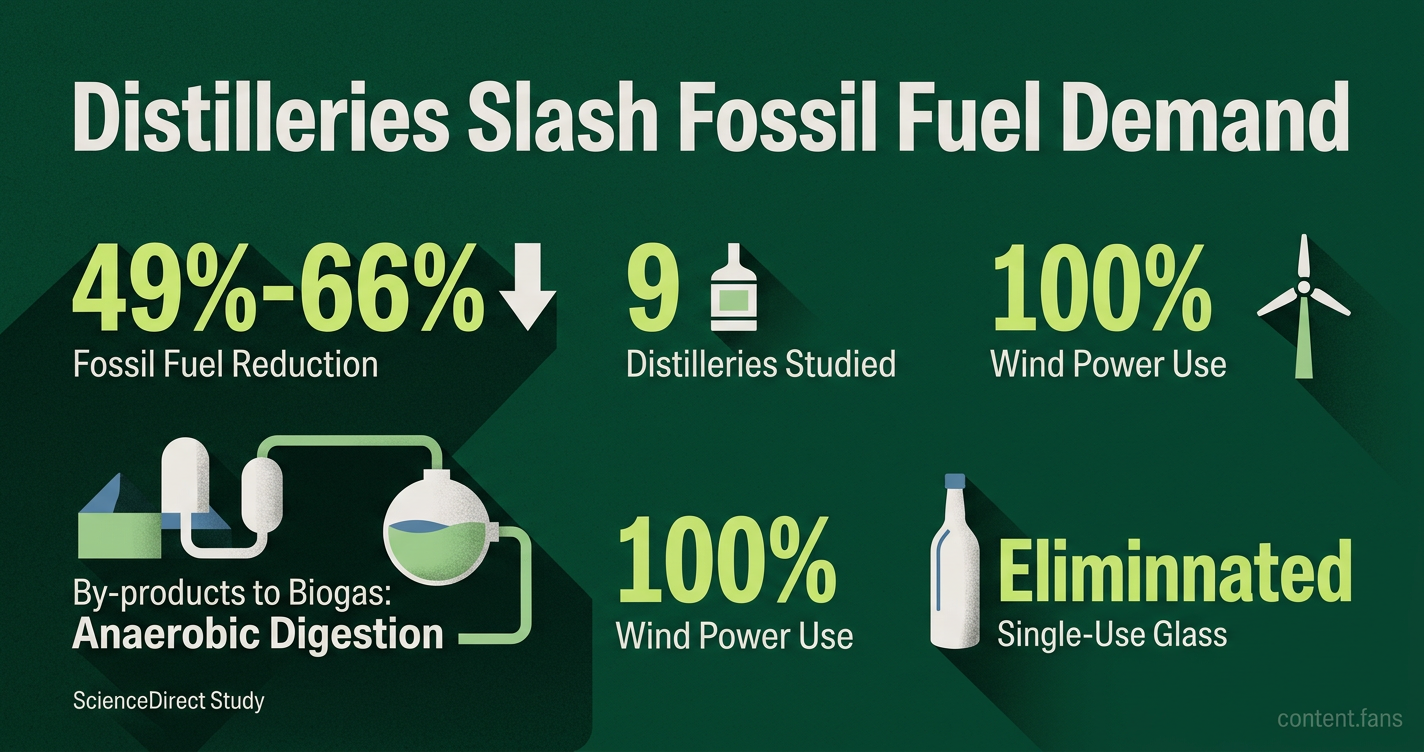
A 2023 study of nine global distilleries confirms the enormous potential of waste-to-energy systems. Researchers found that routing unprocessed or separated by-products to anaerobic digestion slashed fossil fuel demand and Scope 1 greenhouse gas emissions by significant amounts (ScienceDirect). The results underscore that not all waste streams are equal; systems using liquid or concentrated residues saw more modest, yet still meaningful, reductions.
Beyond Waste: A Multi-Faceted Approach to Sustainability
Industry pioneers are demonstrating that sustainability extends beyond waste management. Some brands, like Montanya Distillers, operate on 100 percent wind power, leveraging B Corp certification to open new commercial doors. On the packaging front, Proof & Company's partnership with ecoSPIRITS eliminates single-use glass for key product lines, and the firm offsets residual emissions through its own tree-planting program (Proof & Company CSR).
Holistic facility design and ingredient sourcing also play a key role. Aspen Vodka utilizes an all-electric facility built to LEED-aligned standards and sends its spent grain to a local farm, reporting significant reductions in embodied carbon (Sustainable Brands). Similarly, Mutiny Island Vodka champions underused resources like breadfruit and runs a near-zero-waste operation by routing pulp to livestock feed (Sustainable Brands).
Navigating the Hurdles to Greener Distilling
Despite these successes, distilleries face significant barriers to adoption. The high capital intensity of net-zero pathways, which often require expensive upgrades to heat-recovery stills and closed-loop water systems, can stretch the budgets of craft producers. Furthermore, a complex regulatory landscape requires companies to align with disparate rules, such as SEC climate disclosures and EU packaging directives.
Precision in environmental claims is also paramount. As regulators scrutinize vague terms like "carbon neutral," brands must provide transparent verification. While Young Spirits achieved carbon-neutral status through tree-planting offsets, the industry standard is shifting toward detailed documentation of boundaries, baselines, and third-party audits to substantiate all sustainability claims.
Quantified impact is what resonates with both consumers and industry peers. With distillation accounting for a significant portion of spirits' carbon footprint, every percentage point of reduction matters. Whether through waste valorization, renewable energy, or smarter packaging, verified data provides the most credible benchmark for progress.
How much fossil-fuel demand can distillers eliminate by valorising waste streams?
Recent data from nine operational facilities shows significant cuts in fossil-fuel demand when unprocessed or separated by-products are routed to anaerobic digestion - among the largest confirmed gains in recent literature. Even partly concentrated or liquid residues still deliver meaningful reductions, giving every scale of producer a realistic pathway to decarbonise. By turning what was once wastewater or spent grain into biogas for boilers, distillers move from liability to energy asset.
Which by-product configurations deliver the biggest carbon savings?
The 2023 multi-site study makes the hierarchy clear: unprocessed mixed solids and separated solids outperform every other stream, cutting Scope 1 GHG emissions substantially. In contrast, heavily concentrated syrups and thin stillage show more modest results, mainly because their lower biogas yield per tonne offsets the energy recovered. Optimising separation and moisture levels before digestion is therefore the critical step for anyone chasing headline-worthy reductions.
How much waste does a typical distillery actually generate?
Benchmark figures for malt whisky translate to 17.5-20 lb of spent grain and 4.5-6 gal of pot ale for every gallon of proof spirit. Left untreated, these streams have high biochemical-oxygen demand and can exceed 30 gal of water use per gallon of finished spirit. Valorisation flips this equation: instead of disposal cost, the same organic load becomes a carbon-negative fuel source.
What are the leading technical hurdles when scaling valorisation?
Producers report three recurring sticking points:
1. Separation efficiency - removing excess liquid boosts biogas yield but requires investment in screens or presses.
2. Digester sizing - matching tank volume to seasonal by-product surges avoids costly downtime.
3. Path to compliance - documentation must satisfy both local wastewater regulators and emerging SEC-style climate disclosures. Early pilot projects that log biogas output and Scope 1 reductions provide the data trail auditors now expect.
Beyond energy, what other environmental wins come from waste valorisation?
The same anaerobic digestion step also slashes the biochemical-oxygen demand of remaining effluent, easing pressure on municipal treatment plants. Some distilleries further refine the digestate into organic fertiliser, closing the loop with barley or fruit farmers in their supply chain. Measured together, these co-benefits strengthen consumer-facing sustainability claims and support ESG reporting for investors who increasingly scrutinise quantified lifecycle impacts.