
DC's New Drip Pricing Ban Expands Liability to Third Parties
Serge Bulaev
Washington D.C.'s new law bans drip pricing, making it illegal for sellers to show prices that leave out required fees until checkout. The rule may hold not only sellers but also third parties, like payment processors and marketing vendors, responsible if they help hide fees. Companies must now include all mandatory charges (except taxes and real shipping) in the first price shown to customers. This change could make prices look higher at first, but it might help shoppers by making costs clearer and easier to compare. How the law is enforced, especially for subscriptions and hotels, may still change as cases go to court.

Washington D.C.'s new drip pricing ban marks a pivotal moment for retail price transparency, making it illegal to advertise a price that excludes mandatory fees. This law requires sellers to integrate all required charges, which previously appeared only at checkout, directly into the initial price consumers see.
The law targets what are often called "artificially low advertised prices." It expands liability beyond the seller, allowing legal action against any party that aids or abets the practice of hiding fees, as JD Supra explains. This significantly broadens the risk to include partners and vendors.
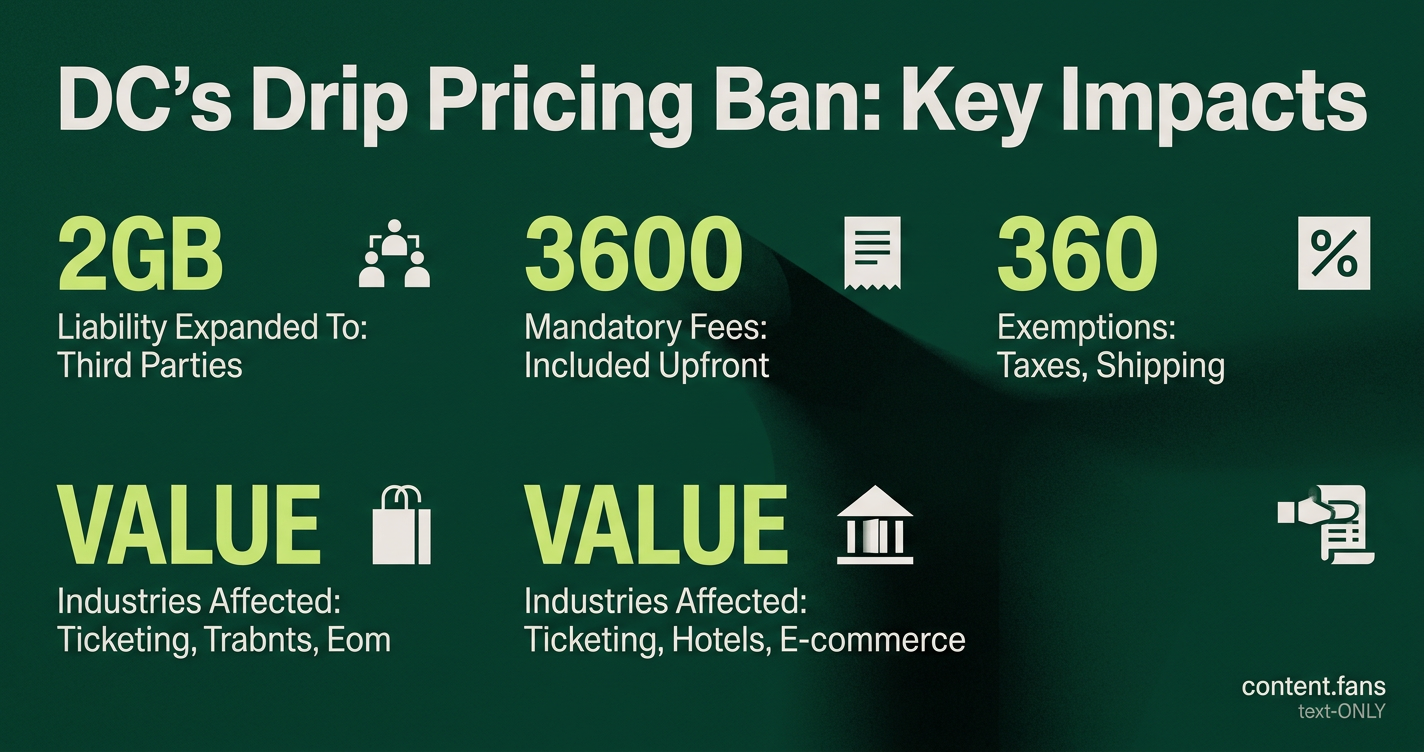
Why this make or break moment for retail pricing matters
The D.C. drip pricing law requires businesses to display an all-in price that includes all mandatory fees and surcharges from the start. This rule aims to eliminate surprise costs at checkout, increase price transparency, and expand legal liability to third parties who facilitate deceptive pricing practices.
The D.C. Attorney General is already enforcing the law, notably with a lawsuit against StubHub. Prosecutors allege hidden fees added significant costs to ticket prices, impacting D.C. consumers substantially. While disputing the claims, StubHub stated it "strongly supports" uniform all-in pricing rules, according to CBS News.
While ticketing is a primary focus for regulators, the law's reach is extensive. It impacts any business using layered pricing to hide mandatory charges, including e-commerce marketplaces, hotels, telecom providers, financial services, and subscription-based companies, fundamentally changing how they must present costs.
Core requirements sellers must meet
- Advertised prices must include all mandatory charges. The only exceptions are government-imposed taxes and actual shipping costs for physical items.
- Fees labeled as "service," "convenience," or "resort" fees are prohibited from appearing late in the checkout process if not included in the initial price.
- Third parties, such as payment processors and marketing vendors, can be held liable for aiding and abetting non-compliant pricing displays.
Non-compliance carries significant penalties, including statutory fines, treble damages in private lawsuits, and fee-shifting provisions. Legal experts note this expanded liability increases the legal risks for everyone involved in pricing, from web designers to back-office teams.
Early enforcement patterns and practical hurdles
Early enforcement focuses on consumer-facing industries where inflated fees are easily documented. However, proving deceptive intent within complex digital checkouts presents challenges. Regulators must identify when a fee was omitted, who controlled the pricing display, and if the charge was truly mandatory, often prioritizing high-impact cases due to limited resources.
Some businesses argue that these fees cover legitimate operational costs and that higher initial prices might deter consumers accustomed to lower advertised rates. In response, companies are either simplifying their pricing structures or advocating for a unified national standard to prevent a confusing patchwork of state and local laws.
D.C. rule in a national context
The D.C. law is part of a national trend. California has enacted legislation targeting hidden fees, Minnesota has implemented all-in pricing requirements, and New York City is considering hotel fee restrictions. Federal regulators are also developing rules targeting junk fees in various industries.
These laws generally converge on a single principle: the first price a consumer sees must be the total price they pay, excluding taxes and legitimate shipping. Notably, D.C.'s statute contains some of the broadest "aiding-and-abetting" provisions, increasing legal exposure for the entire e-commerce ecosystem.
What in-house teams are doing now
Corporate counsel advise immediate audits of:
1. Ad copy and search listings.
2. Product detail pages.
3. Cart and checkout modules.
4. Subscription renewal paths.
Typical adjustments include merging service fees into the base price, updating disclosures, and documenting all pricing decisions to prepare for potential legal challenges. While this will increase advertised prices, it is expected to build consumer trust by enabling clearer, more honest price comparisons.
Future enforcement actions in D.C. will likely focus on complex areas like subscription billing and hotel resort fees. These upcoming legal tests will determine if the law's broad liability for third-party facilitators holds up in court or if legislative adjustments will be required.
What counts as "drip pricing" under the new D.C. law and how is it being enforced?
The law categorizes drip pricing as any advertised price that omits mandatory fees - such as service charges, convenience fees, or resort fees - and only reveals them at checkout. Enforcement is active: the D.C. Attorney General has already filed claims, including against StubHub, where hidden fees allegedly added substantial costs to advertised ticket prices and are estimated to have significantly impacted D.C. consumers. Penalties can now include mandatory minimum fines, treble damages for injured consumers, and fee-shifting provisions that make litigation riskier for violators.
Who else can be sued besides the seller?
Third parties like payment processors, consultants, and vendors that "aid and knowingly or recklessly abet" deceptive pricing are now within reach. This means if your platform, software, or service helps a merchant structure hidden fees, the D.C. Attorney General can name you in a complaint even if you never advertised the price yourself.
How are online marketplaces and subscription services reacting?
- StubHub publicly disputes the suit but also says it "strongly supports federal and state solutions that enhance existing laws to empower consumers, such as requiring all-in pricing uniformly across platforms" source.
- E-commerce sites are auditing pricing flows to fold every mandatory fee into the first price shown, except for taxes and actual shipping.
- Subscription businesses are redesigning sign-up flows so initiation and upgrade fees appear before the consumer clicks "subscribe," cutting revenue from late-stage fee surprises.
Will prices go up or just look higher?
Headline prices will appear higher because all mandatory charges must be baked into the advertised amount, but the total amount paid at checkout should stay about the same for most products. The larger benefit is price transparency: shoppers can compare true total costs before entering credit-card details.
Are other cities or states copying Washington, D.C.?
Yes.
- California has enacted legislation banning hidden fees statewide.
- Minnesota requires all mandatory fees in advertised prices.
- New York City is considering restrictions on hotel junk fees.
- Federal regulators are developing rules targeting junk fees in live-event tickets and short-term lodging nationwide. D.C.'s law is part of a growing wave toward single, easy-to-see prices across the U.S.