
Coca-Cola taps AI to boost retail growth, not just cut costs
Serge Bulaev
Coca-Cola is using artificial intelligence (AI) to help grow its retail business, not just to save money, according to CFO John Murphy. The company may use AI to improve how it targets customers, sets prices, and chooses products for both premium and value shoppers. Some case studies suggest AI tools have led to higher sales and better store performance in different countries. Coca-Cola also appears to use AI to help manage inventory and suggest restocking through apps, which may boost sales. The company's approach suggests AI might help make its products appealing to a wide range of shoppers, focusing on growth instead of cutting jobs.

Coca-Cola is using artificial intelligence to boost retail growth, a strategic pivot that frames AI as a revenue generator rather than a tool for cutting costs. According to company leadership, machine learning is being deployed to sharpen customer targeting, optimize pricing, and refine the product mix for both premium and value-conscious consumers. This approach counters the common narrative of AI as primarily a mechanism for workforce reduction.
Official Stance: AI as a Growth Engine
Coca-Cola's CFO, John Murphy, has consistently positioned AI as a growth enabler for its Retail Growth Management (RGM) strategy. According to industry reports, he has emphasized using AI to navigate a "K-shaped" economy by serving diverse consumer needs. The core goal is to invest in brand innovation, with AI acting as an accelerator for smarter resource allocation.
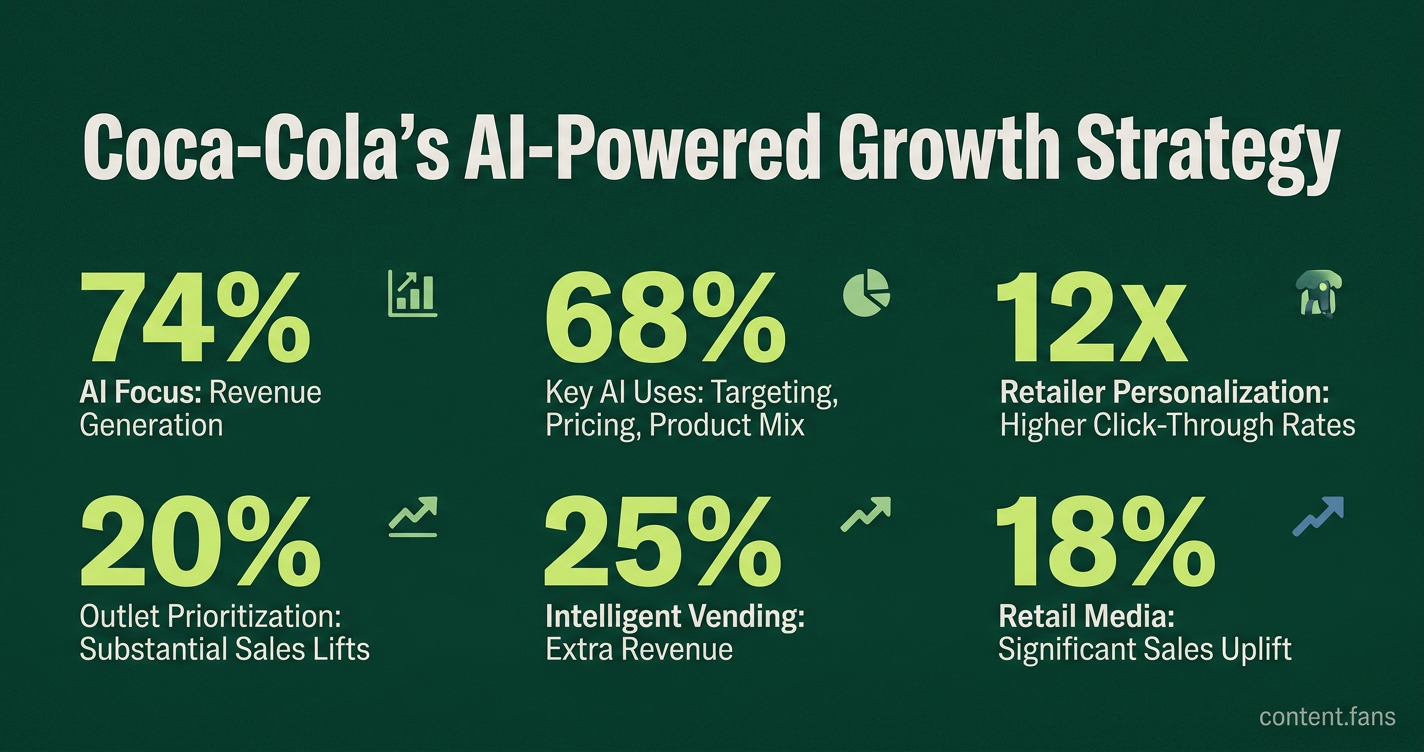
Coca-Cola is deploying artificial intelligence across its retail operations to enhance growth. The company uses AI for precise customer targeting, dynamic pricing, and product mix optimization. This strategy aims to increase sales and market relevance by appealing to both premium and value-conscious shoppers simultaneously.
How AI Translates to Measurable Sales Lifts
Company filings and vendor case studies provide concrete examples of how AI is driving revenue. These pilot programs, which have been scaled after proving their success, demonstrate a clear return on investment across different markets.
- Retailer Personalization: In Mexico, Coca-Cola FEMSA has significantly expanded an AI recommendation engine to reach a growing number of retailers. According to industry reports, generative AI-powered messages achieved substantially higher click-through rates compared to non-AI messages, leading to improved cohort revenue.
- Outlet Prioritization: In Egypt, Coca-Cola HBC used algorithms to analyze external data and identify a significant number of high-priority kiosks and grocery stores. Industry reports noted substantial sales lifts in these outlets compared to benchmark stores.
- Intelligent Vending: An AI model from Hivery optimized vending machine assortments, reportedly adding meaningful extra revenue while reducing restocking trips according to industry case studies.
- Retail Media: A two-week AI activation at Profi stores in Romania delivered a reported significant sales uplift and strong return on ad spend for a new product launch.
Beyond Sales: Optimizing the Shelf and Supply Chain
Coca-Cola's Retail Growth Management strategy also applies AI to assortment and inventory challenges. A pilot program that sent WhatsApp replenishment nudges based on sales and weather data saw participating outlets achieve notably higher sales than control stores. In another initiative, AI helped enrich category data to identify stevia-based drinks that were under-shelved, strengthening data-driven conversations with retailers about space allocation.
A Multi-Billion Dollar Bet on a Segmented Market
The company's AI initiatives are supported by a substantial financial commitment. According to industry reports, Coca-Cola has announced a significant multi-year agreement with Microsoft to expand its use of Azure OpenAI services across marketing, manufacturing, and supply chain operations. Murphy framed this as a way to "hone in on what's going to deliver the most value for our buck."
This investment is central to a strategy that addresses a bifurcated market. AI-powered micro-segmentation allows the company to identify premium buyers with unique flavors and sustainability cues while simultaneously offering value shoppers optimized pack sizes and promotions. This dual approach aims to create demand and enhance brand relevance rather than focus on austerity and cost reduction.