
Clinch Unveils Operational GEO, Integrates AI for Ad Campaign Workflows
Serge Bulaev
Recent evidence suggests that advertising problems may be more about disconnected systems than the number of AI agents. Clinch's new Operational GEO tool, launched in early 2026, appears to help by linking measurement, creative, and media in real time, turning data into immediate campaign actions. Case studies suggest unified systems might speed up work and improve results, such as faster ad trafficking and higher booking rates. Surveys indicate that most marketers face issues with fragmented tools, and investments seem to be shifting toward integrated platforms. This all suggests that better connection between tools, not just more AI, may boost speed, efficiency, and consistency for advertisers.

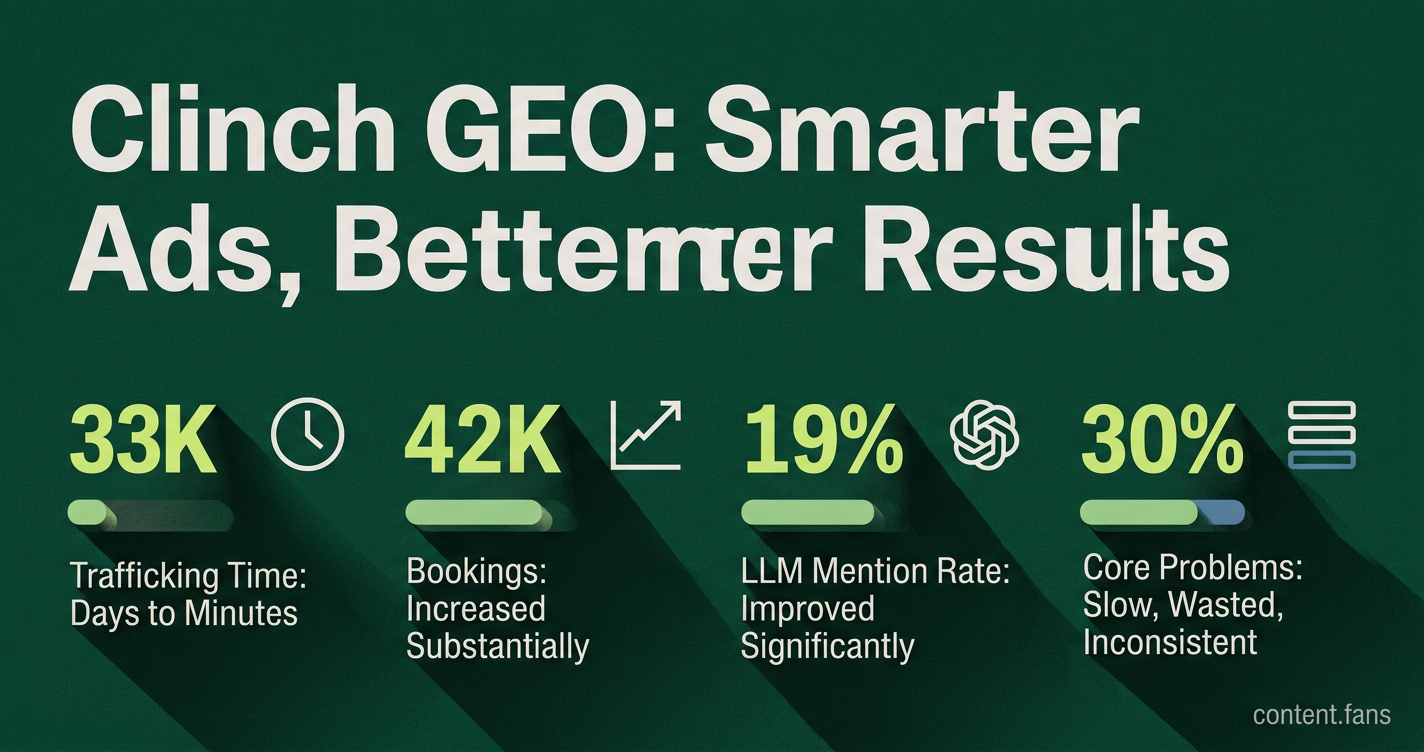
While many advertisers add more AI agents, the industry's core problems - slow trafficking, wasted budgets, and inconsistent results - persist. Clinch's Operational GEO directly addresses this by integrating AI into campaign workflows, arguing the solution isn't more agents, but smarter, connected systems where measurement, creative, and media operate in a unified loop.
Connected feedback loops beat isolated agents
Clinch's Operational GEO (Generative Engine Optimization) is an integrated AI tool designed to fix disconnected ad workflows. It connects measurement, creative, and media bidding in a real-time feedback loop, allowing campaign data to immediately inform and optimize creative assets within a single platform.
The system converts static reports into an always-on "measure, understand, act" cycle. It uses live AI-discovery metrics from partner platform Whitebox, piping them into the Flight Control workflow. According to a Martech360 write-up, this allows brands to see how large language models reference them, diagnose the sources, and feed those insights directly into dynamic creative. Similarly, the Creative Template Catalog auto-tags every asset, using historical performance data to guide the generation of new variants.
Case studies highlight tangible gains
Early results from unified systems demonstrate significant gains. In a travel vertical example cited in Digiday commentary, itinerary-based ads linked to a live sailing feed reduced ad trafficking time from days to minutes and reportedly increased bookings significantly. Another case saw a large retailer boost its AI mention rate substantially by using Operational GEO to connect content fixes with its media strategy.
| Client | Integration layer | Reported outcome |
|---|---|---|
| Travel advertiser | Unified creative + media layer | Trafficking time reduced, bookings increased substantially |
| Large retailer | GEO visibility loop | LLM mention rate improved significantly |
| Genesis & Canvas Worldwide | External conversion data in DCO | Video creative steered toward post-exposure search engagement |
These outcomes are possible because performance signals move continuously between where they are tracked and where campaign decisions are made.
Why the industry trend aligns with integration
Market data confirms that fragmentation is a primary pain point. Industry reports indicate that a significant portion of marketers lack fully unified tech stacks, and research shows that many professionals see disconnected tools as a top hurdle. Spending patterns reflect this shift, with industry data indicating most enterprises now favor AI assistants embedded in existing workflows over custom, stand-alone agents. Capital is migrating toward integrated platforms with built-in safeguards, not isolated chatbots.
Actionable Takeaways for Practitioners
To achieve similar results, advertisers should:
- Map every measurement source to a decision-making tool within the same platform.
- Feed external conversion and intent data back into creative logic, not just media buying.
- Instrument creative at the component level so historical data informs new variants.
- Treat AI-discovery visibility as a core media KPI and close the loop with content updates.
Ultimately, the evidence suggests that prioritizing connection over proliferation is the key. When advertisers focus on building integrated systems, they can unlock improvements in speed, efficiency, and consistency simultaneously, creating a powerful virtuous cycle.
What problem is Clinch trying to solve with its new Operational GEO release?
Clinch argues that simply adding more AI agents to an ad stack does not fix the systemic headaches of speed, efficiency, and outcome consistency. Instead, the company is shipping Operational Generative Engine Optimization (GEO) inside Flight Control so that measurement, bidding, creative, and inventory talk to each other in one continuous loop. Early numbers show a large retail brand significantly improving its AI mention rate after wiring GEO into its always-on asset library.
How does the feedback loop actually work?
The platform follows a "Measure → Understand → Act" cycle:
- Whitebox scans ChatGPT, Gemini, Claude, Perplexity, and Google AI Overviews to score brand visibility, sentiment, and source citations.
- An explainability layer shows which web sources shape model opinion.
- Flight Control auto-tags every creative atom, then spins thousands of permutations tied to live product feeds.
- Results are pushed back to bidding rules so the next impression benefits from the lesson.
In the most recent travel-vertical test, trafficking time shrank from days to minutes and incremental bookings rose substantially when the same team controlled media and creative in one screen.
Does the market agree that integration beats point solutions?
Yes. Industry reports indicate that a growing number of adopters now buy off-the-shelf integrated software rather than one-off agents, and a significant portion of investment firms have agentic AI in full production. Budgets are moving toward workflow-embedded assistants because fragmented stacks can waste substantial programmatic spend. Industry research confirms that many professionals cite data fragmentation as the top blocker to consistent AI performance.
Are there early adopters already live?
Beyond the retailer mention-rate lift:
- Genesis + Canvas Worldwide optimized video toward mid-funnel search intent using The Trade Desk conversion signals, immediately aligning creative with media tactics.
- A LinkedIn-Ads module inside Flight Control lets B2B teams push variant copy straight to Campaign Manager without re-trafficking.
These pilots let Clinch claim "zero reset" between campaigns, because historical performance rides inside every new template.
What should advertisers prioritize if they want similar results?
Clinch partners say governance and data plumbing come first:
- Build a unified asset library with atomic auto-tagging before you scale creative.
- Negotiate third-party measurement ingestion (GEO, retailer first-party carts, or media-side conversions) so optimization signals arrive in real time.
- Demand human-in-the-loop reviews; industry research shows many brands still lack visibility into how agencies use AI.
- Treat agents as embedded micro-services, not standalone apps, so every bid request, product feed update, or GEO scan refines the next ad impression.