
Cineverse Unveils Hex AI to Turn Fandoms Into Streaming Revenue
Serge Bulaev
Cineverse has introduced Hex AI, a tool that uses artificial intelligence to analyze movies frame by frame and create detailed metadata, which may help improve how fans find and enjoy content. The company suggests this deeper information about scenes and audience interests can make advertising and recommendations more relevant, possibly increasing revenue. Cineverse believes fandoms are more like small, identity-based groups than broad genres, so Hex AI might help find new types of content to offer these groups. The company also plans to automate more of its workflow with AI, which could change some jobs but may also create new roles where people manage and guide AI systems. This approach appears to be part of a wider trend in the streaming industry, as more companies use AI for content discovery, automation, and advertising.

Cineverse is set to turn fandoms into a significant streaming revenue engine with its new Hex AI technology, a strategy detailed by executive Erick Opeka at a recent industry event. During a fireside chat, Opeka explained how combining deep, scene-level metadata with a nuanced understanding of fan communities will enhance content discovery and monetization, as reported by Media Play News.
The move highlights a broader industry trend where streaming platforms are elevating AI from a simple recommendation feature to a core architectural layer that defines catalog data, user interfaces, and advertising supply chains.
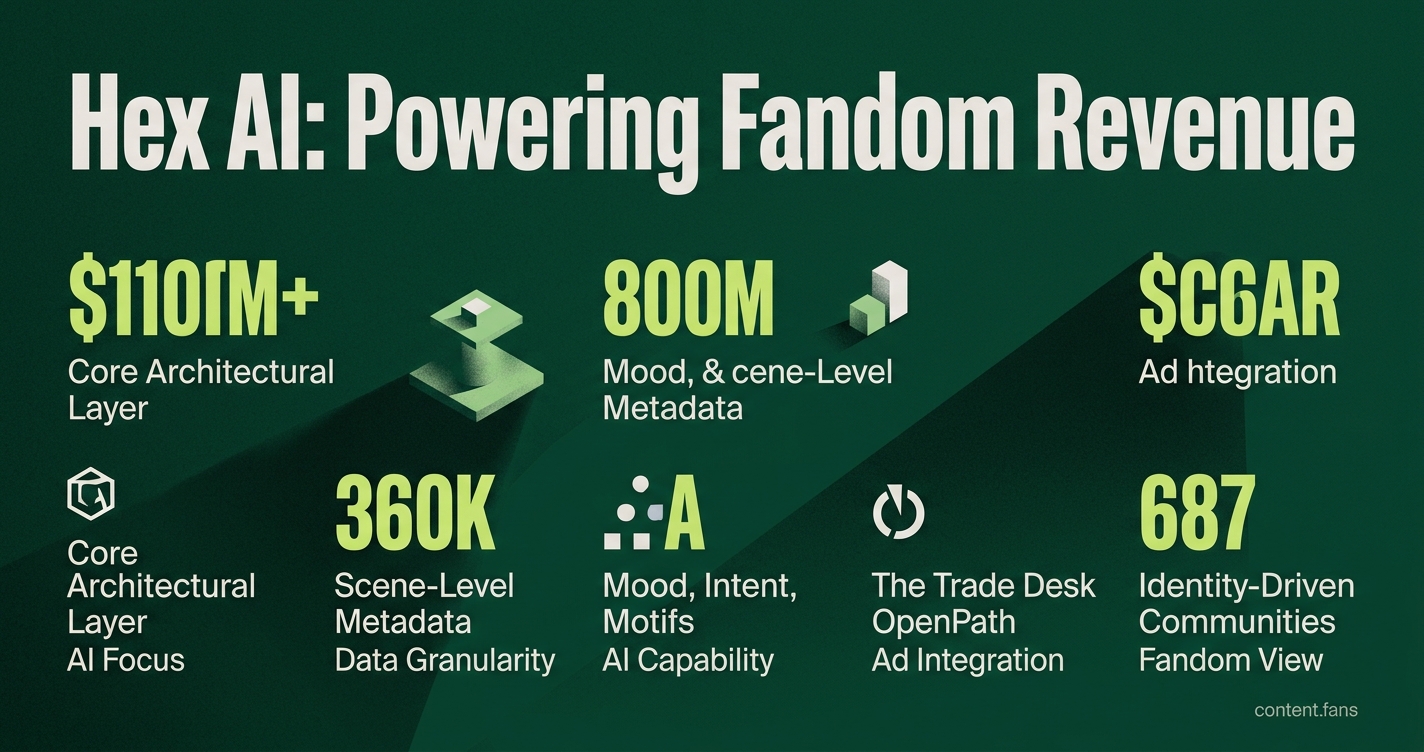
Hex AI: Building a Scene-Level Knowledge Graph
Hex AI is Cineverse's proprietary computer vision system that analyzes video content frame-by-frame. It generates highly detailed metadata by identifying elements like mood, character intent, and visual motifs. This enriched data is then used to improve content discovery, recommendations, and targeted advertising for specific audiences.
Opeka explained that the tool produces granular metadata that conventional tagging methods miss. According to the presentation, Hex AI is capable of identifying:
- Mood and tone changes
- Character intent and emotional arcs
- Music cues and pacing markers
- Visual motifs relevant to niche fandoms
This enriched data powers both cineSearch, the platform's natural-language discovery tool, and its ad-tech stack. By integrating with The Trade Desk's OpenPath, Cineverse aims to shorten its programmatic supply chain and enable near real-time ad optimization that matches campaigns to the emotional texture of a scene.
Why Fandoms Matter to Revenue Planning
Cineverse's strategy operates on the conviction that the industry fundamentally misunderstands fandom, often reducing it to broad genre preferences. Opeka argued that fandoms are identity-driven communities whose interests shift based on micro-themes. By mapping Hex AI's metadata against viewing patterns, the company can identify niche demand that standard categories overlook.
This approach enables Cineverse to license or create content tailored to these lifestyle-anchored micro-genres and market directly to them without relying on third-party data. The company's roadmap includes plans for a unified intelligence layer to automate the entire content supply chain, from ingestion and QC to localization and distribution.
Industry Context: Conversational Discovery and Deeper Automation
This strategy is well-timed with a consumer shift toward intent-based search. According to industry reports, a growing number of users are turning to AI-powered tools for entertainment recommendations, moving beyond traditional guides. In response, streaming operators are enriching metadata, deploying natural-language search, and automating localization workflows.
Operationally, AI is increasingly handling daily tasks like transcription, quality control, and dynamic ad insertion. Cineverse's plan to connect deep metadata directly to ad targeting is consistent with this industry trajectory. Furthermore, analysts note that such rich knowledge graphs can reduce churn by enabling more relevant content recommendations and upsell opportunities.
Implications for Workforce and Workflows
The wider adoption of AI is expected to reshape the entertainment workforce. A 2024 analysis estimates that generative AI could transform over 200,000 U.S. entertainment jobs by 2026, particularly affecting routine post-production tasks. Simultaneously, demand is projected to rise for hybrid roles focused on supervising AI systems, curating metadata, and translating creative goals into technical prompts.
Cineverse executives have stated their AI-driven intelligence layer is designed to augment their workforce, allowing staff to shift from manual, frame-level tagging to higher-value editorial oversight and curation.
Ultimately, Cineverse is positioning its Hex AI and ad-tech initiatives as a strategic flywheel. Better metadata improves content discovery, which enables sharper ad targeting, which in turn finances a deeper and more relevant content catalog. The companies that can connect these functions most efficiently are expected to gain a significant competitive edge in the evolving streaming landscape.
What is Hex AI and how does it turn fandom insight into revenue?
Hex AI is Cineverse's new scene-level computer-vision engine that watched every frame of the catalog to write new metadata. According to company presentations, Cineverse president Erick Opeka demonstrated the system tagging mood, character intent, music tone and pacing for each scene. These enriched descriptors feed Cineverse ad-tech so that the same moment that excites a horror fandom can instantly be matched with a targeted trailer, cutting the supply chain via Trade Desk OpenPath and turning passion into real-time advertising revenue.
Why does Cineverse say the industry "misunderstands fandom"?
At the StreamTV Show fireside chat moderated by CNET's Kourtnee Jackson, Opeka argued that traditional platforms reduce fandoms to genre checkboxes. Cineverse instead treats them as identity-driven communities with shared language and emotional triggers. Hex AI mines those triggers from the content itself, letting the company sell against micro-moments instead of broad categories, a shift the executive calls the difference between "spray-and-pray and precision revenue."
How precise is the metadata that Hex AI generates?
Each film is broken into thousands of scene fingerprints. Beyond the usual cast and plot tags, Hex AI outputs descriptors such as slow-burn suspense, up-tempo synth score, or anti-hero moral dilemma, all delivered in under four minutes per title. Early testing shows improved click-through rates when trailers are matched to scenes carrying these emotion tags compared with poster-synopsis targeting alone.
What other AI tools sit inside the Cineverse stack?
Hex AI works alongside cineSearch, a natural-language discovery layer that lets viewers ask, "Show me scary scenes with female leads in confined spaces." Behind the scenes, agentic AI is being developed to automate localization, thumbnail generation and ad-break placement, part of the company's plan for a unified automated media supply chain.
Will Hex AI replace human curators?
Cineverse emphasizes human-plus-AI curation. Editors still set brand tone and review auto-generated collections, but the machine handles the data grunt work. Industry forecasts cited by Deloitte suggest this hybrid model will expand supervisory roles while reducing pure metadata-tagging jobs, aligning with Cineverse's stated goal to "augment storytellers, not replace them."