
CEPI unveils AI 'ChatGPT for vaccines' to accelerate pandemic response
Serge Bulaev
CEPI is developing an AI tool called the Pandemic Preparedness Engine that may help speed up pandemic prediction and vaccine design. This system is expected to scan global health data and suggest vaccine ideas much faster than before. The project is still in early stages and depends on partnerships, secure data-sharing, and responsible use. Experts suggest there are still big challenges, like making sure the technology is used safely and fairly. So far, no vaccines have come directly from the Engine, but progress seems to be moving forward.

To accelerate the global pandemic response, CEPI is leveraging AI to speed up vaccine development via its 'ChatGPT for vaccines.' This system, the Pandemic Preparedness Engine, will scan global health data to generate vaccine design hypotheses in minutes, a process that previously took months. Experts see the Engine as the digital foundation for CEPI's 100 Days Mission, which aims to produce a safe and effective vaccine within 100 days of identifying a high-risk pathogen.
How the Engine Works
CEPI's Pandemic Preparedness Engine is an AI system designed to accelerate vaccine development. It analyzes real-time global health data, including viral genomes and outbreak trends, to generate optimal vaccine antigen designs, drastically shortening the initial research and development phase from months to mere days.
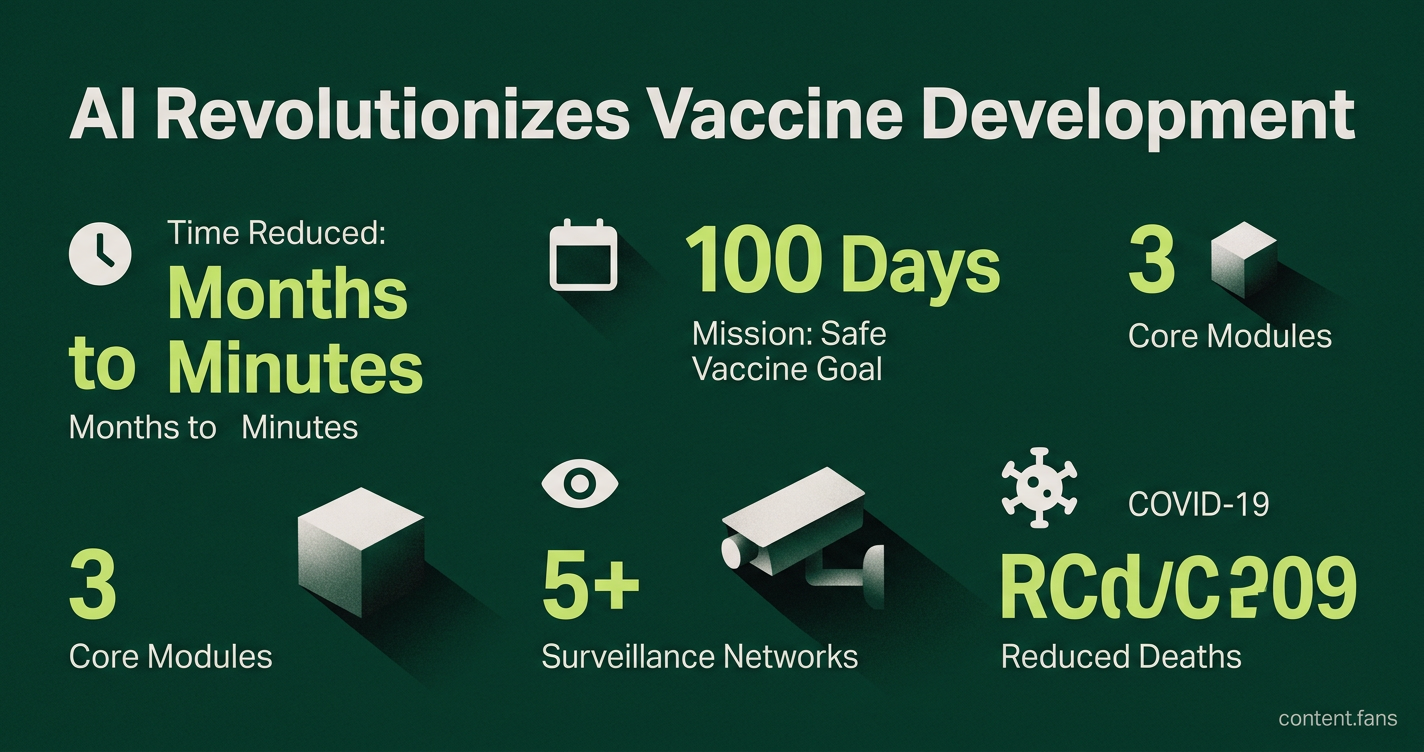
The Pandemic Preparedness Engine operates as a secure, end-to-end workflow built on three core modules: real-time epidemic surveillance, generative antigen design, and manufacturing simulation. According to vaccine scientist Renske Hesselink, the platform will continuously monitor global epidemiological data while proposing candidate antigens on demand. Its data layer integrates viral genomes, epidemiological models, and historical vaccine trial records. Generative AI then proposes immunogen structures optimized to trigger protective immune responses. Industry reports suggest that if this technology had been available in 2020, compressing the design and preclinical phase to just days could have significantly reduced deaths from COVID-19.
Current Progress and Partnerships
Currently in the prototype and collaboration phase, the project involves key partnerships to ensure safety and effectiveness. CEPI is working with Brown University's Pandemic Center, the Nuclear Threat Initiative, and UC Davis to evaluate biosecurity risks and incorporate pathogen-ranking tools like SpillOver. To bolster responsible AI development, significant funding has been allocated for building safeguards. Furthermore, a consultation with the WHO African Region explored connecting the Engine to the Preparedness Data Exchange, enabling local testing by African institutes. More details are expected at an upcoming meeting, as previewed in BioProcess International.
Milestones Under Discussion
- Secure data-sharing agreements with a minimum of five regional surveillance networks.
- Launch an "AI factory" high-performance computing hub for piloting real-time modeling.
- Deploy a sandbox interface allowing researchers to query the Engine for Nipah and Lassa vaccine concepts.
Challenges Ahead
Achieving the 100-day timeline requires overcoming significant hurdles beyond the algorithms themselves. Key challenges include harmonizing international regulatory standards, ensuring equitable access to high-performance computing, and solving manufacturing scale-up logistics. Additionally, CEPI's biosecurity group has highlighted the dual-use risk: the same generative AI that accelerates vaccine design could potentially be misused to create dangerous pathogens, necessitating the co-evolution of robust governance frameworks.
Outlook
Although no vaccines have been produced by the Engine to date, the foundational work is advancing rapidly. CEPI leadership suggests that even a partial implementation - one that can narrow down vaccine candidates in under a week - would be a strong sign of progress. The global health community will be closely watching future conferences for indications that the platform has moved from prototype to operational pilot.