
Breakthru Beverage acquires RNDC's Kentucky, Indiana businesses, creating $8.7 billion entity
Serge Bulaev
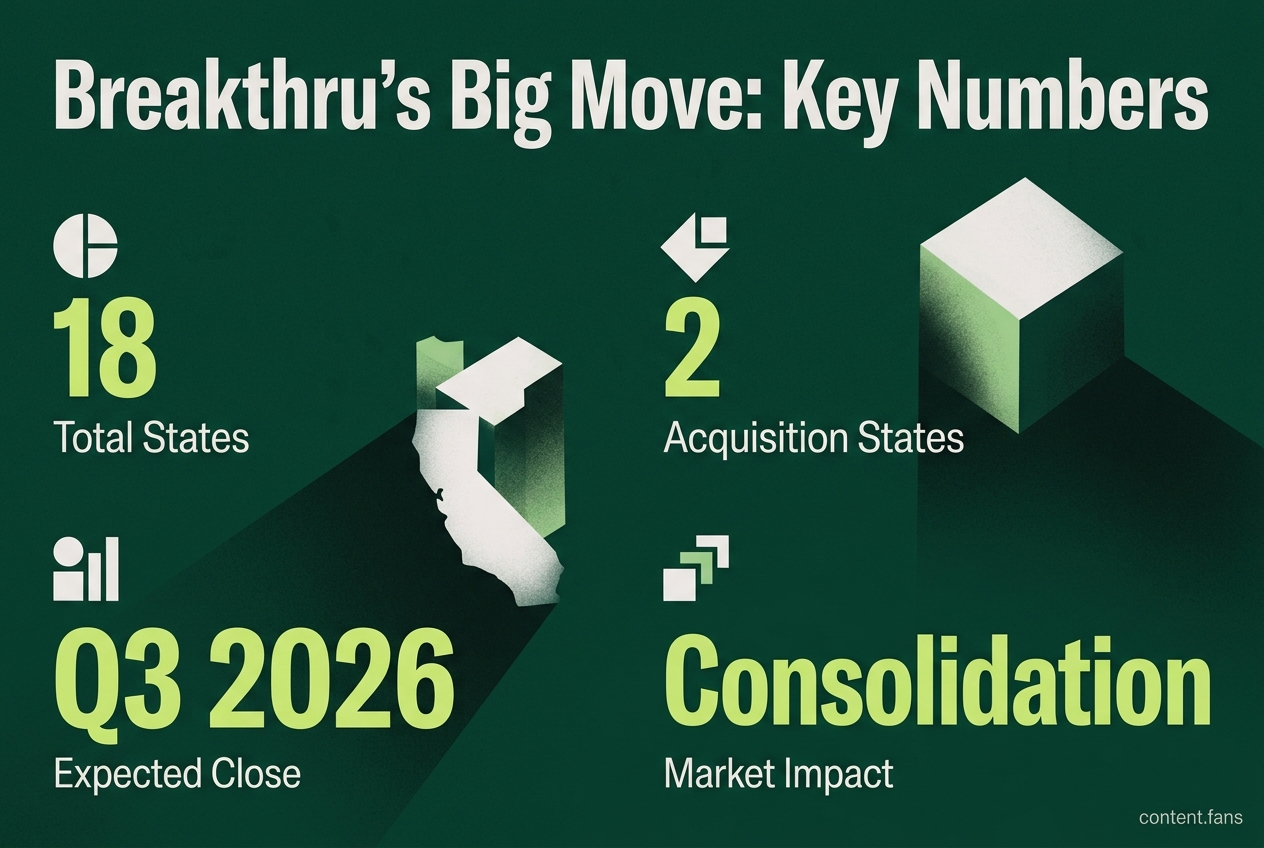
Breakthru Beverage is set to buy RNDC's businesses in Kentucky and Indiana, which may make Breakthru a much bigger company with about $8.7 billion in sales and operate in 18 states. The deal is expected to close in early Q3 2026. This change may mean fewer wholesalers in Kentucky and Indiana, so Breakthru could become the main choice for many wine and spirits brands there. There may be some short-term problems, like stock shortages and unclear pricing changes, and Breakthru has not said how many RNDC employees might stay on. Independent stores and small producers might face new challenges, while big chains could benefit from simplified services.
Breakthru Beverage Group has entered into a Letter of Intent to acquire RNDC's interests in Kentucky and Indiana joint venture businesses with National Wine & Spirits, expanding Breakthru to 18 states. The transaction is expected to close in early Q3 2026 and will expand Breakthru's operations to 18 states, representing a significant consolidation in the U.S. alcohol distribution landscape. This analysis explores the acquisition's strategic impact on suppliers, retailers, and market competition.
Market Impact of Distribution Consolidation in Kentucky and Indiana
The Breakthru Beverage acquisition of RNDC's joint venture interests will significantly reduce the number of major alcohol wholesalers in Kentucky and Indiana. This consolidation makes Breakthru the primary distributor for many wine and spirits brands, potentially altering pricing, brand availability, and competitive dynamics for all local suppliers and retailers.
The deal encompasses RNDC joint venture operations in Kentucky and Indiana. As RNDC exits these open states, competition tightens, positioning Breakthru as the dominant statewide wholesale partner for a vast number of wine and spirits brands, while smaller distributors maintain their focus on niche portfolios. Industry experts anticipate several immediate operational consequences:
- Portfolio Realignment: Suppliers previously with RNDC must find new representation. While some will transition to Breakthru via existing agreements, others may experience temporary stockouts as they navigate the change.
- Pricing Uncertainty: Though larger distributors can leverage economies of scale to reduce logistics costs, it is not yet clear if these savings will lead to lower shelf prices or simply higher margins. Retailers in a recent VinePair memo report they have not received any updated pricing information.
- Workforce Integration: Breakthru has not yet announced its plans regarding the retention or reassignment of RNDC's current employees, with integration strategies still under development.
Strategic Recommendations for Suppliers
For brands selling in Kentucky and Indiana, the distributor landscape has narrowed. While large suppliers might gain from Breakthru's enhanced scale and data analytics, smaller producers face the risk of being overlooked in a vast portfolio. To navigate this new environment, industry analysts advise the following tactics:
- Focus on Velocity Metrics: Prioritize tracking and improving case turns, repeat sales, and other key performance indicators that capture the attention of large distributor sales teams.
- Leverage Digital Channels: Utilize e-commerce and third-party compliance platforms to maintain consumer demand and bridge any potential distribution gaps during the transition.
- Monitor Regulatory Actions: Keep a close watch on state ABC board filings. Any conditions imposed on Breakthru's license transfers could create opportunities for alternative wholesale partnerships.
How the Acquisition Impacts Retailers
Independent and on-premise retailers should prepare for potential shifts in product allocation and service levels as Breakthru integrates the new operations. The consolidated entity could command a significant portion of the premium spirits wholesale volume in some counties, which may impact retailers' negotiating power on pricing. To prepare, store owners should focus on:
- Optimizing SKUs: Emphasize high-velocity products that can justify case-level discounts.
- Diversifying Sources: Explore private label spirits to reduce dependence on a single major distributor.
- Maintaining Communication: Establish clear channels to report and manage out-of-stock risks during the transition.
While large chains may benefit from streamlined invoicing and promotions, independent shops could experience longer lead times. Proactively building up inventory of core products before the transition can help mitigate potential delivery delays.
What exactly is changing in Kentucky and Indiana?
Breakthru Beverage will acquire RNDC's joint venture interests in the two states through a Letter-of-Intent signed in May 2026. Once regulators approve (target close: early Q3 2026), every on- and off-premise account that bought from RNDC will receive invoices, trucks, and sales reps bearing the Breakthru logo instead.
How big is the business that is switching hands?
The joint ventures being acquired represent substantial wholesale operations in both states. After the addition, Breakthru will operate in 18 states and generate significant revenue growth, solidifying its position as a major U.S. wine & spirits distributor.
Will retailers see immediate disruption?
There is no confirmed list of layoffs or warehouse closures, but history shows that route realignments, new item codes, and data-system cut-overs can create temporary periods where popular SKUs are temporarily unavailable. Store buyers are advised to build inventory of core, high-velocity items before the transition and maintain backup orders until Breakthru's new routes stabilize.
How should smaller suppliers prepare?
- Shift the conversation from "points of distribution" to "rate of sale."
Breakthru, like other large wholesalers, allocates field attention to products that turn consistently. - Activate local demand first (tastings, social ads, store demos) so retail buyers ask Breakthru reps for your product instead of the other way around.
- Have an e-commerce proof-of-concept (Drizly, Instacart, winery store) ready; big wholesalers increasingly treat online traction as evidence of marketplace pull.
Could the deal face regulatory push-back?
Kentucky and Indiana are open, license states, so no franchise-law consent is required, but state Alcoholic Beverage Control boards will still review transfer of ownership and warehouse permits. The combined market share in both states will likely be substantial, levels that have triggered extended reviews in past deals. Suppliers and retailers should build appropriate buffers into 2026 launch calendars in case the close date slips.