
CEOs Seek External CHROs to Lead AI Transformation
Serge Bulaev
CEOs are hiring more external CHROs to help companies manage changes from AI, according to HR Brew and other sources. Recent surveys suggest that leaders want CHROs who can guide cultural shifts, build AI skills, and work with CIOs on using AI ethically. Companies may prefer outside hires because they bring fresh ideas and experience with big changes from other fields. Job postings for CHROs now focus more on skills like AI knowledge, data analysis, and leading large transformations. This trend appears to show that HR is being set up to lead workforce changes, and hiring from outside might help CEOs speed up these transformations.
As companies race to implement AI, the demand for external CHROs to lead workforce transformation is surging. CEOs are looking outside their organizations for leaders to spearhead this complex challenge, seeking executives who can blend sophisticated technology governance with strategic human capital management and guide enterprise-wide change.
Why external hires are attractive
CEOs are bringing in external CHROs for AI initiatives because these leaders offer proven experience in large-scale technological change and fresh, cross-industry perspectives. This outside expertise is considered essential for quickly building new AI skills architectures, navigating cultural shifts, and implementing ethical AI governance without delay.
Boards now prioritize an outsider's perspective for rewriting job architectures for the generative AI era. Seasoned leaders from other industries bring crucial cross-sector change management experience, shifting the focus of CHRO job descriptions from administrative stewardship to enterprise transformation.
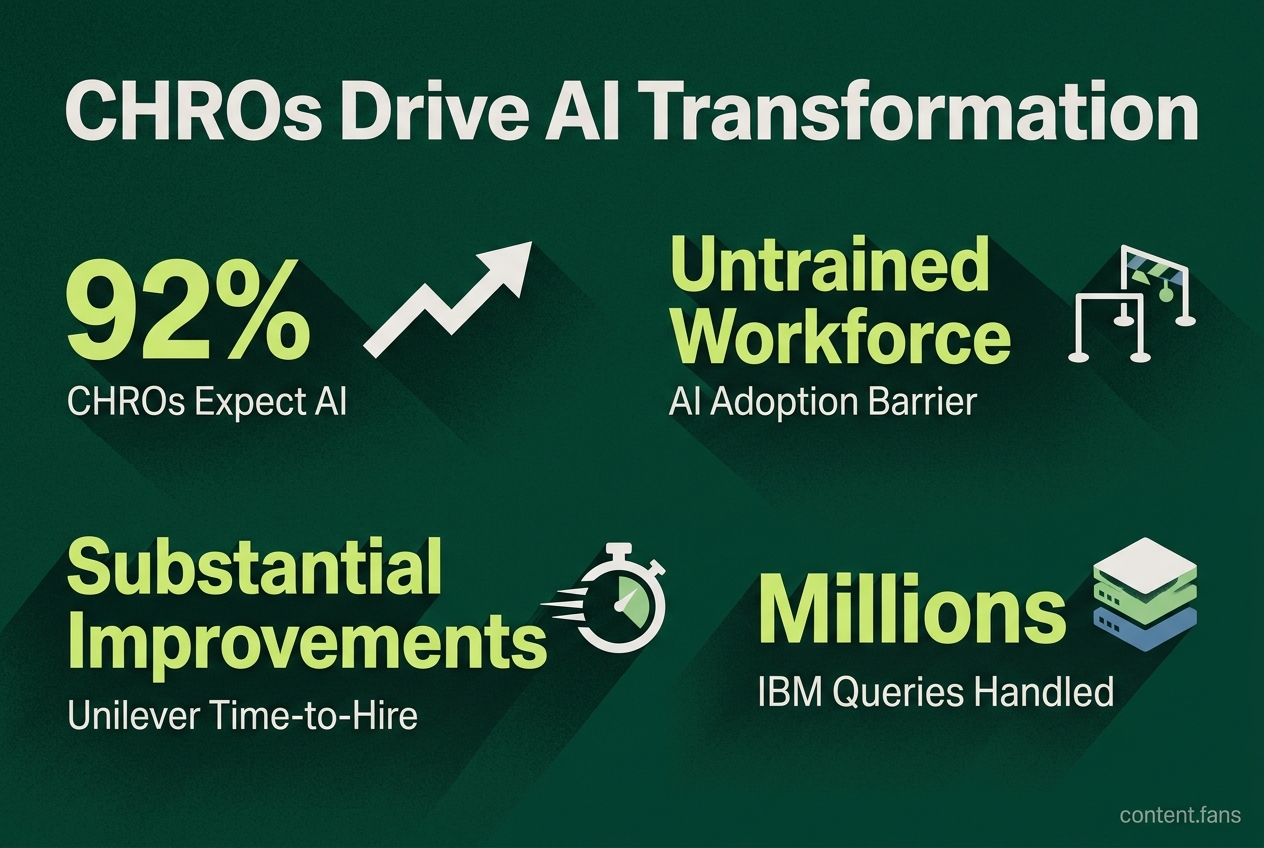
This strategic shift is backed by data. A staggering 92 percent of CHROs expect deeper AI workforce integration within the year, according to a report from SHRM. Similarly, industry reports indicate that a significant portion of senior leaders now view HR as a primary business enabler tasked with leading the AI transformation. These figures underscore the role's evolution from an administrative function to a core business architect.
New skills showing up in job descriptions
Reflecting this new mandate, many CHRO job descriptions increasingly demand a hybrid skill set that blends technical acumen with change leadership. According to industry reports, the most sought-after competencies include:
- AI fluency and vendor literacy
- People analytics and data storytelling
- Task-level work redesign
- Dynamic skills mapping and internal mobility planning
- Ethical and legal governance of algorithms
- Large-scale change leadership
This blend of skills is considered critical for overcoming what Deloitte identifies as the single biggest barrier to AI adoption: an undertrained workforce.
Early operational outcomes
While comprehensive public case studies are still emerging, early results from AI-powered HR initiatives demonstrate significant value. For example:
- Unilever has reported substantial improvements in time-to-hire and diversity recruitment using AI-driven assessment tools, while significantly reducing interview hours according to industry reports.
- IBM's AskHR chatbot has handled millions of employee queries with high containment rates, freeing HR professionals for higher-value strategic work according to company reports.
While not explicitly linked to external hires in these cases, these outcomes exemplify the scale and impact new CHROs are now expected to deliver.
What this means for search committees
For executive search committees, the mandate is clear. Industry experts advise that job descriptions must evolve beyond process efficiency to focus on strategic business outcomes like capability building and hybrid workforce design. Similarly, many organizations are updating their job catalogs to reflect AI's impact on roles. Consequently, top search firms now screen candidates for their ability to convert AI potential into concrete reskilling roadmaps and robust governance.
Ultimately, this trend signals a fundamental recalibration of C-suite dynamics. The CHRO is no longer just a custodian of human capital but the designated architect of AI-driven workforce transformation. For CEOs looking to accelerate this agenda, appointing an experienced external CHRO is becoming the definitive strategic move.