
Cars.com unveils AI video solution, boosts sales 47%
Serge Bulaev
Cars.com announced a new AI video solution in early 2026 that automatically creates short video ads for each new and certified pre-owned vehicle. These videos are shown to shoppers who seem interested, and early internal data suggests there may be increases in vehicle sales, website visits, and foot traffic. The tool reportedly makes making these ads much faster for dealers, but so far, the results rely on Cars.com's own aggregated reporting. Analysts note that more independent data is needed to confirm these early positive results, and it is not yet clear if these gains will hold up as the tool is used more widely.

Cars.com announced its AI video solution on April 27, 2026, after pilot at NADA Show 2026; first live campaign in March 2026. The platform is engineered to convert every vehicle listing into a high-intent sales engine. The platform automatically generates short video ads for new and certified pre-owned vehicles and serves them to shoppers showing relevant intent. According to industry reports, significant increases in sales, website sessions, and dealership visits followed the initial rollout.
The solution integrates closed-loop attribution, enabling dealers to connect ad views directly to on-site behavior and, according to the company's internal data, final in-store purchases. This approach provides a clearer measure of media efficiency as automotive marketers increasingly shift budgets toward connected TV and away from traditional print.
How the AI Video Platform Works
Cars.com's AI video solution works by automatically creating 15- to 30-second video ads for new and CPO vehicles. It uses real-time shopper data to match VIN-level inventory with interested buyers, then generates a spot from existing photos, specs, and pricing without requiring dealer intervention.
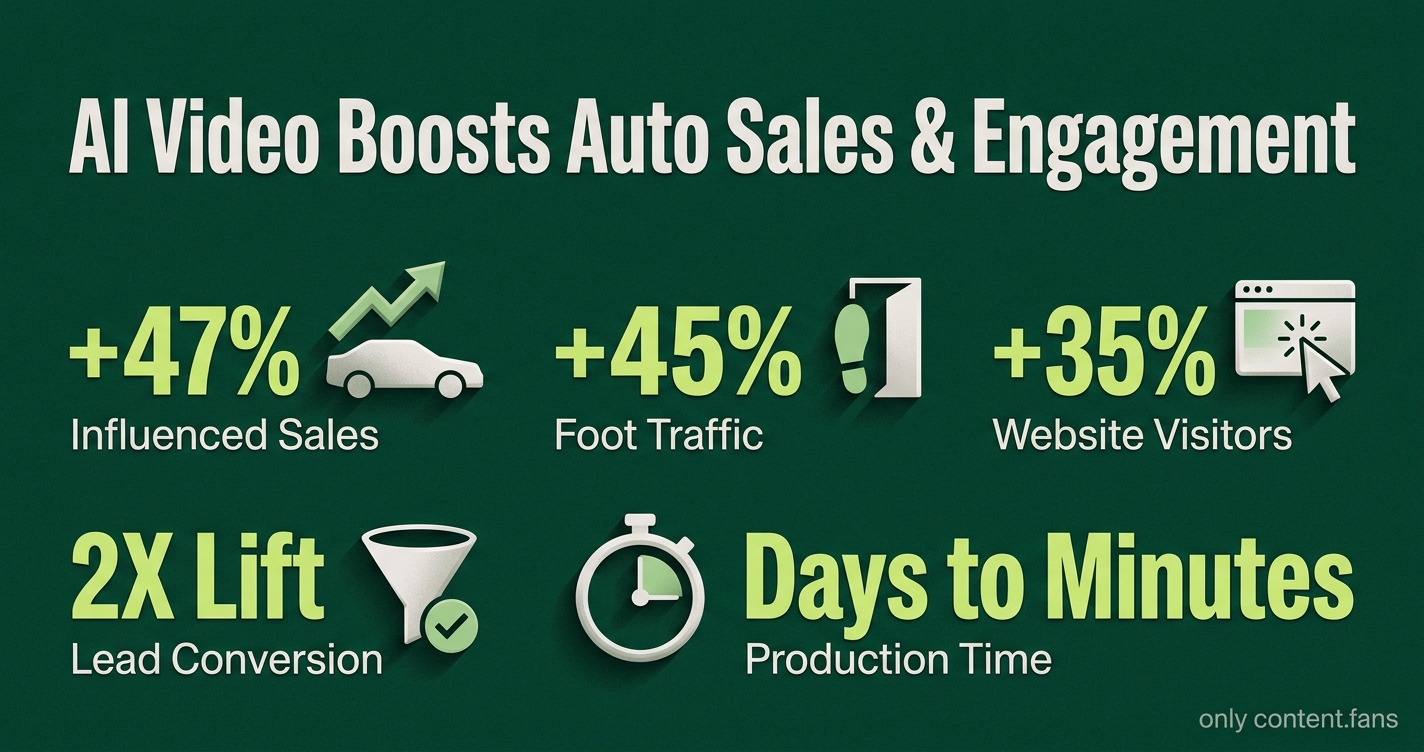
The process begins by analyzing real-time shopper demand signals on Cars.com. The system matches specific inventory by VIN to visitors searching for similar makes, models, and trims. From there, an automated engine assembles a 15- to 30-second video using the vehicle's photos, specifications, and pricing, complete with a voiceover and music. This automation reportedly reduces production time from days to mere minutes.
According to industry reports, pilot programs with select dealers yielded promising internal data:
- A 47% increase in influenced vehicle sales from first 30-day live campaign (Mar-Apr 2026); 2025 pilots doubled website lead conversion.
- A 45 percent increase in foot traffic, measured via mobile location data.
- A 35 percent growth in dealership website visitors over the previous period.
- A 2X lift in website lead conversion vs traditional video creative (pre-campaign announcement), as noted by an AutoRemarketing report.
Currently, the video generation tool is limited to new and certified pre-owned (CPO) inventory. All performance figures are drawn from aggregated internal reporting, as Cars.com has not yet published specific dealer case studies.
Market Context and Industry Implications
Interest in AI-powered video production is growing across the automotive industry. Competing ad-tech platforms claim significant production cost reductions and engagement gains. This aligns with industry reports suggesting a significant portion of auto marketers already use generative AI for data analysis and campaign optimization, signaling a broader market shift toward rapid, micro-targeted creative.
However, industry analysts caution that hyper-personalized assets can cause viewer fatigue without proper frequency management. While Cars.com's closed-loop attribution helps connect ad views to showroom traffic, the impressive impact figures remain early indicators. The absence of third-party validation means they should not yet be treated as industry benchmarks.
As vehicle inventory shortages ease and price competition returns, dealers are increasingly likely to test automated video solutions that promise both reach and relevance. Future disclosures from large dealer groups or independent auditors will be necessary to confirm if these VIN-specific creatives can maintain their reported lift when scaled beyond controlled pilot programs.