
Cambridge AI Vaccine Completes Phase 1, Signals Faster Drug Discovery
Serge Bulaev
Cambridge researchers completed a Phase 1 trial of a vaccine with an AI-designed component in June 2026. The study found the vaccine safe and well tolerated in 39 healthy volunteers, though the immune response was described as modest. Researchers saw some antibody and T-cell signals but said results varied between people, so more testing is needed. The study suggests that AI might help speed up vaccine design, but only two AI-created vaccines have human data so far. No strong claims about protection have been made yet, and more evidence is needed in the next phase of testing.

A Cambridge AI vaccine candidate featuring a component designed with artificial intelligence has entered human testing, marking a significant milestone in AI-assisted drug development. Researchers confirmed the vaccine was safe and well-tolerated in healthy volunteers during its Phase 1 trial, per a ScienceDaily report.
Led by the University of Cambridge spin-out DIOSynVax, the program aims to create a universal sarbecovirus vaccine effective against SARS-CoV-2, SARS, and related bat viruses. However, BBC News coverage notes the observed immune response was "modest," as the initial study prioritized safety over efficacy.
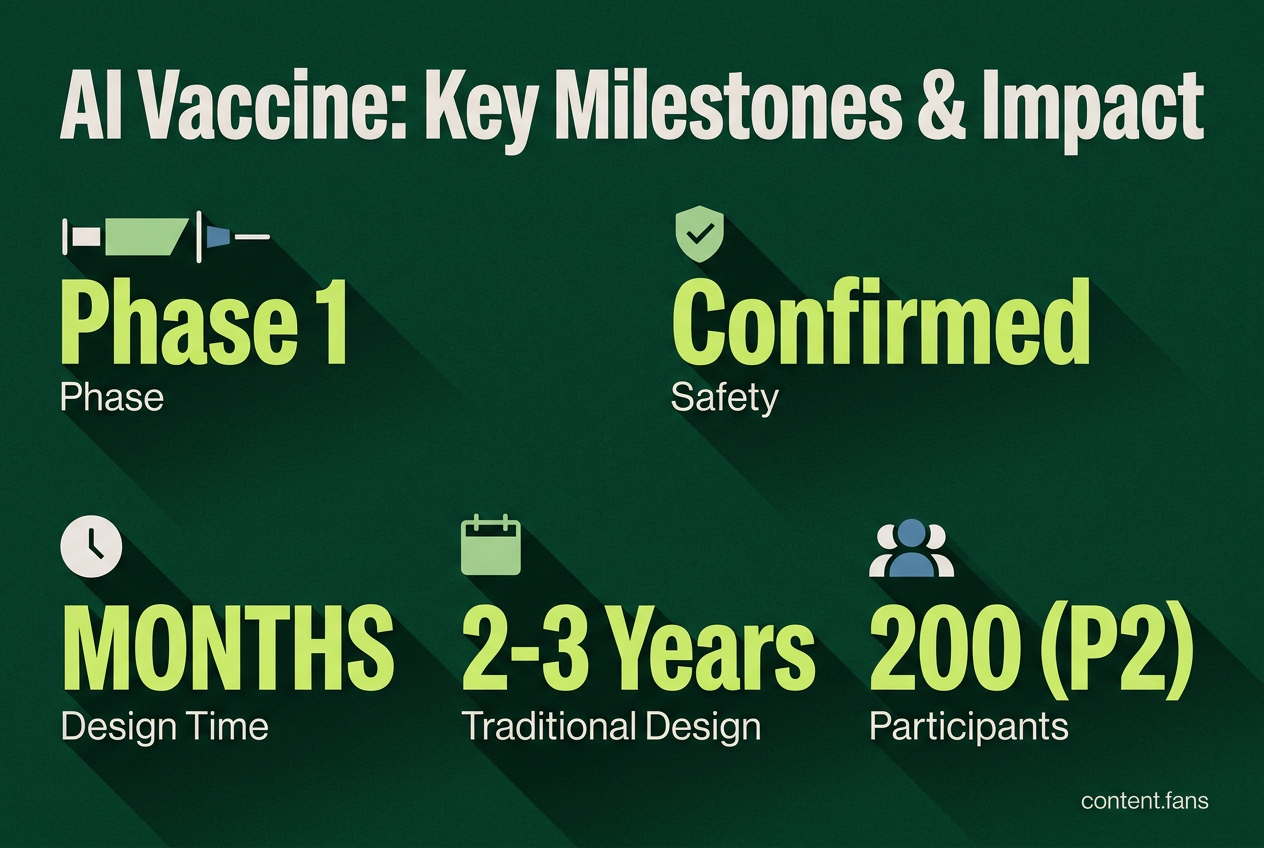
Phase 1 trials primarily focus on safety, not efficacy. While researchers observed some cross-reactive antibody and T-cell signals, results varied significantly among participants. A larger Phase 2 follow-up study, expected to enroll approximately 200 participants, is now being prepared to better assess the vaccine's protective breadth.
Why the study matters
The Phase 1 trial for the Cambridge AI vaccine primarily established its safety profile in humans. The study found the vaccine was well-tolerated with no major safety concerns reported. While it produced a modest immune response, its main success was proving AI-designed components are safe for clinical testing.
- Accelerated Design: AI algorithms selected the vaccine's antigen by screening thousands of viral protein fragments computationally. This compressed the candidate selection timeline from the traditional two to three years down to just a few months, according to Cambridge investigators.
- Computational Approach: The AI methodology involved identifying conserved protein regions for viral probe design, using protein alignments, motifs, and sliding windows to improve coverage across viral variants.
- Confirmed Safety Profile: The trial recorded a positive safety profile among participants. This safety data is a critical prerequisite for advancing to larger, dose-ranging clinical studies.
A narrow clinical landscape for AI vaccines
The clinical landscape for AI-designed vaccines remains limited. The Cambridge candidate represents one of the few AI-assisted vaccine components to reach human testing, though other AI-driven vaccine initiatives are progressing through various stages of development.
| Candidate | Disease target | Trial phase | Public data source |
|---|---|---|---|
| DIOS-CoVax | Sarbecoviruses | Phase 1 testing | University of Cambridge, ScienceDaily |
Broader AI impact on drug timelines
Beyond vaccines, AI is showing potential to accelerate drug development timelines. According to industry reports, AI-powered workflows may significantly shorten early discovery phases and reduce preclinical development timelines. However, experts note that the primary bottlenecks remain in clinical trial execution and manufacturing, where AI's impact is less direct.
Key takeaways for readers
- Safety Confirmed: The Phase 1 trial successfully confirmed the vaccine's safety, though its ability to generate a strong immune response (immunogenicity) requires further study.
- Accelerated Discovery: This trial serves as a proof-of-concept that AI can dramatically speed up antigen design, offering a potential blueprint for rapid responses to future pandemics.
- An Emerging Field: The field appears early-stage, with AI-designed vaccine components beginning to enter human testing, showing promise but remaining in nascent stages.
No claims about the vaccine's clinical efficacy have been made. Regulators will require robust data from the upcoming Phase 2 trial before considering further approval or advancement.