
Brands prep 2026 World Cup alcohol activations; focus on compliance, ROI
Serge Bulaev
Brands are preparing for alcohol promotions at the 2026 World Cup by focusing on following rules and measuring what works. Past events suggest that sponsoring matches may increase sales, especially with well-planned activities and data collection. Experts say brands should set clear goals, use codes to track sales, and check progress regularly. There may be stricter rules coming, like limits on alcohol ads near venues and rules to protect young people. Using sensors and sales data together might help brands prove if these sponsorships really boost sales, but some uncertainty remains.

Major sporting events transform stadiums and fan zones into prime retail opportunities for alcohol brands. For marketers planning 2026 World Cup alcohol activations, the key to success lies in early entry, budgeting for compliance, and creating measurable experiences. This approach effectively converts the excitement of matchday into product trials and sustained long-term sales. This guide provides a strategic roadmap for activation teams preparing for major sports tournaments.
Maximizing Visibility at the 2026 World Cup
Successful alcohol activations at the 2026 World Cup require a focus on regulatory compliance and measurable return on investment (ROI). Brands should develop data-driven strategies that pair on-site experiences with retail promotions, while carefully navigating advertising rules to ensure all marketing efforts are both effective and permissible.
FIFA rights packages provide spirits brands with extensive broadcast visibility. Industry reports suggest that well-promoted sponsorships can significantly boost revenue, with many brands noting strong sales increases when retail activations coincide with televised games. With the 2026 World Cup's expanded format, brands may have greater opportunities for sampling and increased on-premise engagement. Activation teams should combine stadium signage with age-gated fan zones, QR code promotions, and social media engagement to effectively capture first-party data from an engaged audience.
A Strategic Playbook for Sponsorship Activation
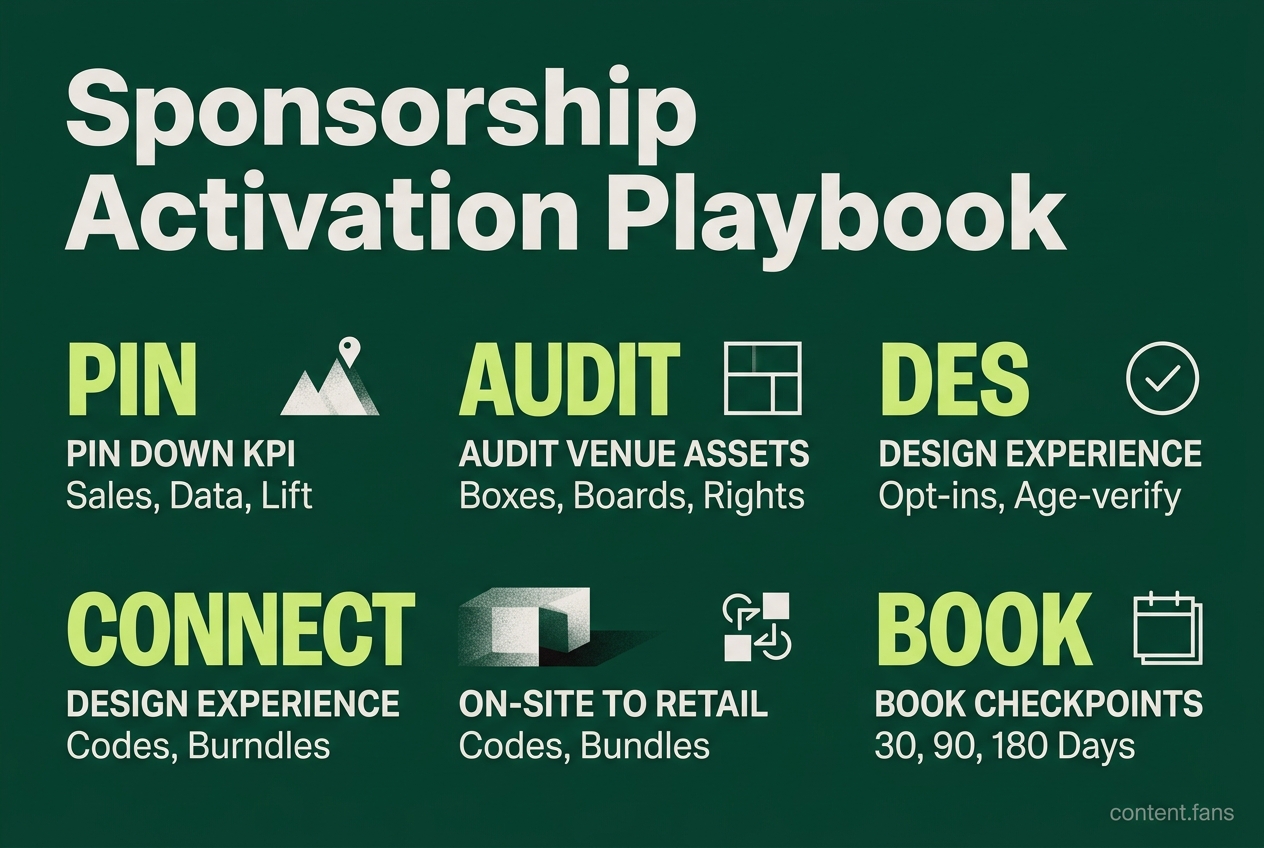
Long-term partnerships, like Cygnet Gin's with the LTA, demonstrate how brands can gain sustained exposure. Their Trophy Lounge at tennis events provides premium hospitality that aligns with the sport's audience. To build similar data-driven programs, brands should follow a five-step process:
- Pin down the single KPI - incremental sales, data capture, or brand lift.
- Audit venue assets: hospitality boxes, tunnel boards, pourage rights, and fan village stalls.
- Design an experience that naturally captures opt-ins and age verification.
- Connect on-site touchpoints to retail via unique codes or partner store bundles.
- Book campaign checkpoints at 30, 90, and 180 days to track uplift.
To isolate campaign impact from organic growth, experts at SPORTFIVE recommend using unique promo codes and matched-market testing to accurately measure incremental revenue (Understanding the ROI of sports sponsorships). This data-first discipline is what distinguishes high-impact activations from simple logo placements.
Navigating Compliance and Measuring ROI in a Stricter Regulatory Environment
The regulatory landscape is tightening. For instance, the UK's Advertising Standards Authority explicitly prohibits any marketing that implies alcohol enhances athletic performance (Alcohol: Enhanced sporting, mental and physical capabilities). With potential regulatory changes possibly restricting advertising near venues, compliance is critical. Activation plans must now incorporate a thorough regulatory checklist for all channels, including broadcast, digital, and on-site advertising, with a focus on youth-exposure limits. For measurement, top agencies suggest combining on-site data like footfall from sensors with sales analytics from control markets. This integrated data approach allows marketers to attribute sales uplift with confidence, proving that sports sponsorships deliver tangible returns beyond social media impressions.
How do spirits brands map 2026 World Cup activations to avoid regulatory blind spots?
Start with a multi-jurisdiction checklist. The UK relies on ASA/CAP co-regulation, and potential regulatory changes may introduce restrictions around stadiums, fan-zones and transport hubs.
Key rules to lock in now:
- No sporting-performance claims: any suggestion that alcohol improves speed, stamina or confidence is almost certainly off-limits.
- Audience composition: avoid placements where a significant portion of the audience is under-18.
- Digital fall-out: a single global campaign may breach stricter regimes in host cities across North America.
Action: run creative past local counsel 90 days before kickoff and build geo-fenced media flighting so identical assets are not served to children in transit zones.
What baseline data should brands capture to prove incremental ROI?
Collect four data points before any asset goes live:
- Sales velocity in host market and a matched control market.
- Unaided brand awareness & consideration within the tournament age-gated demo (21 +).
- First-party opt-ins from past experiential work as a proxy of on-site data potential.
- Social mentions and sentiment score for reputation risk.
These baselines create the control vs. exposed comparison that Snapbar and AnyRoad cite as the only reliable way to isolate true lift after the event.
Which on-site metrics matter most for spirits activations at major tournament fan-zones?
Prioritise metrics that connect participation to purchase behaviour:
- Dwell time above a certain threshold has strong correlative lift for trial-to-purchase in spirits sampling programs.
- First-party opt-ins per interactions - aim for significant rates when prize-driven age-gating is used.
- Unique QR or promo-code redemptions within 30 days - the gold standard for incremental sales attribution.
- Earned media value measured through fan-generated hashtag volume; top-performing activations typically generate substantial UGC posts per visitor.
Ignore vanity metrics such as total footfall unless they are funnelled into the above behaviour-based KPIs.
How long should a spirits brand wait before declaring final ROI on a World Cup activation?
Use a tiered measurement window:
| Checkpoint | Primary Metric | Rationale |
|---|---|---|
| 0-30 days post-event | First-party lead quality & early sales lift | Captures trial impulse |
| 90 days | Repeat-purchase rate & channel mix | Validates long-term lift from tournament sampling |
| 6 months | Customer lifetime value vs. matched control | Determines scalable investment for future cycles |
Industry reports suggest strong sales increases when brands track beyond the immediate 30-day period, because stadium purchases often convert to off-trade baskets weeks later.
Does a long-term partnership (e.g., Cygnet Gin's 3-year LTA deal) outperform single-tournament bursts?
Evidence points to higher cumulative ROI when the spend is amortised:
- Brand recall lifts significantly among core tennis fans across the second and third seasons versus the first, based on standard post-event surveys.
- Cost per engagement drops in year three as fixed build costs are reused and audiences self-select into loyalty programs.
- Retail sell-out gains compound: partners report substantial second-year off-trade uplift when the event calendar is activated in-store.
Apply this to major tournaments by considering multi-year hospitality or sampling programs extending into future qualifying events to amortise creative and logistics.