
Brands Adopt 7-Step Framework for 2026 Influencer Marketing
Serge Bulaev
Influencer marketing in 2026 appears to be growing quickly, with more brands focusing on results instead of just impressions. Experts suggest that smaller creators may be more effective because their audiences engage more, and brands are using a new seven-step method to choose the best creators. Clear tracking and checking for authenticity are becoming more important, as new challenges like AI content and stricter rules may make it harder to pick the right partners. Experts believe that better measurement tools and careful reviews can help brands avoid risks and find creators who really help reach their goals.

To navigate the evolving landscape of influencer marketing, many brands are adopting structured frameworks for creator selection. As budgets rise and the volume of potential partners grows, this systematic approach helps teams choose voices that deliver measurable ROI without risking brand trust.
Why the Current Landscape Looks Different
Industry observers note several key shifts driving this new approach. First, compensation is moving toward measurable results, with performance-based deals gaining favor according to a recent study from Influencer Marketing Hub. Second, brands are prioritizing micro and nano creators, whose smaller, dedicated communities provide superior engagement. Third, overall investment continues to grow, with significant expansion projected for the U.S. creator economy according to industry analysis.
The influencer marketing landscape is being redefined by a focus on performance-based compensation over flat fees, a strategic shift toward highly engaged micro- and nano-creator communities, and a significant expansion in total ad spend. These trends demand a more rigorous, data-driven approach to creator selection.
These developments introduce new hurdles. The rise of AI-generated content necessitates rigorous authenticity checks, while stricter disclosure regulations and fragmented platforms add layers of complexity and risk to campaign management.
A Fit-First Framework for Creator Selection
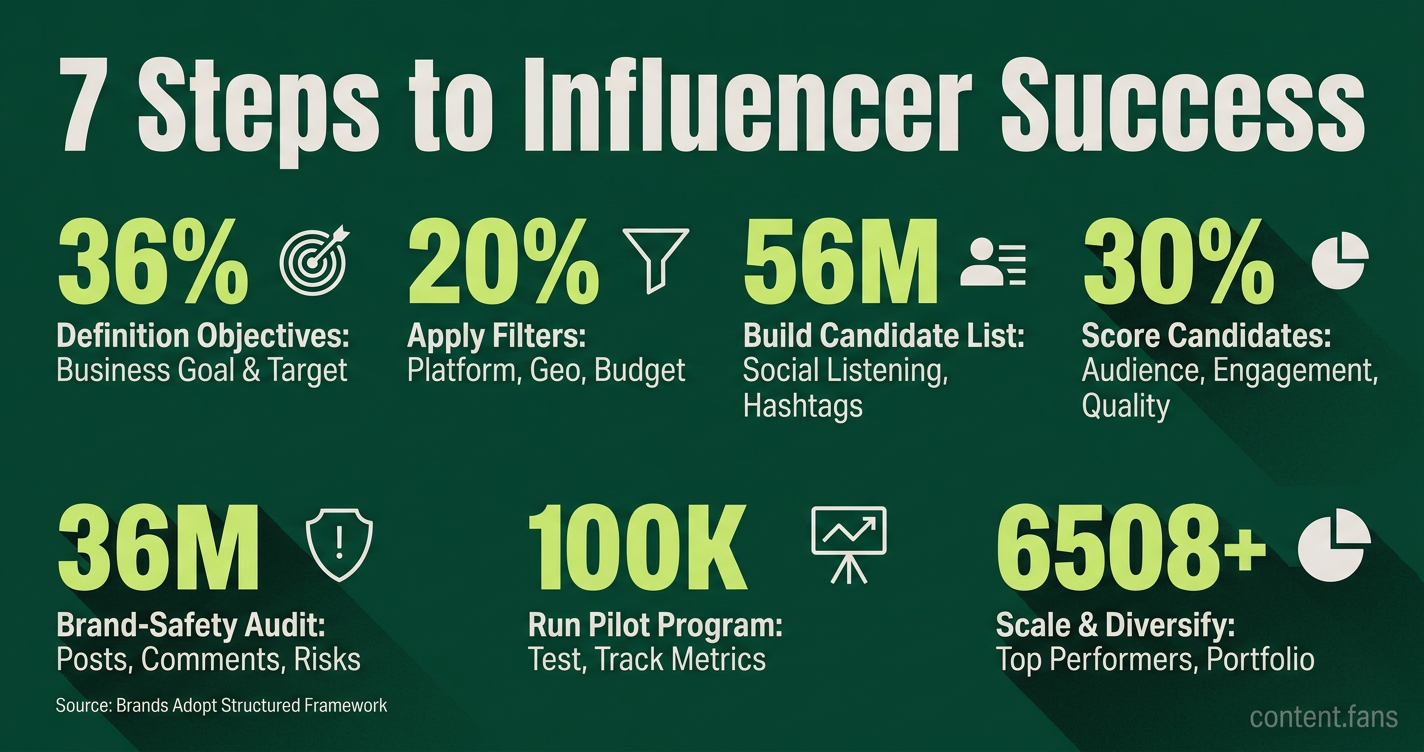
This practical, seven-step workflow prioritizes audience alignment over influencer fame to drive conversions:
- Define Objectives: Start with a specific business goal and a detailed target customer profile.
- Apply Filters: Narrow the field based on platform, geography, content format, and budget constraints.
- Build a Candidate List: Use social listening, hashtag searches, and competitive analysis to identify potential partners.
- Score Candidates: Evaluate creators on audience demographics, engagement authenticity, content quality, and compliance record.
- Conduct a Brand-Safety Audit: Review recent posts, comments, and past partnerships for any potential risks.
- Run a Pilot Program: Test with a small group of creators, tracking key metrics like clicks, conversions, and cost per acquisition.
- Scale and Diversify: Expand partnerships with top-performing creators to build a balanced portfolio of macro, micro, and nano influencers.
This structured process emphasizes that engagement quality and demographic alignment are far better predictors of success than follower count alone. A scoring model is crucial for avoiding the "halo effect" of large but irrelevant audiences.
Metrics and Measurement Today
In this increasingly performance-driven era, many brands are shifting focus from vanity metrics like impressions to actionable outcomes. This requires robust tracking infrastructure, including unique discount codes, affiliate links, and first-party data integration to measure true ROI.
Authenticity and Risk Mitigation
Verifying creator authenticity is paramount. Red flags like sudden follower growth, generic comments, or mismatched audience geography can signal inflated reach. Brands must combine audit tools with manual reviews to vet partners before signing contracts.
Managing Operational Complexity
As campaigns become more regulated and performance-focused, operational management is key. Clear workflows for coordinating deliverables, repurposing content, and ensuring FTC compliance are essential. Contracts should include brand-safety clauses and milestone checkpoints to manage risk effectively.
How does a structured framework help brands cut through platform clutter?
The framework forces marketers to define the single business outcome before they even open TikTok Shop or YouTube Shorts. By mapping that outcome to a creator's niche community (often nano or micro, where costs are typically lower than macro tiers), brands can ignore "platform noise" and focus on the channels that the pilot step proves actually convert. Industry reports suggest that campaigns starting with clear goal-audience alignment show improved attributable sales versus broader approaches.
What changed in creator compensation that makes deals more accountable?
Flat-fee posts are being replaced by performance-based payouts tied to affiliate codes, tracked links, or even shared-cart revenue. The structured model incorporates this shift: scoring creators on past conversion data, and allocating only a small guaranteed fee with the majority of budget unlocked when sales or qualified leads hit pre-set thresholds. Early adopters report significant CPA improvements compared with traditional flat-rate contracts.
Which red flags should disqualify a creator during the brand-safety audit?
Sudden follower spikes, generic emoji-only comments, or clusters of political or medical misinformation in recent posts are automatic outs. The framework's safety checklist also flags competitor conflicts and prior FTC violation history; industry examples show brands successfully beating ROAS targets using smaller, cleaner rosters after thorough vetting.
How long should a pilot last before scaling spend?
Industry guidance recommends several weeks or one full purchase cycle, whichever is shorter. Short-form video data suggests that most attributable sales occur within the first two weeks, so many verticals can validate ROI quickly. Brands that exit pilots too early often experience budget inefficiencies from incomplete data.
Why are long-term partnerships emphasized over one-offs?
One-off posts rarely move the algorithmic "trust" needle; platforms now reward repeat engagement signals between creator and brand handles. Contracts structured as multi-month story arcs generate significantly higher view-through rates and give brands access to first-party audience insights that walled gardens rarely share.