
BCN unveils 'AI Brand Voice' to sell LLM visibility for advertisers
Serge Bulaev
German publisher JV BCN has launched a service called AI Brand Voice, which may help brands appear more in answers from AI assistants like ChatGPT and Gemini. This tool runs audits, rewrites content, and tags entities so that AI models might better recognize and mention certain brands. Advertisers seem interested, but some are cautious and want better ways to measure results before spending money. Pricing details have not been shared, and it is described as a premium product. Experts suggest more companies might try similar tools, but success may depend on how AI models change and how willing advertisers are to join.

German publishing joint venture BCN is tackling declining search traffic with AI Brand Voice, a new service designed to increase brand visibility within AI assistants like ChatGPT and Gemini. The product aims to secure accurate brand citations in AI-generated answers, a new frontier for advertisers where presence is difficult to guarantee.
BCN, a joint venture of Hubert Burda Media, Funke, and Klambt, positions the service as a premium brand awareness tool, not a direct performance channel. The service targets advertisers concerned about diminishing referral traffic from traditional search.
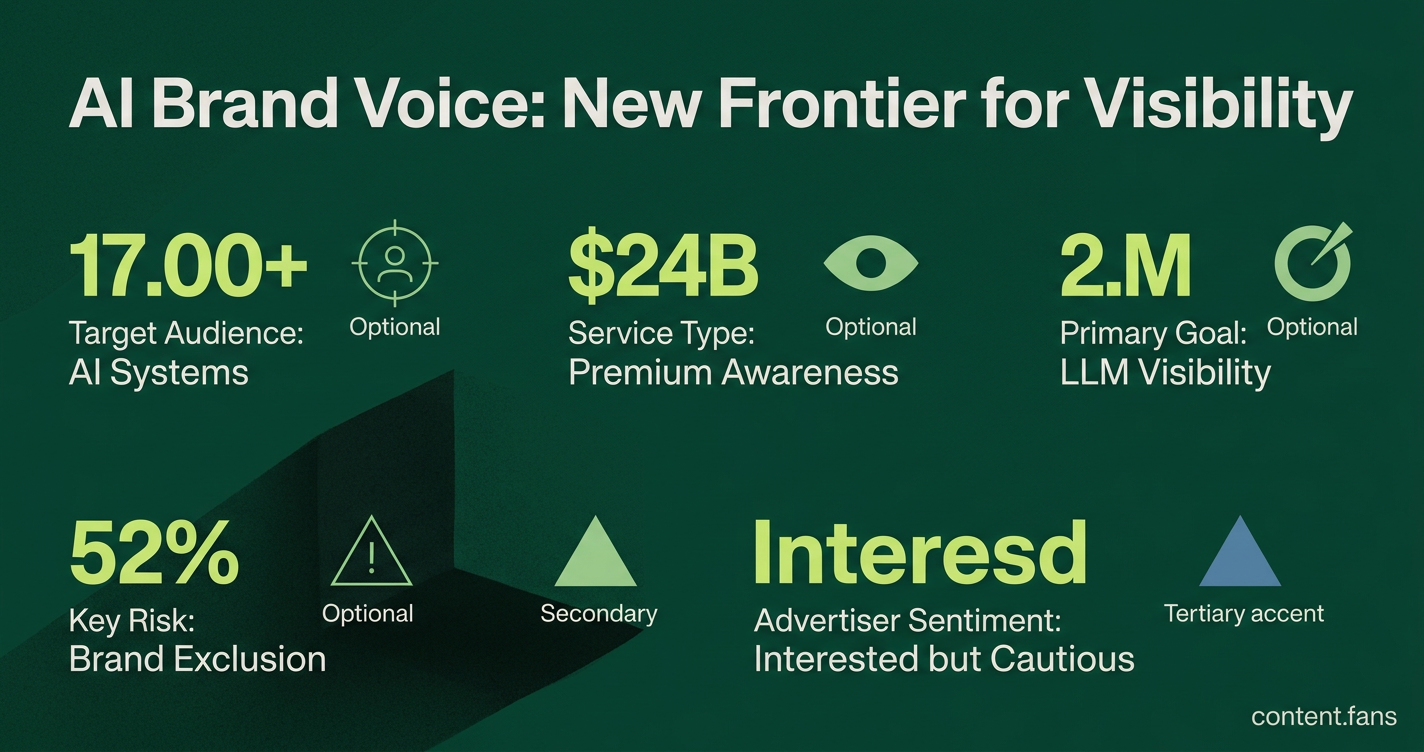
How AI Brand Voice works
AI Brand Voice is a service that helps brands surface inside AI assistants. The service focuses on optimizing publisher content to favor specific brands in AI-generated answers and monitoring AI models to track brand presence.
The process targets LLMs rather than human readers through strategic content optimization and monitoring approaches designed to increase brand visibility in AI-generated responses.
Stefan Betzold, BCN's Chief Digital Product Officer, confirmed that some content is now created with "AI systems as the primary audience." This strategy signals a significant shift in content creation, prioritizing structured metadata and consistent entity naming over traditional creative copywriting.
Why assistants matter for discovery
As generative assistants increasingly consolidate web results into a single, definitive answer, brand exclusion has become a major risk. Industry reports suggest that many brands are absent from category-level AI responses, and a significant portion face factual errors when mentioned. For many, being omitted from an AI answer is the new equivalent of a low search ranking.
This new landscape is forcing publishers to adapt their monetization strategies. Following recommendations from consultancies like EY, many are exploring middleware services and per-query licensing to retain control over their content. BCN's strategy aligns with this trend, combining archive licensing deals with branded AI tools and direct-engagement advertising.
Early reception and limits
Initial market feedback, as summarized by Digiday, shows advertisers are "interested but cautious." The primary hesitation stems from a need for clearer metrics to measure return on investment before allocating significant budgets. While pricing is not public, BCN has confirmed it is a premium product.
Industry observers expect more publishers will launch similar LLM visibility packages in the coming years. However, they also caution that the rapid evolution of AI algorithms means any gains in visibility will require continuous optimization to be maintained.
AI Brand Voice is a pioneering effort by a publisher to formalize brand marketing within AI assistants. Its long-term success and scalability beyond BCN's portfolio will likely depend on broad advertiser adoption and the ongoing development of the AI ecosystem.
What exactly is BCN's "AI Brand Voice" product?
BCN - the joint commercial arm of Hubert Burda Media, Funke and Klambt - has packaged an LLM-visibility suite that helps brands surface inside ChatGPT, Gemini and similar assistants, optimizes content so the models reference brands accurately, then keeps monitoring to maintain brand presence.
The offer is positioned as a premium-priced, brand-awareness buy, not a last-click performance placement, and is explicitly built for machines first, humans second.
How does the technology make a brand appear inside an AI answer?
The team runs prompts through third-party tools such as Peak AI and Rank Scale to see which domains the large language models already surface for a given category.
Where the brand is missing, BCN produces AI-optimized descriptions and works to ensure the models pick up verified, on-brand wording instead of hallucinating or omitting the name.
Continuous monitoring and content adjustments help maintain brand visibility as the models update.
Why are publishers selling this instead of traditional search inventory?
With growing numbers of consumers turning to AI for product recommendations, many brands remain invisible in category-level answers, and early tests show referral traffic from classic search declining during the consideration phase.
By turning their archive into training-grade, attributed content, the three German publishers can sell presence inside the answer itself, a placement that neither banners nor keyword ads can guarantee.
Who is the target advertiser and what does it cost?
BCN markets the product to brand managers who care about share-of-voice rather than immediate clicks.
Although public rate cards have not been released, executives told press it is a premium, fixed-fee package targeting brands that need trusted descriptions in generative answers.
Is this a one-off experiment or part of a wider trend?
The launch fits a publisher strategy emerging in recent years: license high-value archives, charge for specialized access, and secure official citation inside AI responses.
Analysts expect similar LLM-visibility products from other publisher coalitions and foresee a mixed monetization model where licensing, citation fees and branded AI tools supplement traditional revenue as assistants become an important discovery layer.