
Anthropic's Rising Costs Force SaaS Vendors to Shorten Contracts
Serge Bulaev
Rising and unpredictable costs for Anthropic's Claude AI models may be causing enterprises to pressure SaaS vendors into shorter, more flexible contracts. Buyers appear to avoid multi-year deals, asking for six- to twelve-month terms and ways to adjust if prices change. SaaS companies may be adapting by splitting out AI fees, using cheaper models for simple tasks, and providing detailed usage data. Some buyers now ask for usage alerts and spending caps to control costs. Analysts suggest these changes might make contracts more focused on cost and risk sharing, rather than long-term commitments.
The ripple effects of Anthropic's rising costs for its Claude AI models are creating major shifts in the software industry. Industry reports suggest that enterprises are pressuring SaaS vendors for shorter contracts as they grapple with unpredictable and increasing AI usage fees.
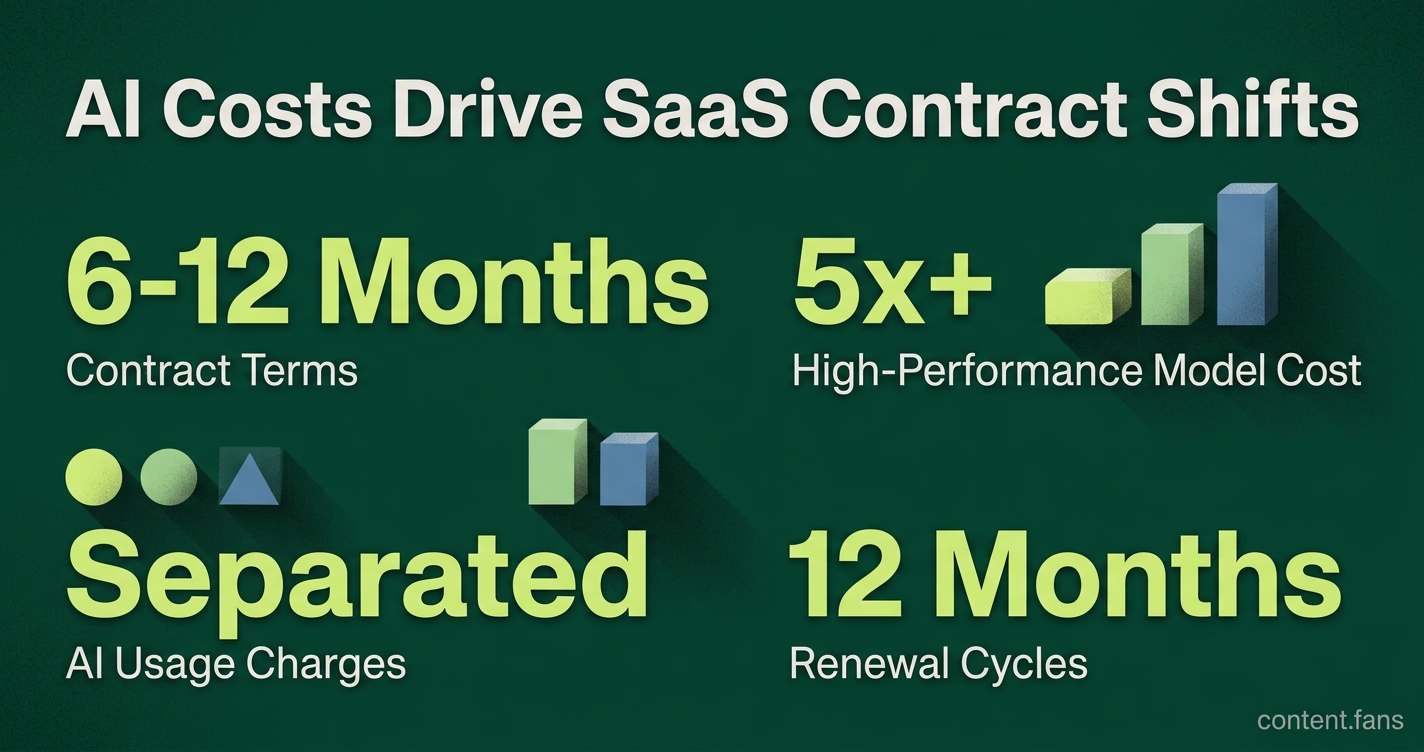
With Anthropic's token pricing varying dramatically - from Haiku's low rates to Opus's much higher tier - procurement teams see long-term deals as a significant financial risk. Industry observers highlight this volatility. Consequently, buyers are demanding shorter six- to twelve-month terms, with opt-outs and repricing clauses to manage unexpected cost surges.
How Anthropic's Pricing Model Creates Contract Risk
Enterprises are avoiding multi-year SaaS commitments due to the unpredictable and rising costs of underlying AI models like Anthropic's Claude. To mitigate financial risk from sudden spikes in token usage fees, procurement teams are demanding shorter contract terms, often six to twelve months, with added flexibility.
Anthropic's usage-based model charges per token, with significant cost differences between model tiers. For example, some high-performance models carry a 5x or greater cost multiple over base models like Haiku. This price spread directly exposes SaaS vendors to margin erosion if they don't pass AI costs directly to customers. Compounding this tension, NPIFinancial reports that Anthropic's enterprise agreements can require committed monthly token spending without volume discounts. This penalizes vendors for under-utilization and motivates them to offer shorter contracts to their own customers.
How SaaS Vendors Are Adapting
To navigate this new landscape, SaaS vendors are deploying several key strategies:
- Hybrid Pricing: Many providers now separate AI usage charges from fixed platform fees, ensuring cost spikes are transparently invoiced without destroying their margins.
- Shorter Renewal Cycles: AI-specific add-ons are often limited to twelve-month terms, even if the core software platform has a multi-year agreement.
- Intelligent Model Routing: To manage blended costs, engineering teams route simple queries to cheaper models, reserving expensive Opus models for high-value tasks.
- Usage Telemetry: Vendors are providing customers with detailed dashboards that connect feature usage to token consumption, enabling clear ROI analysis.
Furthermore, industry reports suggest that SaaS vendors can reclaim margin by reserving GPU capacity, which can provide significant cost savings. This regained financial headroom makes it more feasible to accommodate customer demands for shorter contract terms.
What Enterprise Buyers Now Expect
In response to cost volatility, enterprise buyers are negotiating new protections. According to Correct Context, some are securing flat-fee annual licenses for AI usage. When flat fees aren't possible, procurement teams are now demanding specific contractual safeguards:
- Cost Controls: Alerts when usage approaches monthly token budgets and hard spending caps.
- Price Protection: The right to renegotiate if Anthropic materially increases its public pricing.
- Full Transparency: Detailed audit logs that trace every SaaS action back to a specific AI model call, verifying an auditable trail of expenses.
Zylo also notes a growing trend of finance departments tracking AI consumption as a distinct metric alongside user seat counts. This practice allows them to accurately benchmark the total cost of ownership (TCO) and make data-driven decisions at renewal time.
Early Impact on the SaaS Market
While these more flexible contracts may accelerate sales cycles, they introduce challenges to long-term revenue forecasting for SaaS companies. As noted by CloudZero, Anthropic's own pricing - where API usage is billed separately from per-seat fees - encourages a decoupled pricing model across the industry. This strategy can reduce initial sticker shock for buyers and improve transparency around value and cost.
Ultimately, the contract cycles for AI-powered SaaS are shifting away from traditional software schedules and are now more aligned with the rapid pace of infrastructure pricing changes. As long as Anthropic's token economics remain dynamic, analysts predict that negotiations will continue to prioritize cost transparency, risk mitigation, and shared financial responsibility for the foreseeable future.